


50-day question: Will Trump give Putin more time — what’s in it for Ukraine?



More than a week has passed since U.S. President Donald Trump made headlines by giving Vladimir Putin a 50-day deadline to end the war in Ukraine — or face what Trump called "very significant" economic sanctions. So far, the Kremlin has shown no change in its stance
Contents:
- The background behind the ultimatum
- What exactly did Trump demand?
- The Kremlin’s response
- Reactions from the EU and Ukraine
- What experts say about Trump’s move
Yet Trump’s statement has energized the Ukrainian side. In addition to the long-anticipated promise of new sanctions, he also pledged military cooperation, specifically involving Patriot air defense systems. For the first time in his presidency, Trump has taken his most pro-Ukrainian position — though he denies this, continuing to present himself as a neutral party aiming to “achieve peace.”
Espreso explains what lies behind these bold statements and whether we should expect any movement by late August, when the 50-day countdown expires.
The background behind the ultimatum
Since returning to the political stage, Donald Trump has repeatedly promised to end the war in Ukraine “quickly,” leveraging his reputation as a “deal-making genius.” During the campaign, he even claimed he could stop the war “within 24 hours,” although his team later adjusted that timeline to 100 days.
During this time, Washington reopened talks with Moscow and reportedly offered significant concessions — halting Ukraine’s path to NATO membership and even recognizing Crimea as Russian. The goal: to end the Kremlin’s war.
But Russia responded only with more ultimatums, effectively demanding Ukraine’s capitulation, and showed no readiness to compromise.
Eventually, Trump began hinting at growing frustration with Putin. On several occasions, he gave the Russian leader “two to three weeks” to change course, saying vaguely, “We’ll see what happens.” But time passed, and Russia continued its attacks on Ukrainian cities and civilians. Kyiv endured some of the most intense airstrikes since the start of the war, while Ukraine’s air defense — especially stocks of U.S.-supplied Patriot missiles — began running low.
The only visible result of the renewed diplomacy was the reopening of direct peace talks between Ukraine and Russia in Turkey. These talks didn’t stop the fighting but did lead to several prisoner exchanges — more than 1,000 Ukrainian soldiers were returned from captivity.
By July, Trump appeared to realize that Putin’s aggression couldn’t be halted by kind words alone. As the U.S. president himself admitted, each time he had a “great conversation” with Putin, the Kremlin would soon order massive attacks on Ukrainian towns and villages. Trump also revealed that his wife Melania had urged him to act, telling him that Russia was “still bombing Ukraine.”
Increasingly, Trump has begun to note Putin’s irrational behavior — his obsession with dismantling Ukrainian statehood and his refusal to strike a reasonable deal.
One likely trigger for Trump’s ultimatum was a phone call between him and Putin on July 3. According to Manhattan University professor Igor Aizenberg, who spoke on Espreso TV, Trump was angered during that call by Putin’s refusal to offer even minimal concessions — and by his continued reliance on military escalation.
According to Axios, during this call, Putin allegedly informed Trump about Russia’s plans to complete the occupation of four Ukrainian regions within 60 days. Ten days after that conversation, on July 14, Trump appeared at a press conference alongside NATO Secretary General Mark Rutte, where he announced a 50-day deadline.
In effect, this term gives Putin the opportunity to carry out his planned offensive, as 50 days from July 14 closely aligns with the 60-day window mentioned by Putin. According to CNN, Russia could begin its large summer offensive within days or weeks, targeting three key cities in eastern Ukraine: Pokrovsk, Kostiantynivka, and Kupiansk.
On the other hand, the Kremlin has been trying to fully capture the Donetsk region for over 3.5 years, but has so far paid a heavy price for its actions, losing over a thousand soldiers and large amounts of equipment daily. Analysts estimate that at this rate, it would take Russia more than 70–80 years to fully occupy Ukraine. Some experts believe Trump has once again chosen to trust Putin’s promises — essentially saying, “You need 60 more days? Fine, but after that, we talk seriously.”
What exactly did Trump demand?
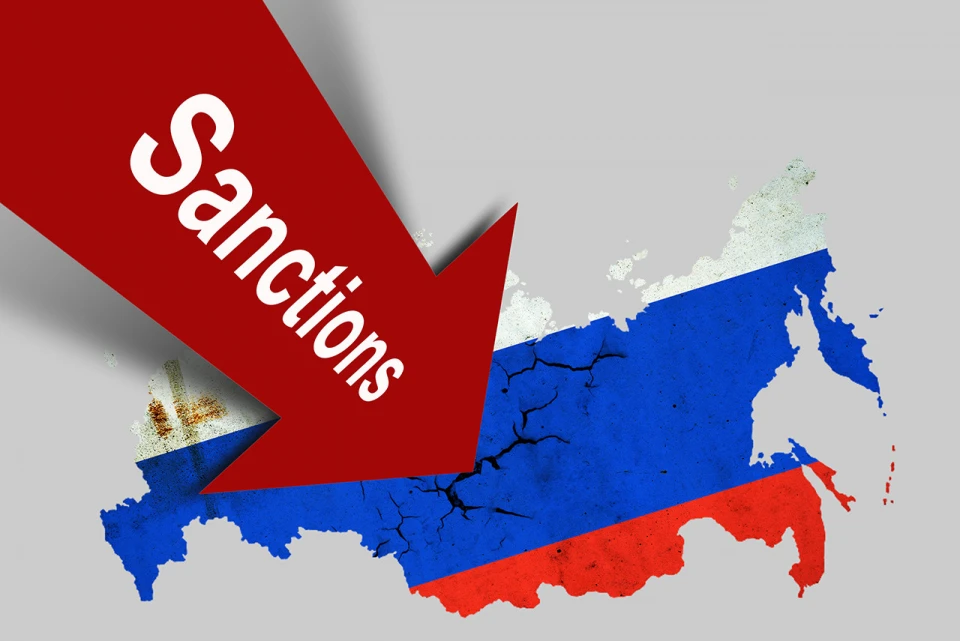
Trump’s ultimatum states that Russia must cease hostilities and reach a peace agreement with Ukraine under terms he described as “fair.” If that doesn’t happen, the U.S. will impose 100% secondary tariffs on goods and services from countries that buy Russian oil and gas (such as China, Brazil, and India). According to Washington, this could have a significant economic impact on Russia, which heavily relies on energy exports.
“The sanctions will be very, very powerful and very bad for the countries involved, and I hope we don’t have to pull that string and maybe we won’t, we’ll see,” Trump said in his typical style.
Republican Senator Lindsey Graham put it more bluntly, saying Trump is going to "whoop Putin’s ass.”
However, the contents of a “fair deal” between Ukraine and Russia remain vague. Trump previously claimed that his intervention had allegedly made Putin abandon ambitions to seize all of Ukraine, but the specific terms have not been publicly disclosed. Some critics suggest that this ultimatum may merely be Trump’s attempt to save face after failing to quickly end the war. Accordingly, Trump’s new rhetoric on Ukraine may be more about optics than genuine support, according to Foreign Policy.
After all, 50 days is a long time and is effectively seen by Russia as an extension of its “window of opportunity” to escalate fighting and strengthen its position ahead of possible real negotiations later this year. During this time, Putin could capture more territory to complicate the peace process. Moreover, Trump’s ultimatum lacks clear enforcement mechanisms beyond economic sanctions, which raises doubts about its effectiveness. Russia has been living under the world’s most extensive sanctions regime for years—and has learned how to circumvent them.
The Kremlin’s response
Russia responded to the ultimatum with demonstrative indifference. Deputy Chairman of the Russian Security Council Dmitry Medvedev called Trump’s statement “decorative” and said Russia would not react to such threats. This mirrors previous rhetoric from Russian officials, who routinely ignore Western ultimatums and insist on their own terms.
Russian Foreign Minister Sergey Lavrov said the EU was “trying to drag the U.S. into a sanctions spiral,” but dismissed Trump’s warning as just another ultimatum.
“Fifty days — it used to be 24 hours; it used to be 100 days; we’ve lived through all of that. We already have unprecedented sanctions. We’re coping. I’m sure we’ll continue to cope,” he said.
According to the BBC, the Moscow Stock Exchange even rose by 2.7% after Trump’s ultimatum, because “Russia had been preparing for even harsher sanctions from President Trump.”
The advantages of improving ties with the U.S. are outweighed by Putin’s maximalist military goals, The Guardian notes.
“Vladimir Putin appears unfazed by Donald Trump’s first tangible break with Moscow – a sign, analysts and Kremlin insiders say, that the Russian leader had long anticipated a deterioration in relations from the apparent improvement at the beginning of Trump’s second term,” the outlet reports.
Reactions from the EU and Ukraine
Trump’s ultimatum sparked skepticism not only in Moscow, but also in Kyiv and among Ukraine’s Western allies. European leaders consider it insufficiently tough. They fear the 50-day window will give Russia time to regroup its forces rather than bring real progress toward ending the war.
“On one hand it is very positive that President Trump is taking on a strong stance on Russia. On the other hand, 50 days is a very long time if we see that they [Russia] are killing innocent civilians,” said EU foreign affairs representative Kaja Kallas.
Ukrainian President Volodymyr Zelenskyy also expressed concern, noting that every one of those 50 days could bring more destruction and casualties for Ukrainians. He emphasized the need for serious leverage to pressure Putin, who, in his view, is unwilling to compromise. Still, Zelenskyy now routinely thanks Trump first in public statements, recognizing that Trump is finally saying what Ukraine has long wanted to hear. According to The Washington Post, Zelenskyy even reorganized his government to improve relations with the U.S. — particularly to advance the so-called “critical minerals” agreement.
At the same time, both European and Ukrainian officials acknowledge that Trump’s tactical shift regarding Putin is significant. Soon after issuing the ultimatum, Trump unveiled a new plan: the U.S. will manufacture weapons that NATO countries in Europe will purchase and transfer to Ukraine. This plan, he claims, will provide Ukraine with “a massive amount of military equipment,” including 17 Patriot systems. However, the announcement caught European allies by surprise — Reuters reports they only learned about it during Trump’s speech. The Pentagon also publicly distanced itself from the announcement.
Moreover, Trump said the Patriot systems would be delivered to Ukraine very quickly. But it later emerged that he most likely meant 17 launchers, not full Patriot batteries. Major General Vadym Skibitskyi, deputy head of Ukraine’s military intelligence, clarified this. Each Patriot system consists of 5–6 launchers — so Trump was talking about three batteries. Skibitskyi noted that Germany had already committed to supplying two systems, and the Netherlands one — but only on the condition that they receive replacements within 6–8 months. So U.S. involvement is essential.
NATO’s Supreme Allied Commander Europe has confirmed that preparations for transferring Patriot systems to Ukraine are underway — but again, with no specific timeline.
Another explanation for Trump’s claim involves Switzerland, which is now being asked to give up its turn to receive five Patriot systems ordered years ago. These systems, still under production by Raytheon, will be redirected to Ukraine at Germany’s expense — but won’t be ready until early next year. Even then, the Swiss contract originally scheduled delivery through 2028, so Ukraine’s full acquisition could take a long time.
Military expert Ivan Kyrychevskyi told Espreso TV that the best option for Ukraine would be to purchase Patriot systems with the $10 billion allocated by the U.S., rather than redirect systems already ordered by Switzerland. The Swiss systems were intended to protect vital NATO logistics routes, and their diversion could have negative consequences.
“In principle, we’re in an uncomfortable dilemma where Trump wants to arm Ukraine at Europe’s expense, and as a country, we’re showing no initiative. And the coincidence of Trump’s 17 launchers and Switzerland’s 17 launchers does raise eyebrows. It seems even the Americans aren’t quite clear when they talk about systems vs. launchers,” he added.
Meanwhile, Trump’s mention of military aid for Ukraine has drawn criticism from his own supporters, who argue “this isn’t our war.” Before the election, Trump promised he wouldn’t be like Biden and send billions to “the best salesman in the world,” as he called Zelenskyy. Yet Trump insists his NATO alliance plans are not a betrayal of his “America First” policy.
What do experts say about Trump’s initiative?
Austrian military expert Markus Reisner told DW that Trump’s shift shouldn’t be taken too optimistically — because the 50-day timeline is too vague and the decisions are not clearly defined.
He mention that If you listen carefully to Trump, first of all, he only promised defensive weapon systems. As for offensive weapons, he made no decisions — just said he’d consider it. But 50 days is a very long time; a lot can happen.
There were reports that in a phone call, Trump hinted to Zelenskyy that Ukraine should go on the offensive — and even asked whether Ukraine could strike Moscow. But later, the U.S. president publicly said: “Zelenskyy shouldn’t attack Moscow.”
According to White House officials, Trump believes Russia is winning the war — it’s just a matter of time because Russia has a larger economy and population. Thus, his goal is to stop the killing. Everything else — except favorable deals — matters little to him.
Journalist Vitaliy Portnikov also links Trump’s ultimatum to money. The aid approved under Biden is running out.
“Trump is forced to determine his next steps in the Russia–Ukraine war. Clearly, he wants to end the war — even if it’s just a ceasefire. And he wants to do it without making new decisions, especially financial ones. That’s why his strategic goal is to convince Putin to stop the fighting before the last of the Biden-era aid is used up. Only a few billion dollars remain — and they’ll likely be spent during the next 50 days,” Portnikov writes.
He adds that the 50 days are not so much about escalation in Ukraine as they are about a possible U.S.–Russia escalation.
Some believe Trump might actually impose sanctions, as he promised. He kept his word with Iran, launching attacks on its nuclear program alongside Israel.
“By the deadline, Russia must feel that it’s not the only one that can bomb another country’s capital,” said former Ukrainian foreign minister Volodymyr Ohryzko on Radio NV, hinting that Ukraine may be stockpiling weapons for a major strike to pressure the Kremlin and reassure the U.S.
However, as CNN experts note, an American blow to Russian oil could drastically raise global energy prices — something Trump voters, who expected cheap gas, would not appreciate.
According to the International Energy Agency, Russia earned about $192 billion last year from oil sales. Cutting that off might be effective — but also costly, and not just for Moscow. Global oil prices could soar if over 7 million barrels of Russian oil per day suddenly disappear.
That’s why, as Hudson Institute senior fellow Luke Coffey notes, Trump doesn’t actually know how to force Putin to end the war. The 50-day deadline is just another Trump scare tactic that doesn’t faze the Russians — but it helps Trump appear tough in the media amid Putin’s own ultimatums.
That may be why Trump recently said that while he’s disappointed in Putin, he’s “not done with him” — meaning he’s still willing to talk. A personal meeting may happen as early as September, possibly with China’s leader attending as well. In that light, the game of extending the deadline by another 2–3 weeks — or issuing a new “by the end of the year” ultimatum — could continue in late August.
Meanwhile, as Americans wait, the Russians continue their offensive and carry out massive airstrikes. Ukrainians are left to deal with it all — day after day — in a war that, sadly, still shows no end in sight.




- News