


Russia expands military bases near NATO borders: preparing for war or strategic pressure?



Russia is actively expanding its military presence near the borders of NATO countries — Finland, Norway, and the Baltic states. These actions raise concerns about the potential threat to the Alliance and the new war that Putin might be planning
Content
1. Expansion of Russian military infrastructure: what we know
2. Statements about the threat of an attack on NATO
3. Implications of Russia's military expansion near NATO borders
4. Russia’s potential and likely new targets
Recently, The Wall Street Journal reported on Russia's expansion of military bases and infrastructure near the Baltic Sea. This has raised concerns among Western countries about the Kremlin's intentions. In the context of the ongoing Russian-Ukrainian war, these actions are seen as potential preparation for greater confrontation with NATO. However, experts are divided: some view it as preparation for full-scale war, while others see it as part of Russia's typical hybrid strategy.
Espreso will provide more details on the potential threats posed by Russia's infrastructure build-up near NATO's northeastern borders.
Expansion of Russian military infrastructure: what we know
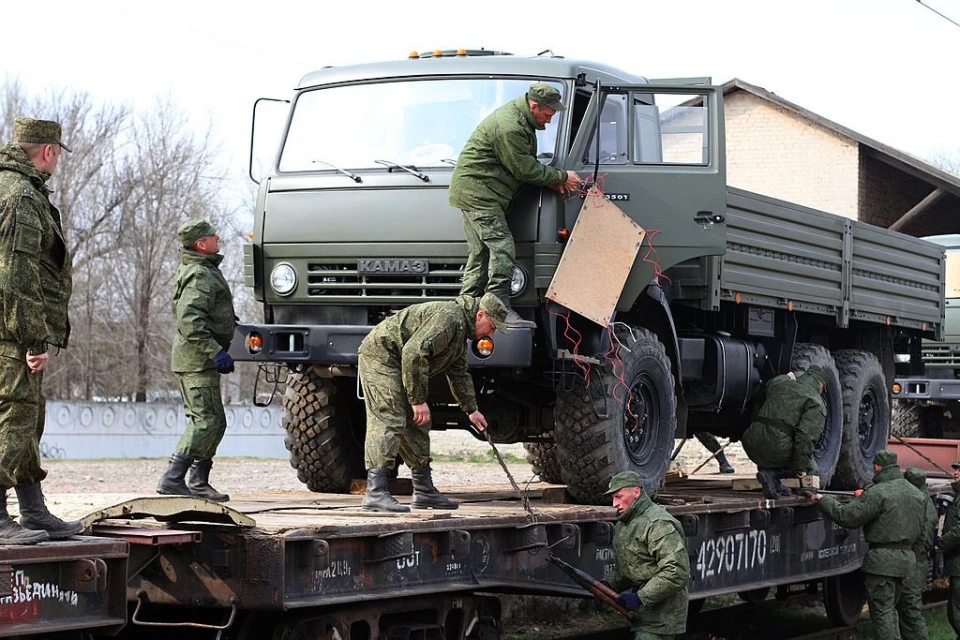
Satellite images provided to The Wall Street Journal by the U.S. company Planet show that in recent years, Russia has been actively expanding its military presence in border regions, particularly in the Leningrad Military District, which borders Estonia, Latvia, and Finland, as well as in the Murmansk area near Norway.
In Petrozavodsk, about 160 km from the Finnish border, a new army command is being established, which over the next few years is expected to lead tens of thousands of troops. Western intelligence reports that small brigades in these regions are being expanded into divisions with up to 10,000 personnel. In addition, Russia is laying new rail lines along its borders with Finland, Norway, and Estonia, upgrading arsenals, and constructing barracks and training grounds.
These actions are accompanied by increased military production and recruitment. According to U.S. intelligence estimates, Russia is enlisting around 30,000 new recruits each month, while European sources suggest the figure could be as high as 40,000, surpassing last year's numbers. The new units deployed near NATO borders are being equipped with modern gear, unlike the outdated Soviet-era equipment mostly used on the Ukrainian front.
It's also worth noting that when Finland joined NATO in 2023, Russia began expanding military bases along their shared border, The Telegraph reported. At the Alakurtti base, located about 50 km from the border, new storage facilities for armored vehicles were built, each capable of housing up to 40 units.
Overall, this year, Russia has increased its military spending to over 6% of GDP, up from 3.6% before the war in Ukraine. By comparison, in 2024, the U.S. spent 3.4% of its GDP on defense, and EU countries averaged 2.1%.
Statements about the threat of an attack on NATO
Western politicians and intelligence agencies have repeatedly expressed concerns about Russia's aggressive intentions. For example, a February report by Danish intelligence stated that Russia could launch a large-scale war in Europe within five years if it perceives NATO as weak. Similar assessments were voiced by German Defense Minister Boris Pistorius and the head of German intelligence Bruno Kahl, who pointed to 2029–2030 as a potential timeframe for an attack. In Finland, officials say Russia has long been rehearsing scenarios for an assault on Finland, the Baltic states, and Norway. Meanwhile, the Netherlands is preparing for a possible conflict with Russia “a year after the war in Ukraine ends.”
Ukrainian President Volodymyr Zelenskyy has repeatedly emphasized that if Ukraine loses the war with Russia, it could trigger further Kremlin aggression against the Baltic states or Poland, potentially sparking a global conflict between NATO and Russia. NATO Secretary General Mark Rutte also recently called Russia a long-term threat to the Alliance.
However, there are skeptical voices, particularly regarding U.S. President Donald Trump. While his stance on Russia has recently shifted toward tougher rhetoric, as recently as February, he stated that he does not consider Russia a threat to NATO or Europe.
“When this gets done [when a peace deal between Ukraine and Russia is reached], it’s done, they’re going to all want to go home and rest. I don’t see it happening. And we’ll make sure it doesn’t happen. Not going to happen, but we’ll make sure it doesn’t happen,” emphasized the U.S. President in March, responding to concerns from some NATO allies who fear a possible Russian attack on their territory.
Meanwhile, U.S. intelligence believes that Russia is avoiding direct military conflict with NATO, preferring asymmetric actions that stay below the threshold of war, such as sabotage and hybrid attacks.
Implications of Russia's military expansion near NATO borders
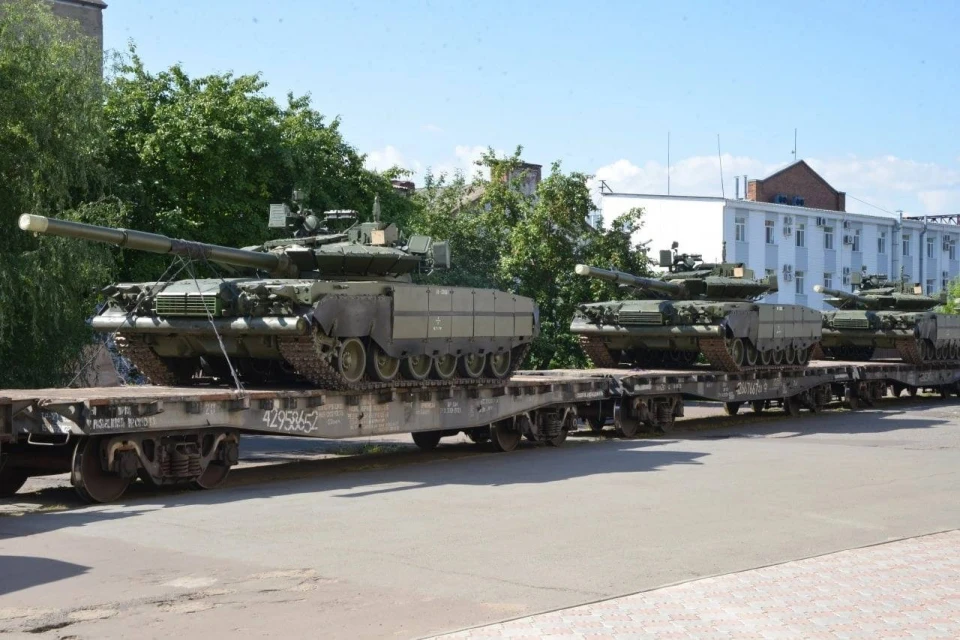
The construction of Russian military infrastructure near NATO borders likely serves several interconnected goals: demonstrating strength, exerting strategic pressure, and gradually expanding the Kremlin’s sphere of influence through militarization, particularly effective against weaker or more vulnerable neighbors.
For example, analysts at the Institute for the Study of War (ISW) believe that Russia is conducting a large-scale reorganization of its Armed Forces in preparation for a potential conflict with NATO. This includes the formation of new army corps, divisions, and brigades, as well as expanding its military presence in Belarus, where tactical nuclear weapons and advanced air defense systems have already been deployed.
Therefore, the expansion of bases, modernization of railways, and formation of new divisions may indicate the buildup of offensive capabilities. The construction of additional rail lines facilitates the rapid deployment of troops and equipment, crucial for offensive operations. Meanwhile, the deployment of modern equipment to new units may signal the Kremlin’s intention to create combat-ready forces for a potential clash with NATO.
On the other hand, ISW also notes that Russia employs hybrid tactics, such as cyberattacks and GPS jamming, to destabilize the situation in Europe.
Expert Fiona Hill, former adviser to U.S. President Donald Trump on Russia, warns that despite the weakening of Russia’s conventional military due to its prolonged war with Ukraine, Vladimir Putin remains a serious threat to the West. She emphasizes that Russia actively relies on nontraditional methods of warfare, including sabotage and attacks on critical infrastructure.
Russia has extensive experience using hybrid tactics such as cyberattacks, disinformation, and provocations, as seen in Ukraine. Therefore, the troop buildup near NATO’s borders may be part of an intimidation strategy to sow panic among Alliance members. It may also be an attempt to test NATO’s unity through provocations in border areas.
Of course, a third explanation cannot be ruled out: this militarization might be aimed at a domestic audience and used to sustain Russia’s economy. Border region militarization may serve as a political tool to project Putin’s strength internally. Additionally, infrastructure construction stimulates the economy by creating jobs and awarding new contracts to loyal companies.
Russia’s potential and likely new targets
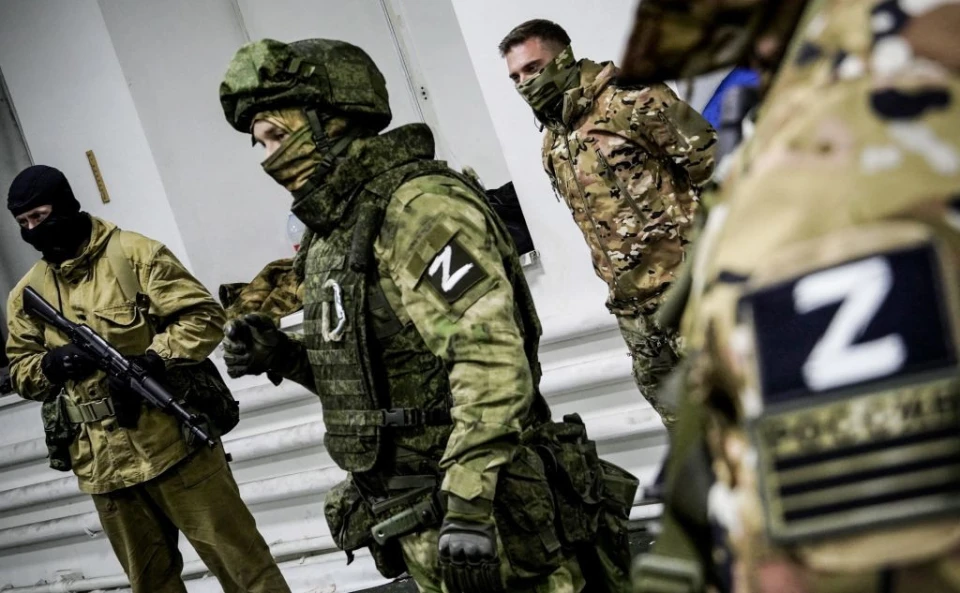
Despite heavy battlefield losses in Ukraine, unseen since World War II, Russia’s military potential remains significant, though limited compared to NATO. According to Western sources, Russia aims to increase its active military personnel to 1.5 million this year, as a large portion of its forces are engaged in Ukraine. While economic sanctions and dependence on imported technologies hinder the rapid buildup of modern weaponry, they do not halt it, especially not Russia’s mobilization efforts.
The Economist writes that Russia may launch aggressive actions against NATO countries once its army is rebuilt, as for Putin, it’s a matter of survival. Over his 25 years in power, he has initiated five wars.
“There is currently no concrete intelligence indicating that Russia intends to attack NATO. But intentions can change. For Putin, war is linked to prolonging and legitimizing his rule,” the outlet notes.
For a new large-scale conflict, Russia would likely choose a target where it could exploit local superiority and avoid a massive NATO response. As with the full-scale invasion of Ukraine, using Belarusian infrastructure (and possibly troops) could give it an advantage near the Baltic states' borders. These countries are vulnerable due to geography and their limited armed forces. As Delfi reports, citing a report by the Military Intelligence and Security Service (MIDD), which assesses Russian military activity near Latvia, Russia has recently increased surveillance of NATO activities in the Baltic Sea and is engaging in shows of force and provocations.
Estonia is often mentioned by Russian propagandists as a potential target due to its significant Russian-speaking minority, which Russia could use to justify aggression. Western intelligence suggests that Russia might try to capture a small area, such as Narva in Estonia, to test NATO's response.
Veteran of the Russian-Ukrainian war, reserve Major Oleksiy Hetman, noted in an interview on Radio NV that it is currently unclear whether NATO would invoke Article 5 in such a case. A similar situation could arise if a private military company enters one of the NATO countries, from which Russia could quickly disassociate itself.
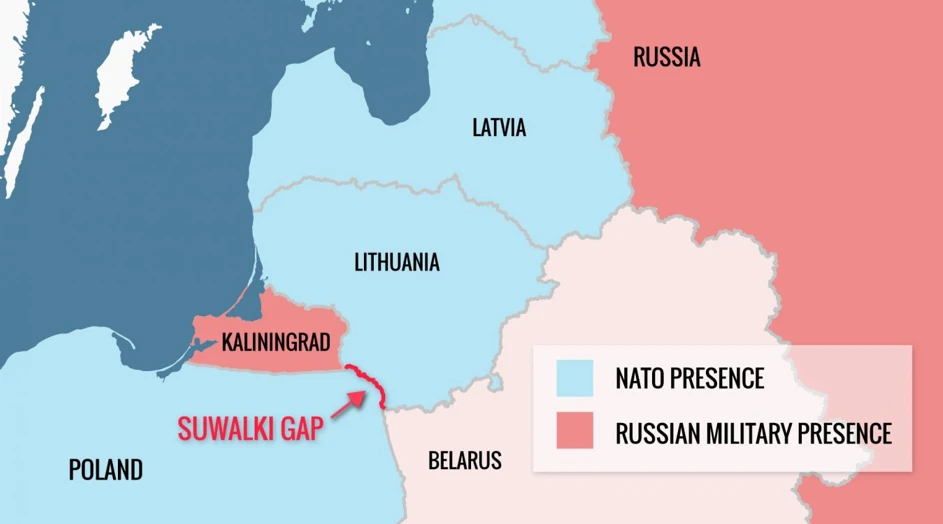
Another possible direction for Russian aggression is the Suwałki Gap — a narrow strip of land between Poland and Lithuania, which could connect the Kaliningrad region with Belarus. Capturing this corridor would allow Russia to land-block the Baltic States from the rest of NATO and significantly strengthen its presence in the isolated Kaliningrad region. As a result, Lithuania is strengthening the defense of the Suwałki Gap. Vilnius plans to modernize 113 km of roads, repair eight bridges, and protect against Russia's attempts to jam GPS. NATO is also preparing for a potential Russian invasion of the Baltic states, so Estonia, Latvia, and Lithuania are heavily fortifying the 965 km border with Russia and Belarus as part of the Baltic Defense Line. This includes 1,000 concrete bunkers, 600 of which are planned for Estonia. They will be supplemented with trenches, anti-tank ditches, ammunition depots, and supply storage.
Meanwhile, Russia and Belarus plan to conduct joint military exercises, Zapad-2025, on Belarusian territory this year. During this period, the threat will not only rise for Ukraine but possibly also for the security of the Suwałki Gap.
President Zelenskyy noted that Russia is preparing something in Belarus this summer.
"Look at Belarus – this summer, Russia is preparing something there under the cover of military exercises. This is how their new attacks usually start. But where this time? I don’t know. Ukraine? Lithuania? Poland? God forbid! But we all need to be ready. All our institutions are open to cooperation," Zelenskyy said.
Regarding Finland, the chances of an attack are low. Although after Finland's accession to NATO, Russia has increased its rhetoric and military activity near its borders, the long border (over 1,300 km) presents logistical challenges. Moreover, a full-scale attack is unlikely due to Finland's strong defense and NATO's support. The Russians also remember the lesson the Soviet army learned during the Winter War, when they lost hundreds of thousands of soldiers, but the outcome was limited.
Instead, the Arctic region, where Norway borders Russia, is strategically important due to resources and sea routes. Russia may have already deployed strategic nuclear bombers on the Kola Peninsula, which could indicate preparations for operations in this region. However, these actions seem more like intimidation and a demonstration of strength without a real military confrontation.
Analysts generally agree that in the event of high risks of a full-scale war, Russia would likely resort to its usual hybrid methods – ones it has already used in Ukraine. These could include local provocations on the border, airspace violations, cyberattacks, or sabotage without directly escalating into a military conflict. For example, last year, Russia was repeatedly suspected of carrying out sabotage against underwater infrastructure in the Baltic Sea.




- News