


Unstoppable and unjammable: What we know about Ukraine’s Khyzhak REBOFF drone



One of the key innovations on the front lines in 2024 was the use of fiber optic drones. The Ukrainian military says they are not a cure-all or a “super weapon,” but they can be very useful in certain situations. Overall, they help expand the Ukrainian Defense Forces' arsenal and tactical options
Contents
1. What are fiber-optic drones
2. What is the Khyzhak (Predator) REBOFF Predator"
3. Tactical and technical characteristics of the "REBOFF Predator"
4. Modifications of the "REBOFF Predator"
5. How do the "REBOFF Predator" drones work
6. Prospects for the "REBOFF Predator" drone
What are fiber-optic drones
The military began using fiber-optic drones because traditional drones were becoming easier to counter. In the early stages of Russia’s full-scale invasion, medium-class strike drones like the Bayraktar were effective. Later, FPV drones were used widely, but electronic warfare systems began targeting them on a large scale. Even though drone makers switched to new frequencies, electronic warfare quickly adapted.
Today, the front line is saturated with electronic warfare systems. That’s why troops need fiber-optic drones, which are controlled not by radio signals but by light signals. These signals travel through a thin optical fiber. An electric signal is converted into light, sent along the cable, and then converted back into electricity by a receiver. The connection only breaks if the cable is physically cut, allowing the drone to fly in areas with heavy electronic warfare without losing control.
From a distance, it looks like the drone is connected to the operator by a thin thread. As the drone flies, the fiber-optic thread unwinds from a reel. The drone can fly as far as the thread allows.
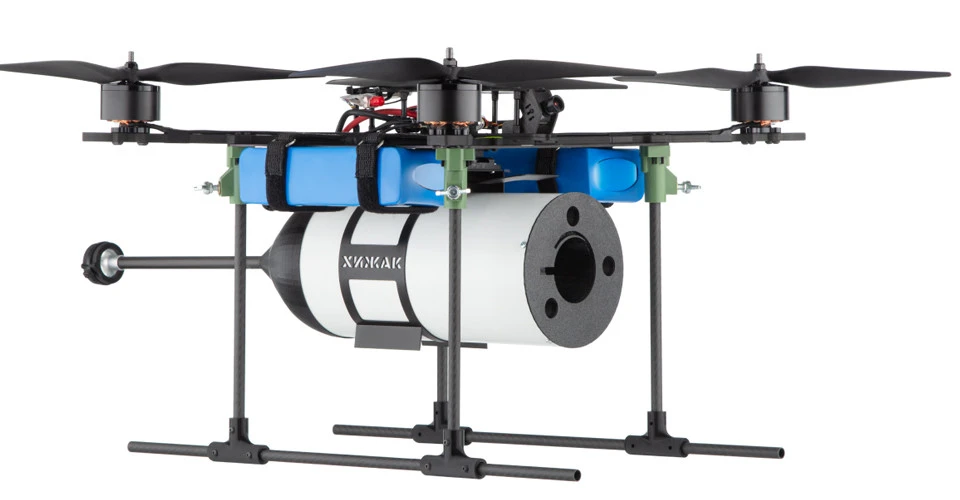
Drone Khyzhak (Predator) REBOFF
photo: 3dtech.ua
What is Khyzhak (Predator) REBOFF
The Khyzhak (Predator) REBOFF is a fiber-optic drone made by the Ukrainian company 3DTech. Its name reflects its intended aggressive use on the battlefield, while the "REBOFF" prefix highlights its resistance to electronic warfare.
The drone was successfully tested in combat in November 2024. By May 2025, it had completed the official codification process.
"3DTech is the first Ukrainian company to successfully complete the codification of its Predator REBOFF fiber-optic drone line with the Ministry of Defense," the Ukrainian defense ministry's website stated. "These drones use fiber-optic reels ranging from 10 to 20 km, making them effective for various combat missions."
The development of Ukrainian fiber-optic drones began in 2023 in response to requests from the military.
“During testing, the drones successfully crossed water obstacles (rivers and lakes) and flew over power lines at speeds up to 143 km/h. In 2024, the first test batches were delivered to the army and showed strong potential for scaling this technology in the war with Russia,” the ministry reported.
Today, the company has created a line of five fiber-optic drone models. They are already in use by combat brigades and are proving effective on the front lines.
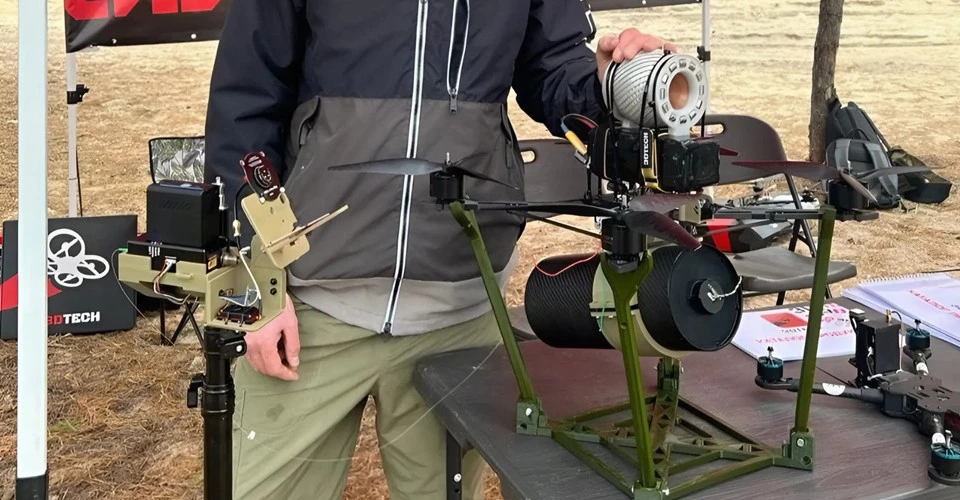
Tactical and technical characteristics
Since there are only five modifications of the codified "predators", their parameters differ somewhat from each other.
- Frame - 10 to 13 inches,
- Combat load - 1.5 to 2.2 kg,
- Maximum distance - 10 to 20 km,
- Endurance - 12 to 25 min,
- Maximum speed - up to 143 km/h.
Modifications of the Khyzhak (Predator) REBOFF
- Predator REBOFF 10 Lite 10KM
This drone was designed for urban combat and defensive operations. Its effective range is about 8–9 km, slightly less than the stated 10 km. Pilots usually leave 10–20% of the fiber for maneuvering, and weather conditions also affect performance.
According to the developers, the limited range is actually an advantage. A shorter distance reduces the risk of the fiber being cut. The drone can carry a combat load of 1.8 kg.
- Predator REBOFF 10KM
The classic Predator drone carries the heaviest payload in the family—2.2 kg. It has a combat radius of up to 10 km and is designed to repel enemy attacks, fight on the front line, and operate in urban battles.
- Predator REBOFF 10 Lite 15KM
This budget model performs well on the front line. It works for attacking enemy equipment and for indoor maneuvers. Adding 5 km of fiber reduced its payload by only 300 grams. With a 1.5 kg warhead, it can destroy armored vehicles or personnel with striking elements.
- Predator REBOFF 15KM
“In combat, the operator can stop the drone near enemy supply lines and wait in ambush for hours until a high-value target appears,” explains the Ukrainian Ministry of Defense website.
- Predator 13 REBOFF 20KM
This drone has two battery packs, which improve balance, maneuverability, and control. It is ideal for destroying front-line infrastructure like enemy guns, mortars, and electronic warfare systems. Its 20 km fiber coil makes it especially effective.
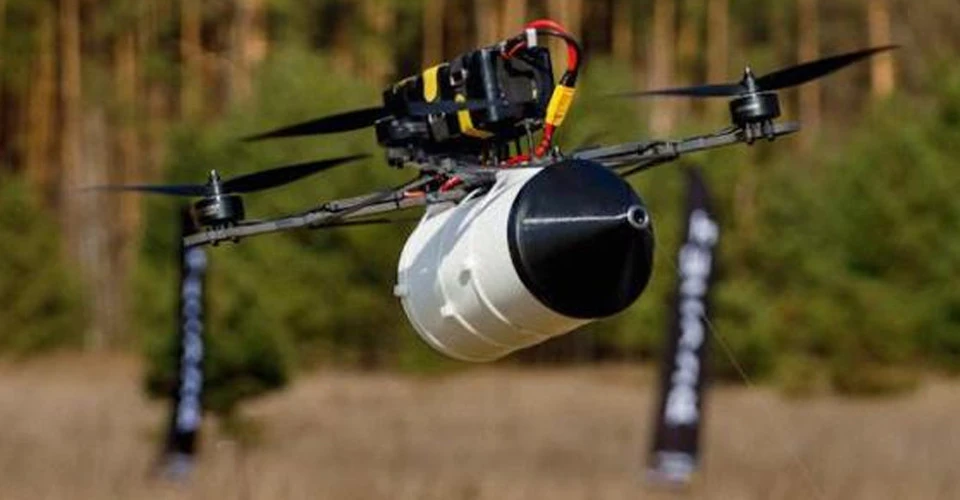
How do Predator REBOFF drones work
The entire Predator drone line flies at altitudes up to 500 meters and speeds up to 70 km/h. However, during tests, the drones unwound their fiber coils at speeds up to 143 km/h.
“Based on military needs and combat experience, the company equipped all Predator REBOFF drones with special quick fasteners. This lets users assemble and disassemble the drones without ties. Each UAV has legs for safe takeoff, landing, and waiting in ambush,” the Ministry of Defense website reports.
If needed, REBOFF coils can connect to 10- and 13-inch drones from other manufacturers.
Besides protection from enemy radio interference, the pilot gets a clearer image than with traditional FPV, said the company’s founder and CEO, Oleksiy Zhulinskyi, in an interview with Forbes. Operators no longer face signal loss over distance or the radio horizon effect.
“Some parts of the front line have rough terrain with hills, valleys, and forests, making radio-controlled drones hard to use. Fiber-optic drones solve these problems completely. The enemy usually watches the sky for drones attacking from above, but fiber-optic drones fly low and can approach targets out of sight, making them more effective and surprising,” said Oleksiy Zhulinskyi.
He also explained the strength of the fiber-optic cable. During the first test flight, a group of cyclists crossed the drone’s path and tripped over the cable — it didn’t break. However, the cable becomes fragile if tied in knots or bent at sharp angles over 45 degrees.
“Pilots need to be careful. Although our coil system reduces the risk of breaking, they must watch the cable’s stretch and avoid sharp or fast moves that could cause the propellers to cut it,” the 3DTech CEO emphasized.
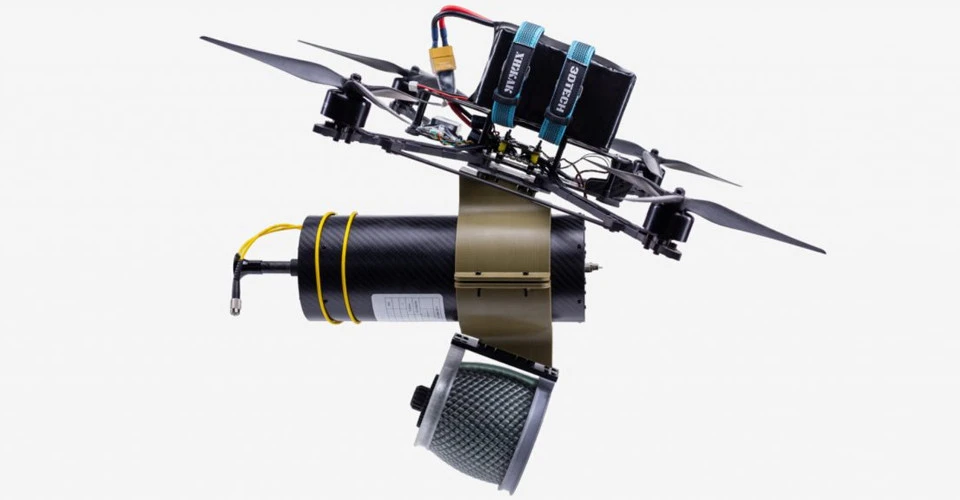
Prospects for the Predator REBOFF drone
The manufacturing company is now preparing to codify drones with coils of 25 and 30 km, which will help the Ukrainian Defense Forces effectively destroy equipment and manpower behind enemy lines. In particular, in early May, Defense Express wrote about the first Ukrainian-made 30 km coil for fiber-optic FPV drones, the serial production of which has already begun.
The article stated that the production and winding of all the company's coils is completely localized in Ukraine, and only raw materials are purchased.
"Finished Chinese coils often have factory defects that are extremely difficult to detect. Winding the coil in Ukraine allows you to control the quality of the product at all stages of production, which significantly reduces the number of breaks when used by fighters on the front line," the publication wrote.
The reviewers noted that fiber-optic drones are actively gaining popularity in Ukraine, but at the same time drew attention to the fact that most serial samples have a range of no more than 20 km, while there is a need for much longer ranges. The new coils from 3DTech are designed to correct this situation.




- News