


Ukrainka airbase: Russia’s strategic aviation mirrors Black Sea Fleet’s fate



Following the successful Spider Web Operation and Ukraine’s expanded ability to strike long-range targets with domestically produced drones and missiles, Russian strategic aviation and the Black Sea Fleet have been forced to keep as far away as possible from Ukraine’s “long arm”
Contents
1. Ukrainka air base: history and significance
2. Spider Web Operation and strikes on Russian air bases
3. Relocation of Russian aviation to Ukrainka
4. Parallel with the Black Sea Fleet — also an “escape from drones”
The Ukrainka airbase in Russia’s Amur region has become the main refuge for Russian strategic bombers. This is a clear success for Ukraine, as Kremlin aircraft now have to fly twice as far, increasing wear.
Espreso will provide more details on this distant airbase, explore whether a Spider Web 2 operation could happen, and offer comparisons with the Black Sea Fleet.
Ukrainka air base: history and significance
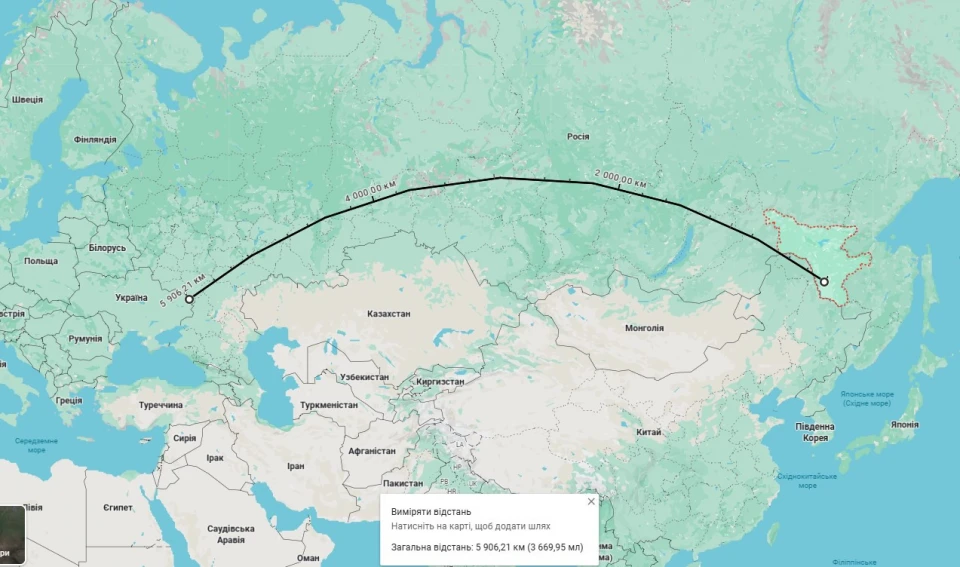
Ukrainka Air Base sits nearly 6,000 kilometers from the Ukrainian border — the same distance as from London to Washington. It is located in Russia’s Amur region, near the Chinese border and about 1,000 kilometers from North Korea and Japan.
The base takes its name from the nearby village of Ukrainka, where Ukrainian immigrants settled during the Russian Empire.
The airfield dates back to Soviet times. By the 1950s, it was already operational and one of six Soviet bases capable of servicing heavy strategic bombers. The concrete runway is 3,500 meters long.
Since the 1960s, the 251st Separate Squadron of M-4 Strategic Bomber Refueling Biplanes has been stationed at Ukrainka, providing air refueling for missions over the Pacific. In the 1980s, the base became home to the command of the 73rd Heavy Bomber Division, initially equipped with 3M aircraft and later modernized Tu-95K-22 bombers.
Today, the 326th Heavy Bomber Aviation Division is stationed at Ukrainka Air Base, including the 182nd Guards Sevastopol-Berlin and 79th Heavy Bomber Aviation Regiments. The units operate Tu-95MS strategic bombers and Tu-22M3 aircraft transferred from the Pacific Fleet.
Ukrainka is one of three main rear hubs for Russian strategic aviation, along with Engels and Belaya. Following Ukraine’s recent successes, the base has become a key element of Russia’s long-range strike capabilities, hosting Tu-95MS bombers equipped to carry cruise missiles, including the Kh-101, which Russia uses against Ukraine.
Its remote location makes the base largely out of reach for direct Ukrainian attacks. The most advanced Ukrainian system, the Flamingo, has a range of 3,000 kilometers. Still, experts note that Ukrainka is not entirely safe from potential strikes.
Spider Web Operation and strikes on Russian air bases
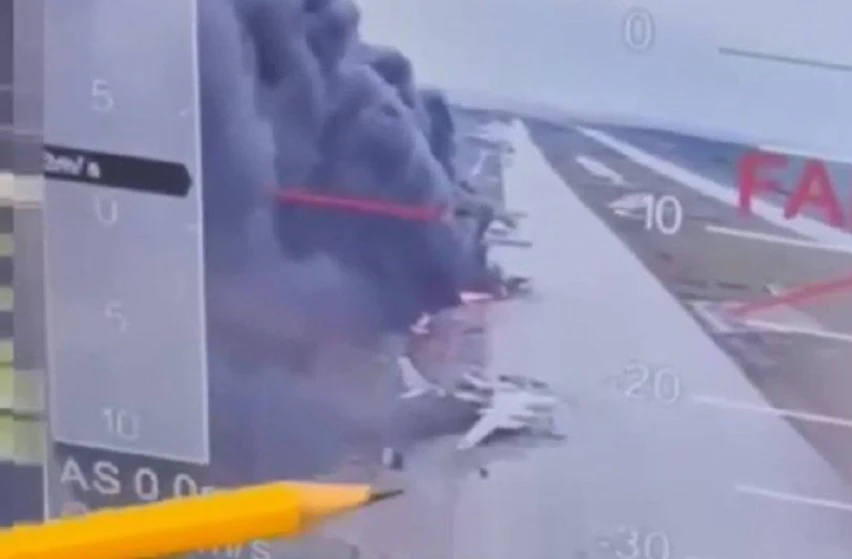
On June 1, the Security Service of Ukraine (SBU) carried out a unique operation called Spider Web to strike Russian strategic aviation. Ukrainian drones attacked four Russian air bases: Belaya in the Irkutsk region, Olenya in the Murmansk region, Diagilevo in the Ryazan region, and Ivanovo in the Ivanovo region.
The SBU reported that 41 aircraft were hit, including Tu-95MS, Tu-22M3, and A-50 models — about 34% of Russia’s strategic cruise missile carriers. The estimated value of the destroyed aircraft exceeds $7 billion.
The operation took more than 18 months to prepare. Its logistics were highly complex: FPV drones were transported into Russia hidden in mobile wooden houses on trucks and remotely launched for the strikes. The attack on Belaya marked the first Ukrainian drone strike in Siberia, while the strike on Olenya targeted an object hosting aircraft capable of carrying nuclear weapons for the first time.
It is important to note that the Ukrainka air base was also one of the targets of the Spider Web Operation. However, the strike on it failed because a truck carrying drones caught fire on its way to the airfield, which then detonated. This means that in the future it may well be in the crosshairs of Ukrainian forces again. After all, even the Far East is no longer a guarantee of security for well-planned operations involving modern unmanned technologies.
“Ukraine is responding to Russian attacks on our energy facilities and will continue to do so. But we really want this war to end. But no one will simply endure in the dark," Ukrainian President Volodymyr Zelenskyy recently said during a meeting with Slovak Prime Minister Robert Fico, hinting at new long-range strikes if Russia continues to target Ukraine's energy sector.
Relocation of Russian aviation to Ukrainka
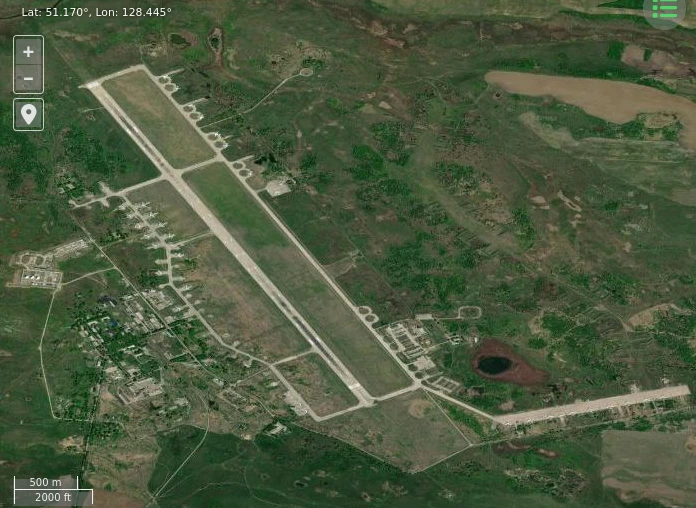
After the Spider Web Operation and previous attacks on airfields, Russia began moving its strategic bombers, including Tu-95MS, to the Ukrainka air base.
This was announced in early June by Ukrainian aviation expert and leading researcher at the National Aviation University Valeriy Romanenko in a commentary to LIGA.net. He noted that such deployment would complicate the logistics of attacks.
“They will be able to carry out demonstration actions from time to time, but they will not be able to uphold the regularity of raids like last year,” Romanenko said.
As early as mid-June, experts from AviVector's OSINT analytics wrote that Russia had begun to relocate their strategic bombers to the Far East. At that time, Russia deployed Tu-160 bombers to the Elizovo airfield in Kamchatka, Anadyr airfield in Chukotka, and Borisoglebskoye airfield near Kazan.
In early September, SBU Head Vasyl Maliuk reported that Russian forces began using fewer aircraft in their attacks, as they moved the surviving warplanes to the Ukrainka long-range air base in the Amur region.
"It's true that during missile and drone attacks they operate with fewer aircraft. They were forced to move their long-range strategic aircraft to the easternmost point - to Ukrainka airfield. Now they have to cover a long distance to get closer to the territory of Ukraine, to the launch sites. This is not profitable and unacceptable for them. This accelerates the wear and tear of aircraft parts, and they quickly lose their engine life," said Maliuk.
Simply put, Russian strategic aviation is now positioned farther from the Ukrainian front, making its logistics more complicated and increasing wear and tear on aircraft, which reduces the operational effectiveness of its strikes. The Russians no longer have a “safe base,” echoing the vulnerabilities previously exposed in the Black Sea. The Washington Post compared the Spider Web Operation to the attack on Pearl Harbor, highlighting that Ukraine has demonstrated the ability to rewrite the rules of war.
Parallel with the Black Sea Fleet — also an “escape from drones”
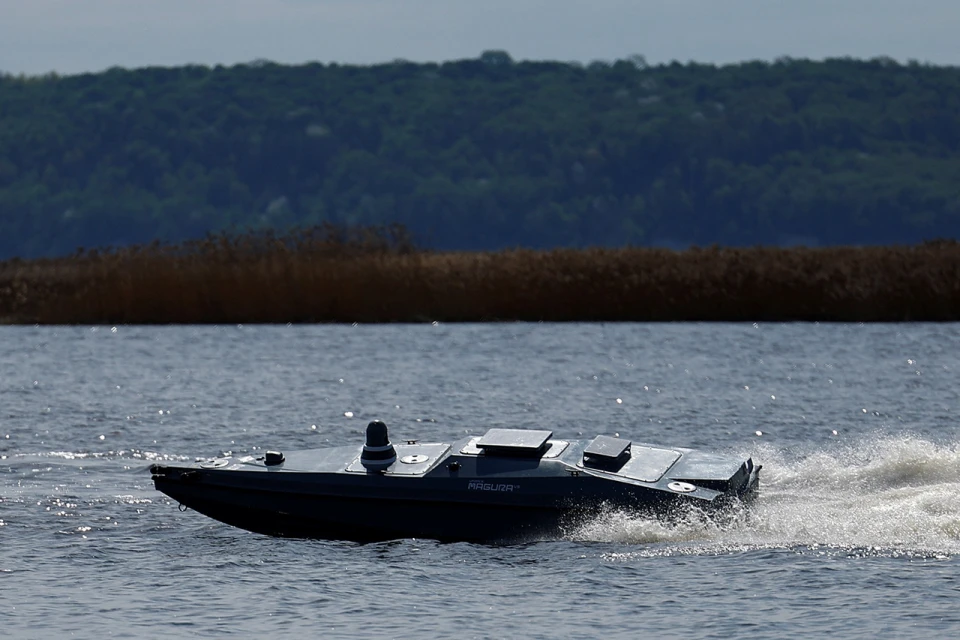 As American researcher James Rogers (Tech Policy Institute, Cornell) told Babel, drones are now a modern “Kalashnikov assault rifle” that is cheap and effective for virtually any purpose.
Ukrainian innovations in the field of maritime drones are no less significant than innovations in aerial drone technologies. The neutralization of the Russian fleet in the Black Sea thanks to drones like the Sea Baby, and later the installation of missile systems on these drones to shoot down combat helicopters — the world is watching this just as closely as it is watching the Spider Web Operation, the expert notes.
Indeed, the situation with Russian strategic aviation has much to do with the retreat of the Russian Black Sea Fleet. Ukrainian kamikaze maritime drones, along with Neptune coastal missiles, successfully drove the Russian Black Sea Fleet from Crimea to the eastern part of the Black Sea.
As noted by intelligence analyst Isaac Seitz, the Ukrainian attacks forced Russia to relocate its ships from convenient Sevastopol to much less convenient Novorossiysk, which reduced the fleet's operational capabilities.
"Ukraine's operations in the Black Sea have certainly limited Russia's naval capabilities, but the Black Sea Fleet is not inactive. As the war continues, Russia is adjusting its tactics and strategy to protect itself from Ukraine's asymmetric operations. However, for a fleet the size of Russia's, these failures are surprising and, frankly, inexcusable," says Seitz.
And this is despite the fact that Ukraine has virtually no navy of its own! This once again emphasizes the importance of the latest developments in modern warfare. Ukrainian drones demonstrate the country's ability to create innovative ways that often negate Russia's advantages in traditional weapons.
The parallel with the Black Sea Fleet shows the main point: Russia is forced to flee its key bases, which it considered unattainable for Ukraine just yesterday. Just as the Russian ships lost control of the sea around Crimea, the strategic aviation that was relocated to Ukrainka actually recognized the success of Ukraine's asymmetric responses, which are destroying the Kremlin's plans and forcing it to reconsider its narrative of “invincibility.”




- News