


January 10–19 live war map: Ukraine loses central Huliaipole, Russian forces begin bypassing Kostiantynivka



In the first two weeks of January, fighting intensity stayed above last year's average, but territorial gains dropped sharply. Russian infantry took roughly 80 square kilometers, and if this continues, it'll be the lowest monthly total in 1.5 years
One reason was the weather and frost, but last year they didn't stop the Russian forces and didn't prevent them from capturing over 500 square kilometers in January and February. There's a noticeable shortage of qualified resources among Russian forces on the front.
Huliaipole crisis deepens
For example, after a 10-kilometer breakthrough in the Huliaipole direction, the Russian army threw significantly more forces here to develop their success. While in 2024, 4% of all battles took place on the Zaporizhzhia front, in January it was as high as 23%. This direction became the second most intense after Pokrovsk by a wide margin, but both there and here, the front has practically frozen.
Very heavy fighting took place in the center of Huliaipole. Russian forces broke through to the central streets of this small town. After Russian forces previously punched a corridor from the southern part of the town and then forced the Haichur River from the north as well, Ukrainian defenders found themselves in a very precarious position. As a result, they were forced to withdraw to the western part of the town.
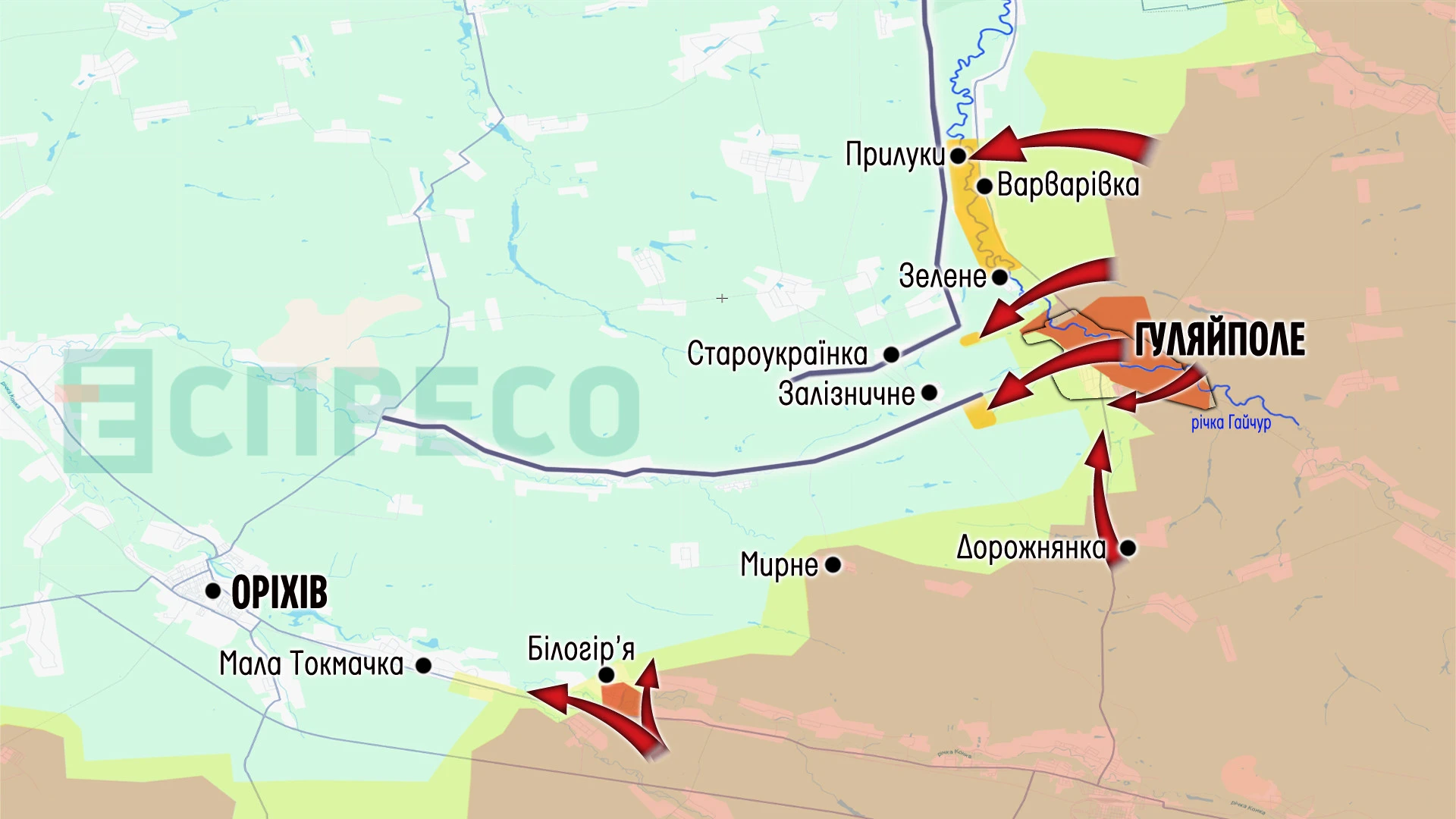
Moreover, the spread of Russian assault operations has already reached Zaliznychne and Staroukrainka, west of Huliaipole. This threatens a breakthrough into the rear of two defensive lines at once. Further Russian advancement along the road to Huliaipole will collapse Ukrainian defenses in the Myrne and Mala Tokmachka area and allow them to reach the near approaches to Orikhiv. In parallel, Russian forces intensified their offensive from the south near Bilohiria; so far their advancement here is insignificant, but this is a dangerous trend.
In addition, from Zaliznychne, Russian forces will most likely attempt to break through to Verkhnia Tersa to gain the opportunity to outflank Ukrainian defenders holding defensive redoubts running along the right bank of the Haichur northward to the fortified area in Ternovate. That's why holding Huliaipole as long as possible and preventing a breakthrough to Zaliznychne and beyond is extremely important and gives Ukraine time to prepare new defensive nodes.
Meanwhile, the Russian army is making another attempt to break through Ukrainian defensive lines, attacking head-on in the Pryluky and Varvarivka area. Here, small groups of assault troops forced the river, passed through Pryluky, and reached Ukrainian positions that were manned only by drone pilots. Russian forces briefly captured these positions, but later servicemen from the 108th Territorial Defense Brigade eliminated them. Similar breakthroughs were eliminated in Zelene and Staroukrainka. However, this is a very telling fact showing that no matter how well defensive positions are built, without personnel they become easy prey for Russian forces.
Battle for Sloviansk and Kostiantynivka
The third most intense fighting area became the combined front where the Russian army is trying to envelop both Kostiantynivka and Sloviansk from the flanks—the last major urban agglomeration controlled by Ukraine. Obviously, the battle for it will continue for a very long time, probably years, but the vectors of Russian assault operations indicate the direction in which future combat operations will develop.
In January, there were not many territorial changes here, but there are several dangerous trends. South of Kostiantynivka, the Ukrainian Armed Forces reliably hold defenses in the area of the Kleban-Byk reservoir and Pleshchiivka, so Russian forces are trying to break through from the sides.
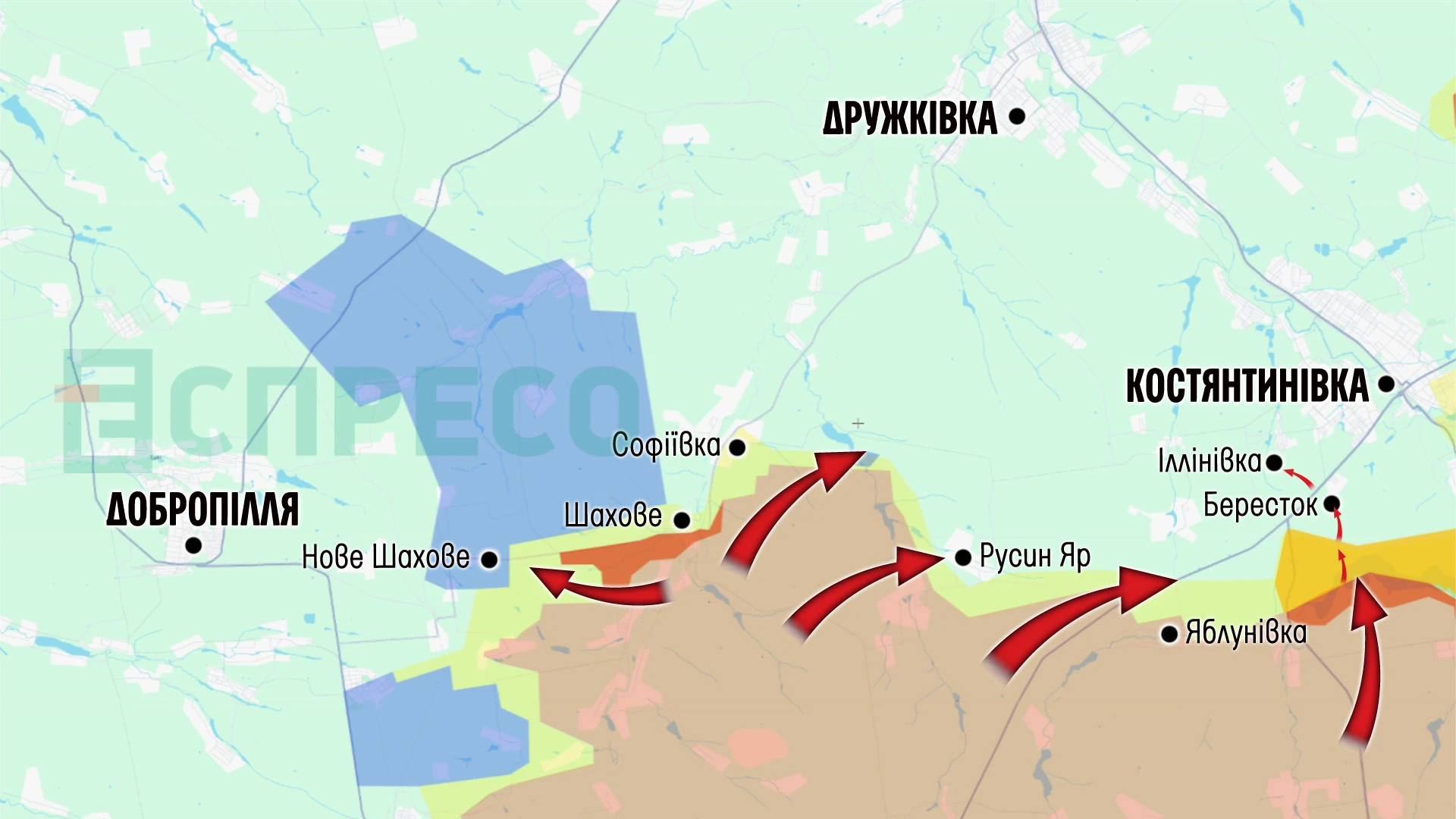
In particular, from the right flank, they continuously attack north of Shakhove toward Sofiivka and Rusynyi Yar. And although they made no progress between Dobropillia and Kostiantynivka, unfortunately they occupied part of Shakhove and advanced along the road toward Nove Shakhove and Dobropillia. Back in October and November, Ukrainian defenders liberated these territories as part of eliminating the breakthrough toward Dobropillia. Now Russian forces are gradually recapturing them again.
However, what's more dangerous is that a certain number of assault troops managed to bypass Ukrainian defensive redoubts and reach from Yablunivka to Berestok and Illinivka, which is practically a suburb of Kostiantynivka. Yes, currently the Ukrainian Armed Forces ensured they only got a one-way trip, but there will be others. So this hole in the defense needs to be closed quickly.
From the left flank, daily assaults on the outskirts of Kostiantynivka from Oleksandro-Shultyne continue. But as long as the Ukrainian Armed Forces hold positions in Stupochky and Predtechyne, these attacks don't pose a critical threat and are rather a good way of attriting Russian forces.
In Chasiv Yar, servicemen of the 24th Mechanized Brigade named after King Danylo reliably cover the Kostiantynivka rear.
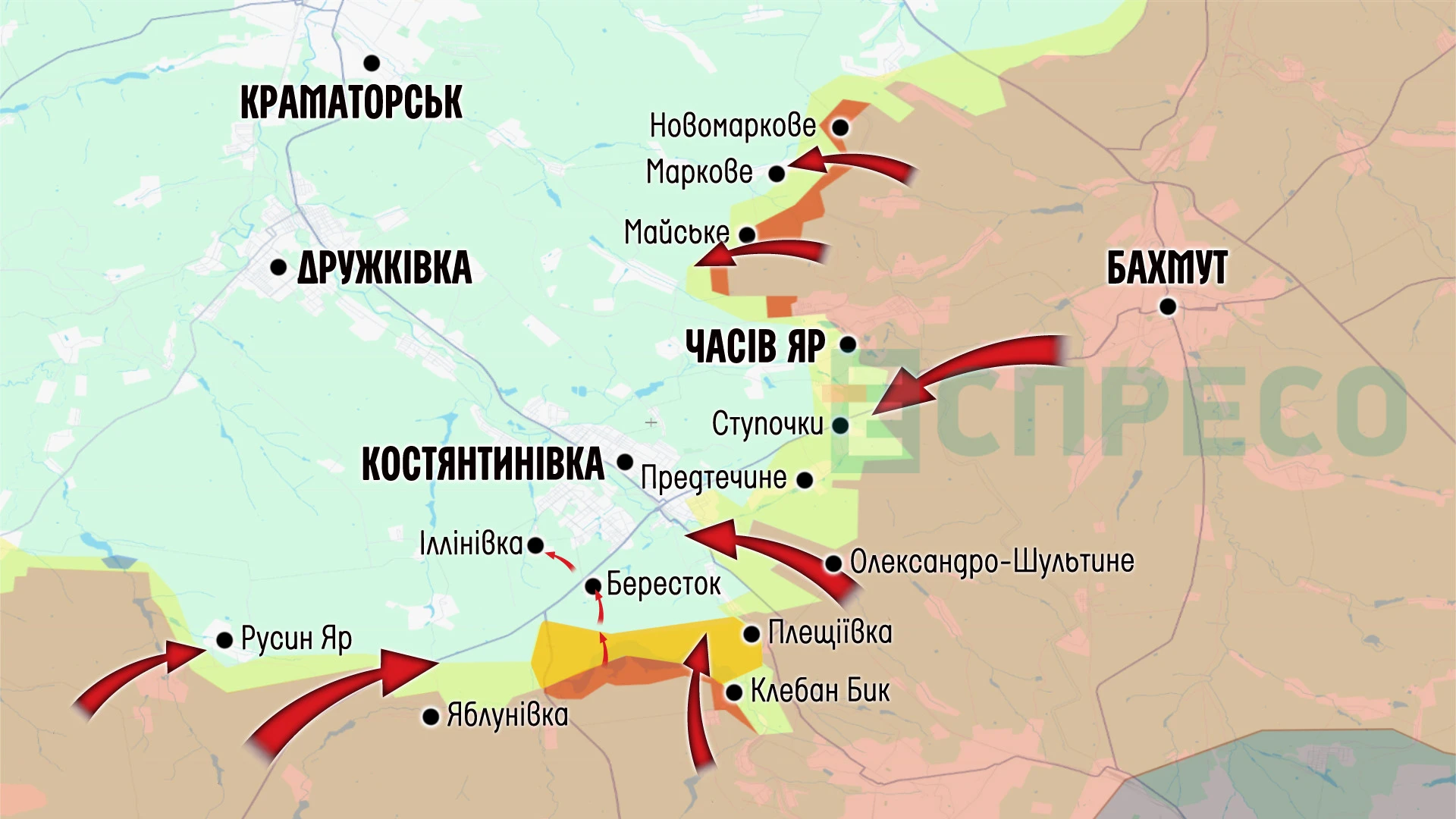
However, Russian forces are looking for gaps between brigades to squeeze through to the town from the east. In January, along a 10-km stretch of the front, they expanded their control zone by advancing less than a kilometer westward. This occurred north of Chasiv Yar in the area of Maiske and Novomarkove villages. At the same time, Ukrainian defenders conducted a local counteroffensive and recaptured another village from Russian forces—Markove. For now, the eastern flank is less of a priority for Russian forces than the western one, but here too they constantly try to improve their positions before beginning a large-scale offensive on Kostiantynivka, which will begin soon.
Meanwhile, on the Sloviansk front, Russian forces continue a slow but relentless advance along both banks of the Siverskyi Donets. After withdrawing from Siversk, Ukrainian defenders held positions in Svyato-Pokrovsk, but Russian forces first drove a wedge from the south, advancing from Kuzmynivka, and in January occupied the heights north of the village. As a result, Ukrainian troops, squeezed from both sides, will probably gradually withdraw from Svyato-Pokrovsk.
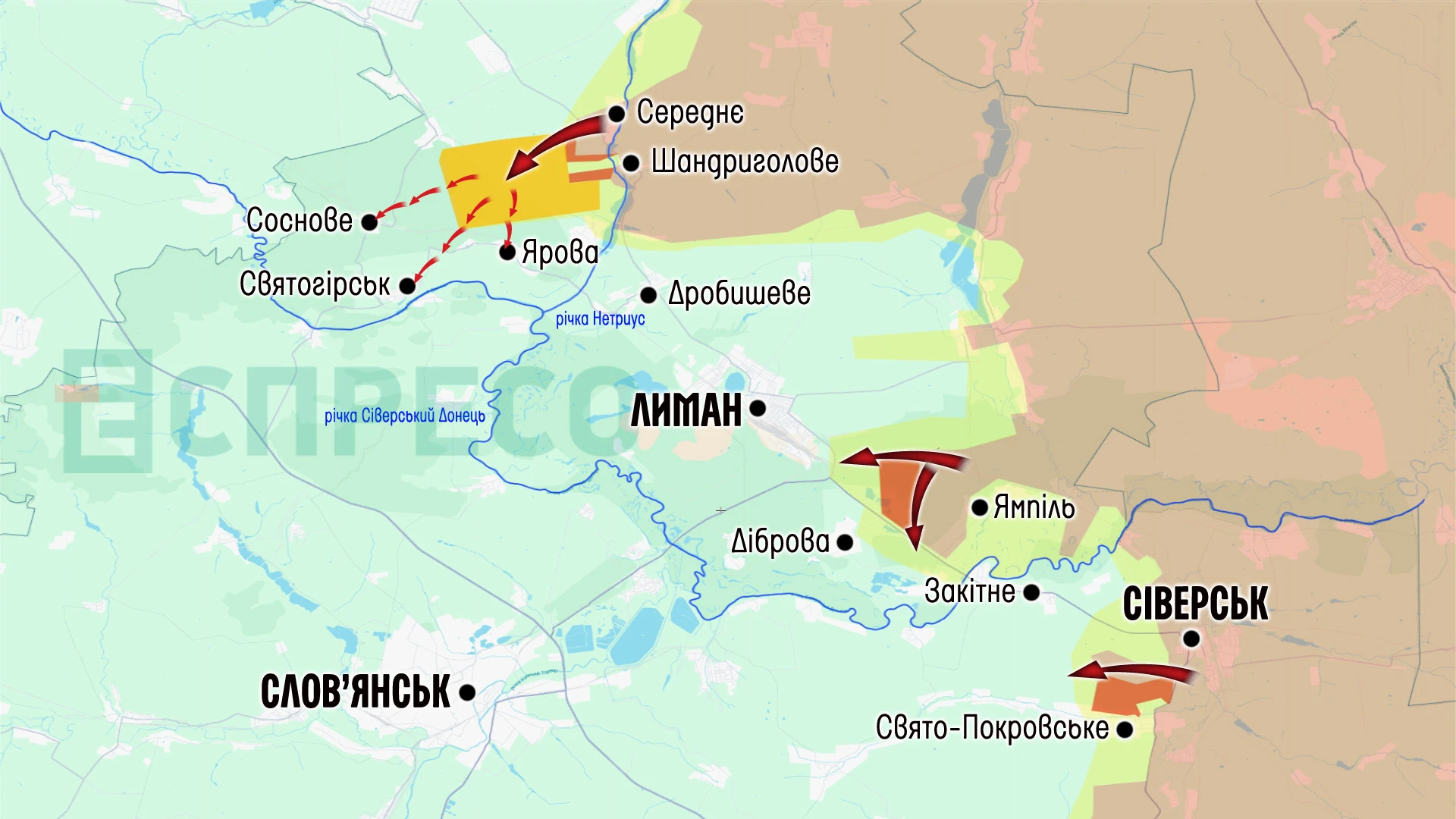
With the onset of frost, Russian forces increased the number of attempts to force the Siverskyi Donets in the area between Dronivka and Zakitne. However, as long as the Ukrainian Armed Forces maintain control over Yampil, all such intentions fail.
On the other hand, frost makes it easier to cross small rivers. Such as, for example, the Netrius, which for a long time helped form the front north of Lyman. However, in recent days Russian forces managed to cross it in several places and expanded their control zone, as well as the gray zone in the area of Serednie and Shandryholove villages. Russian forces gained the opportunity to seep into the huge forest massif surrounding Sviatohirsk. Their assault troops were spotted in Sosnove and Yarova. Spotted and destroyed. Obviously, through massive penetration into the forest, Russian forces want to cut one of the important roads to Lyman and then advance toward Drobysheve to be able to attack Lyman from three sides.
Front in Sumy region comes alive again
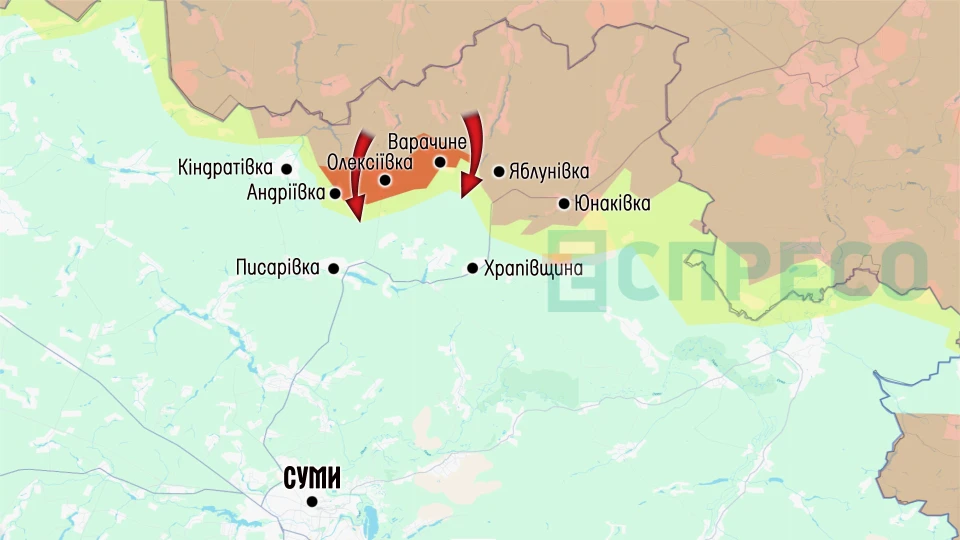
After the failure in Kupiansk, Russian generals want to show at least some result, and therefore somewhat increased activity in Vovchansk and the Sumy region. In late December and January, Russian forces attacked in two directions from Oleksiivka. From the right flank, they advanced 3 km south and occupied the villages of Varachyne and Novomykolaivka. And from the left, they recaptured Andriivka and advanced further south toward the highway to Sumy. To reach the outskirts of the regional center, Russian drones now need to cover less than 20 km. It's worth noting that in a year of fairly intense fighting, Russian forces penetrated 7 km deep into Ukraine from the border. Obviously, they want to further destabilize the Sumy region and get even closer to the regional center.
However, these are only plans that very often fall apart for Russia. As recently, Ukrainians finally buried the long-standing Russian mythology built around victory in World War II. "We can repeat it"—Russian forces kept saying, frightening the whole world, and especially Europe. On January 11, the Russian-Ukrainian war equaled in duration the Soviet-German war of 1941-45. But in terms of results, it is an absolute failure and will become the foundation for the end of the modern Russian empire. Everyone has already seen—they can't repeat anything.
The maps are created based on information obtained from the Ukrainian Armed Forces’ General Staff, as well as from other open and verified sources. At the same time, the maps are not maximally accurate and only conditionally reflect trends in the combat zone.




- News