


Ukrainian drones turn Kupiansk into kill zone for 88% of Russian troops



The ORION unit has created a defensive zone on the Kupiansk front that's become a death trap for Russian infantry and armor. According to the unit, 88% of enemy forces are wiped out before they even get close to Ukrainian lines, and the rest never make it through
The ORION unit's press service reported the information.
ORION is a rapid reaction border command unit of the State Border Guard Service, part of the Revenge assault guard brigade. Its primary mission is protecting the state border and defending the border zone.
Since 2014, ORION has operated in the Luhansk region. In May 2025, the unit moved to the Kupiansk axis in the Kharkiv region. At that time, the situation was typical for the front: Russians were using the "gray zone" for approaches and troop concentrations, while control of the space remained fragmented.
"We understood that the problem wasn't the number of troops or equipment. We needed to deprive the enemy of the very ability to move and establish positions," explains Vladyslav Zolotarov, an officer from the unit's headquarters management group.
The solution was a fully robotic kill zone. Within just two months, ORION created a comprehensive control system: approximately one kilometer deep against enemy infantry and over 20-25 kilometers against armored vehicles. The system operates around the clock, leaving the enemy no opportunities for approach, maneuver, or establishing positions in this sector.
The kill zone is a reconnaissance and strike system built on a combination of aerial and ground unmanned platforms: reconnaissance drones like Leleka, Mavic, FPV drones, and ground robotic complexes (GRCs), which enable area control without constant human presence at positions.
Vladyslav Zolotarov notes that just five years ago, detecting the enemy at the border or line of contact required ground patrols—several border guards who would cover 30-40 kilometers daily, constantly under threat of fire.
"The ability to analyze the situation then was severely limited by human factors—fatigue, weather, visibility. Today, the work of an entire patrol is performed by a single drone operator: remotely identifying targets, transmitting coordinates, and ensuring strikes without direct contact," says Zolotarov.
ORION detects the enemy at distant approaches and destroys vehicles within 20-25 kilometers using FPV drones. In the near zone, 5-10 kilometers, the space is under constant surveillance by reconnaissance UAVs that immediately detect any movement.
For enemy infantry, a separate line has been created—approximately one kilometer where it's impossible to take positions or wait it out. In a typical scenario, up to five FPV drones engage a single target. There have been recorded cases where up to 12 drones simultaneously attacked one infantryman.
According to Vladyslav Zolotarov, this system works not only for strikes but also for rescue operations. For example, on Christmas in the Kupiansk area, three guided aerial bombs destroyed the home of a 70-year-old man. After the strike, he was trapped under rubble, wounded and immobilized. Neither ambulances nor volunteers could reach him—the area was under enemy drone and fire control.
After reconnaissance, fighters reached the house, provided first aid, and stopped the bleeding. Evacuation was performed using a ground robotic complex—there was no other way to extract the person from that location.
The evacuation took approximately four hours over a distance of 20 kilometers. The man is currently receiving treatment at a hospital in the Kharkiv region.
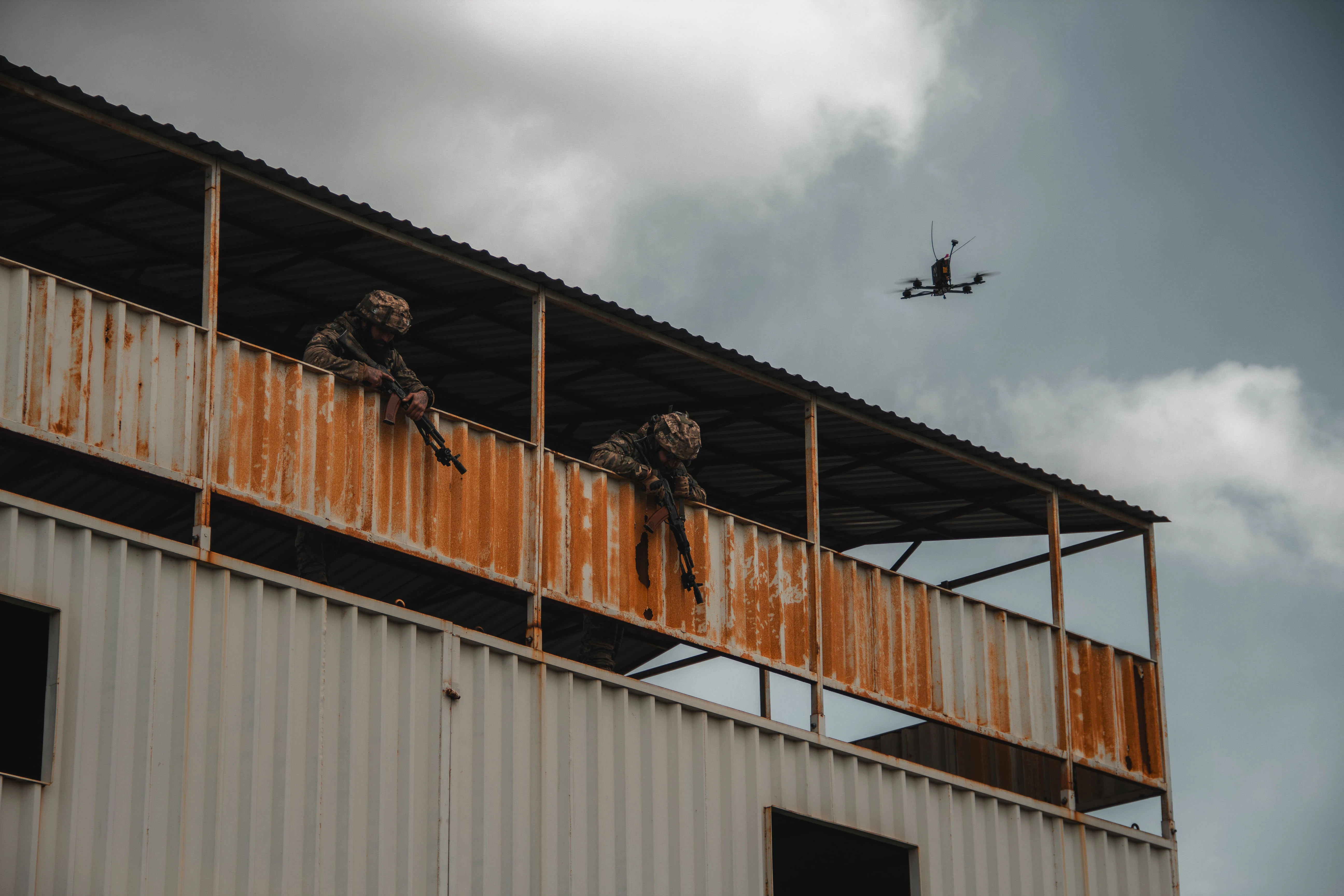
The unit emphasizes that the kill zone already minimizes human involvement in the most dangerous combat areas—both in the air and on the ground. The next step is developing ground robotic complexes not only for humanitarian tasks but as a full-fledged element of the combat system. This means ground drones that can enter the battlefield instead of humans: conducting fire, delivering ammunition, covering positions, operating under fire, and in zones where it's dangerous or impossible for infantry to enter.
"Technically, this is already possible, but scaling requires resources, so plans include procurement and development of GRCs to expand their use beyond evacuation and logistics missions," says Zolotarov.




- News