


Pokrovsk as new critical point in Russia-Ukraine war: why it is dangerous



The anxious question of whether Pokrovsk will hold inevitably sparks intense debates in society, the media, and on social networks. However, it would be a serious mistake to reduce the discussion to “Ukraine’ll lose the city anyway,” “Ukraine should surrender because it’s no longer a city but ruins,” or to speculations about which special forces to send there. If we want to understand how events may unfold, we need to understand how we arrived at Pokrovsk, which factors could decide the outcome of the battle for the city, and how to act so that even the worst-case scenario does not decisively affect the course of the entire war
Contents
1. What is happening in Pokrovsk today
2. How the international balance of power shapes the conflict
3. Russia’s decay as a factor in the war
4. Military potentials of Russia and Ukraine
5. Challenges in Ukraine’s military command
6. Is the loss of Pokrovsk inevitable?
7. Holding Pokrovsk won’t solve all problems
The military situation in Pokrovsk as it stands today became possible only at this stage of the war. The widespread use of drones has made rapid troop breakthroughs into strategic depth unrealistic for both sides. Similarly, using armored vehicles for assaults has become fatal, and the assaults themselves suicidal for those carrying them out. As a result, the tactic of small assault groups infiltrating positions, tested since summer 2024, remains in use. Russia continues to apply it, despite increasingly heavy losses. In 2025, Russian drones began systematically targeting not only military depots and roads but also moving vehicles and civilian infrastructure. Consequently, Pokrovsk has found itself on the verge of operational encirclement. On October 29, a video showing a Russian flag near the city’s stele was released. Although it was immediately destroyed by Ukrainian forces, observers describe such combat situations as a significant expansion of the gray zone. How do these events in and around the city reflect on the map of the entire war, and could they bring us closer to ending the madness of 21st-century warfare? Let’s highlight the key determining factors.
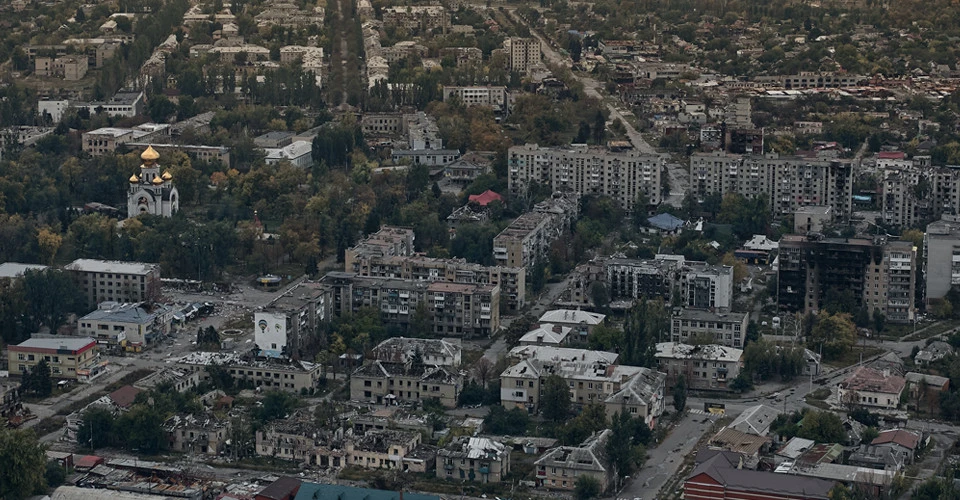
Pokrovsk, October 7, 2025, photo: Getty Images
What is happening in Pokrovsk today
Experts do not hide that the situation in Pokrovsk is “very bad,” but they insist it can still be salvaged. The panorama of actions and information reports resembles Avdiivka in many ways, but in reality, the situation is worse due to Russia’s higher stakes and the direct link between the city’s loss and the war’s subsequent scenarios.
Logistics in the Pokrovsk and Kupiansk sectors of the front are not just complicated — they are nearly impossible due to complete coverage by Russian drones, artillery, and guided bombs. Within a day or two, the situation will reach a level requiring a decision: either massive efforts to restore the situation or a controlled withdrawal to preserve the lives and combat capability of the troops. Since August, Russian troops have established several accumulation points in and around Pokrovsk, and the sharp deterioration of the situation became evident on October 24, when at least 250 Russian soldiers entered the city, engaging in infantry fights and shooting Ukrainian troops at positions, including drone operators. Ukrainian forces, due to lost logistics, are forced to march 10–15 kilometers on foot to reach their positions.
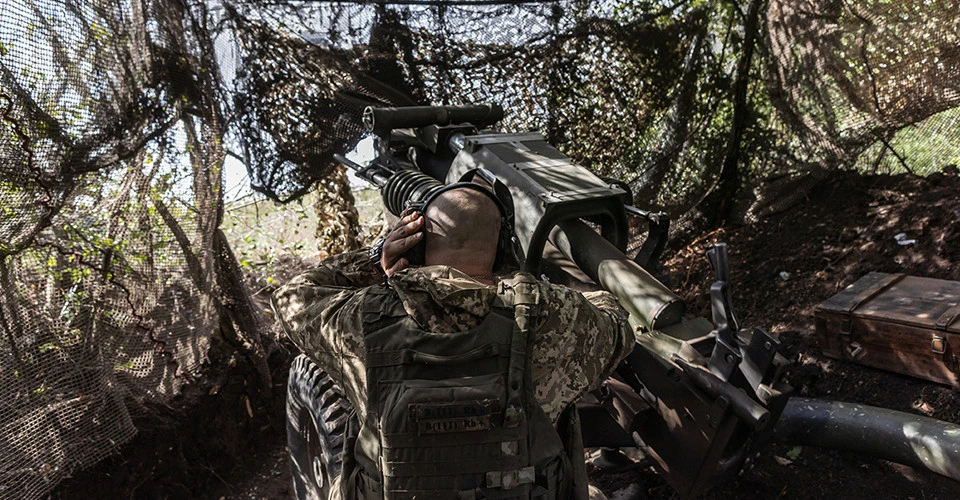
Ukrainian soldiers shell Russian positions near Pokrovsk, photo: Getty Images
On the Ukrainian side, there are active countermeasures: a group from the Ukrainian Defense Ministry’s Main Intelligence Directorate has entered the city and is trying to “clear” its critical areas of Russian soldiers. There is also an operational response from regular units defending the city. However, it must be acknowledged that primarily due to a shortage of personnel (a clear sign of this is soldiers remaining on positions for 2.5–3 months) and a deficit of weapons, the Russian Armed Forces’ infiltration tactics using small groups of 2–6 soldiers, often disguised as civilians and frequently covered by drones, are producing results. This is aided by sabotage, the continuous and systematic nature of assaults and infiltrations, combined with their own fatalism and abnormal tolerance for human losses in the invading Russian army. The fact that Putin’s Russia can ignore hundreds of thousands of killed and wounded soldiers is a key challenge.
It may seem that the situation around Pokrovsk is self-contained. Partly, it is. But the city’s future developments are influenced by many factors.
How the international balance of power shapes the conflict
At the end of October, U.S. intelligence agencies reported that Putin is “more than ever before” prepared to continue the war. There is no mystery here: it was set up for full readiness by the Kremlin leader “to go all the way” — i.e., to the complete destruction of an independent Ukraine — by U.S. President Donald Trump. Trump not only fully removed Russia from international isolation, but also turned an international criminal into an honored (for his aggression) leader of a great power, and encouraged the destruction of Ukraine. The apex was the world‑threatening rhetoric about the Burevestnik missile — supposedly having “unlimited range,” a nuclear engine, an “unpredictable trajectory,” and being “practically invulnerable.” Experts have already called it “a powerful bluff, an ugly and not‑terrifying weapon.” Kremlin “scare tactics” are an old tradition, but so too is the Western tendency to interpret threats as a sign of weakness. The force and zeal of Putin are most reinforced by his episodic ally Xi Jinping. On the eve of his historic meeting with Trump, Xi went on an explicit and desperate offensive by declaring that China does not rule out the possibility of using force against Taiwan.
Against this background, a positive development is that the West has begun to show greater resolve and unity. It seems that the Alliance is now led by an unusually charismatic figure able to demonstrate determination and encourage allies. Despite inappropriate political curtsies from the White House, NATO Secretary‑General Mark Rutte insists that Putin is running out of money, troops, and ideas, and that it is time to increase pressure on Russia.
It is also worth noting a remark by Yuval Noah Harari, the Israeli historian, philosopher, and writer. He recently said that, from a military standpoint, it makes sense for Ukraine to conduct tactical withdrawals and preserve its forces and soldiers’ lives, allowing the Russians to exhaust themselves with costly attacks for minimal gains.
Much depends on the results of the talks between Trump and Xi Jinping, which have already taken place but whose outcomes are not yet fully clear. However, it cannot be denied that China has long been secretly supplying Russia with drone components worth tens of millions of dollars, as well as even more dual‑use equipment and technology.
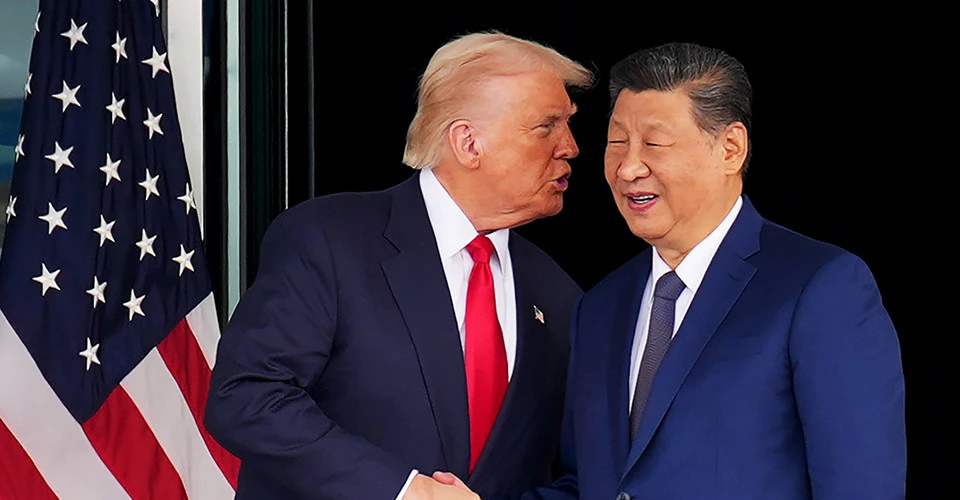
Donald Trump and Xi Jinping, photo: Getty Images
Recently, it became known that China is gradually reducing the sale of key drone components to Ukraine, effectively “cutting off the oxygen” for the drone industry. Even attempts by Ukrainian defense enterprises to import Chinese electronic components through friendly countries, including the Baltic states or Poland, are now being blocked.
This primarily concerns engines, batteries, and flight control systems — Ukrainian specialists now rely on the European Union to fill this gap. It is known that about 60% of components were previously imported from China.
The European factor has risen to the forefront in 2025 in terms of Western influence on the course of the war. The truth is that Europe is weak and unprepared for war. Yet it is adapting to new realities, primarily by supporting Ukraine. In October, it was reported that several European countries pledged to contribute a total of $2 billion over the coming months to the PURL initiative for purchasing American weapons for Ukraine. Next year, PURL’s main goal is to raise $12–15 billion. However, it is still unknown whether long-range and tactical ballistic missiles will be included.
Thus, it is clear that the war of economies will become a key factor influencing the course and scenarios of the war.
Russia’s decay as a factor in the war
As early as September, military factories in Russia cut salaries and hiring, with pay for new positions at defense enterprises falling by 10% compared to 2024.
In October, Russia began slashing regional contract payments, as local budgets in regions are responsible for 60–80% of payments to contract soldiers for the war. It started in Tatarstan, Chuvashia, and Mari El, where contract payments ranged from 2.1 to 3.5 million rubles. For example, in Chuvashia, contract payments were cut from 2.5 million to 800,000 rubles; in Tatarstan, from 3.1 million to 800,000 rubles; and in Mari El, from 2.6 million to 800,000 rubles. This is expected to be just the beginning.
Although the Kremlin is already trying to introduce safeguards. On October 28, the State Duma passed a law in a single session, in all three readings, on the mobilization of military reservists even in peacetime. For now, it concerns “special assemblies for the protection of critically important and essential facilities”, guarding energy, transport, oil refining, and other critical infrastructure. However, there is little doubt that reservists will later be deployed outside Russia and during “counter-terrorism operations” (a point included in the initial draft of the law). Therefore, sending reservists to the combat zone is only a matter of time.
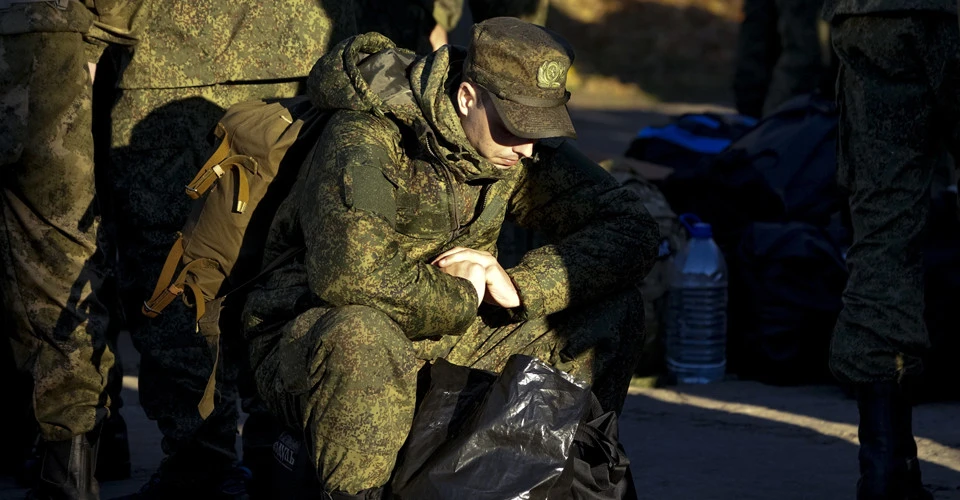
Russian mobilization, photo: Getty Images
Meanwhile, the number of volunteers willing to go to war in Ukraine is declining. From April to June 2025, only 37,900 people signed contracts, the lowest in two years. In the second quarter of 2024, that number was 92,800. In the first half of 2025, 127,500 contract soldiers received payments, compared to 166,200 a year ago. This is cited as direct evidence of the declining effectiveness of financial incentives that were previously used successfully for mobilization.
However, the “psychology of war” is even more striking — the depth of degradation in Russian society. The mental approach of Russian soldiers, reminiscent of Genghis Khan’s enforcers, may at first seem like an advantage. It involves the Russian Armed Forces establishing a system of executing their own subordinates for refusing orders. The publication Verstka even launched a special project called Obnuliteli (Reseters) about torturers in the Russian army. It currently includes data on 101 servicemen who “reset” their own comrades — killing, torturing to death, and sending them into assaults from which no one can return alive.
Judging by these trends, the situation in Russia will worsen, especially after the active, “hot” phase of this war ends. But that is a topic for another discussion.
Military potentials of Russia and Ukraine
On one hand, Russia has achieved a lot — everything in the country is subordinated to the war effort, unlike in Ukraine. And this certainly produces some results. Russian drones using fiber-optic guidance can now cover nearly 30 km. Every day, Russia actively operates drones within a 50-kilometer zone from the front. In October, the adversary introduced attacks using guided Shahed FPV drones with a 50 kg warhead. They also expanded the types of drones equipped with automatic target acquisition and machine-vision guidance, improving both the accuracy and range of strikes by drones like the Molniya.
The most dangerous development has been Russia’s modernization of the Iskander tactical missile system, confirmed by U.S. intelligence: upgrades allow the missiles to change trajectory and perform maneuvers instead of following a traditional ballistic path. Additionally, the range of the Iskander system has increased to 1,000 km.
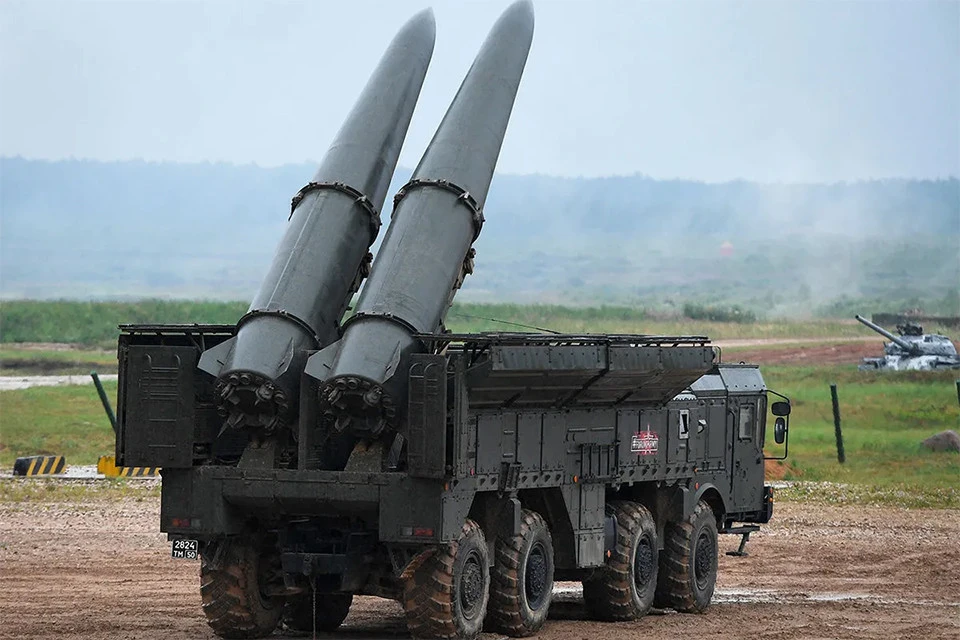
Iskander-M mobile missile launcher, photo: Militarnyi
But there is another side to the war, which has now returned to Russia itself.
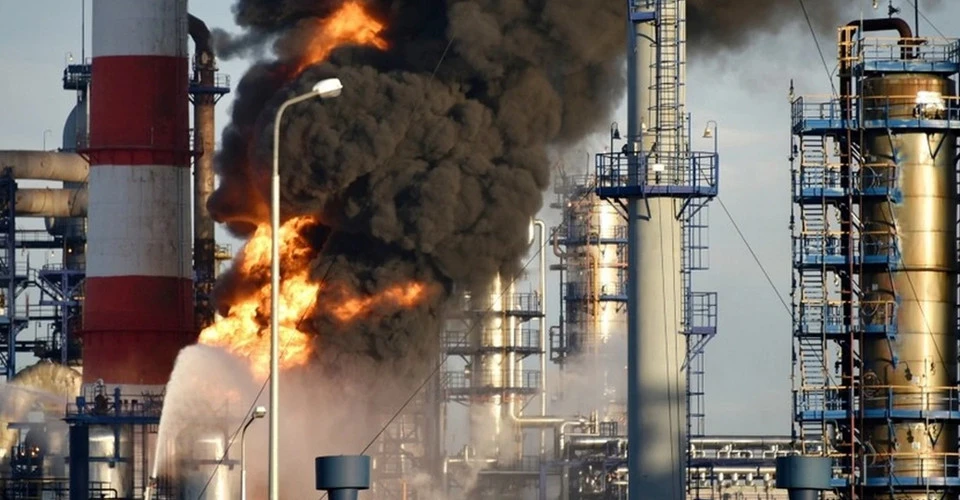
Ukrainian long-range drone strikes have begun systematically hitting airbases, command centers, troop concentrations, logistics hubs, and oil refining facilities.
The Ukrainian campaign against Russian refineries, launched in the summer of 2025, has already changed the energy and financial landscape of the aggressor country, shutting down over a third of Russia’s refining capacity.
Military analyst Hendrik Remmel from the German Institute for Defense and Strategic Studies (GIDS) believes that long-range strikes are hitting Moscow not only militarily but also socially, economically, and politically. “There are signs that the strategy of long-range strikes, primarily drone-based, is gradually producing results,” the expert says.
In October, drones struck a major refinery in Tyumen, near the town of Antipino, 2,000 km from the border, setting a new record for strikes deep inside Russian territory.
On the battlefield, the situation is far from straightforward. For example, the October offensive near Dobropillia, even with an increased number of tanks, failed, just like previous attempts. During an assault involving 29 armored vehicles, the heaviest deployment in months, the attack was successfully repelled thanks to pre-fortified positions, effective mine-laying, coordinated actions of artillery units of the Armed Forces and the National Guard, and drone operators. The Russians lost 15 vehicles, including two tanks, twelve armored combat vehicles, and one car. Russian infantry disembarking from the vehicles were destroyed by FPV drone strikes. This has become a typical scenario in 2025.
Ukrainian forces face problems on a different front. As before, there is a shortage of personnel, there aren’t enough trained fighters on the front lines. Equipment is also lacking, from vehicles to drones. “A vehicle may last a month, a week or two, and it’s gone,” soldiers say, confirming that the shortage of vehicles significantly reduces combat effectiveness. Representatives of various units report that the supply of drones is “terrible,” and most essential equipment “has to be bought personally.”
Analyst Vasyl Pekhno cites a former brigade commander who noted: “We don’t have the resources for defensive combat, yet we constantly receive orders to restore positions. This makes it impossible to hold those positions.”
Here, we reach a complex set of critical issues where the outcome depends solely on Ukraine.
Challenges in Ukraine’s military command
As before, it remains a key factor shaping the course and ultimate outcome of the war. For Ukraine, the most painful issues continue to be the crucial links between the government and society, military command, trust in leadership at nearly all levels, and ensuring the army is equipped with motivated personnel and quality weapons.
It is unclear whether the top priority among the “problems of Pokrovsk” (in the broader sense, as it is evident that the threat of losing the city stems from accumulated issues) is the realistic fight against corruption and abuses at all levels of government. One way or another, the gap between Ukrainian society and the authorities in the fall of 2025 has reached the depth of the Challenger Abyss in the Mariana Trench. Domestic political conflicts are eroding not only the government itself but also the army. Can the country’s military-political leadership review its approach to combating the greatest evil, whose existence makes the entire nation vulnerable? This question becomes vital for the nation, and therefore for its army.
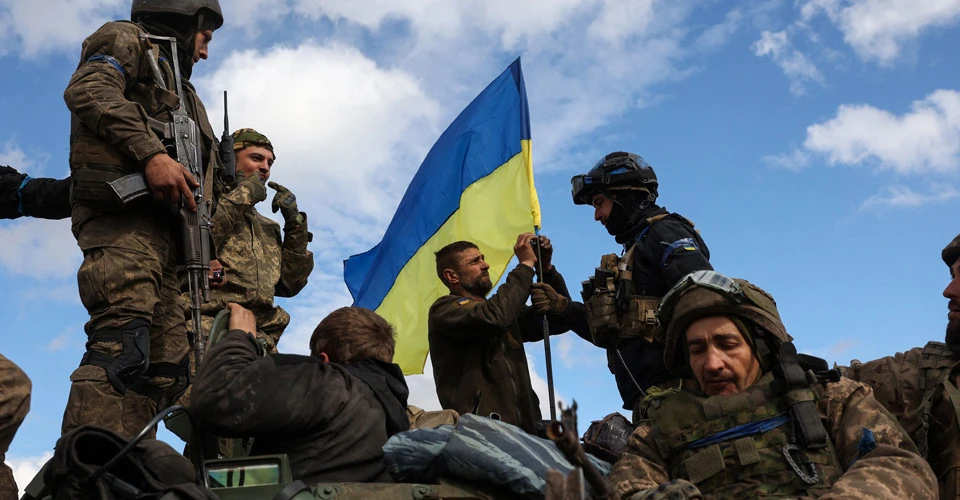
The mobilization problem, unresolved since late 2023, has turned into outright “busification” — a festering sore on the body of our defense capability. Experts have repeatedly sent recommendations to the authorities; one additional measure could be to launch joint European efforts to voluntarily recruit both Ukrainians abroad and volunteers from across the Western world.
The formation of Assault Forces as a separate branch of the Ukrainian Armed Forces, but subordinated directly to the Commander-in-Chief, has exposed a particular problem of military command. Informed military figures, including General Serhiy Kryvonos, have claimed that the Commander-in-Chief had a conflict with the Air Assault Forces commanders at the start of the Kursk operation (the Air Assault Forces had performed effectively as “fire brigades” before the idea of Assault Forces emerged). He perceived this not only as personal disloyalty and as the Air Assault Forces’ inability to carry out a difficult and unpopular mission, given the inevitable losses, but also as a “potential problem” for the future. The very existence of that conflict indicates a rather uneasy and not very rosy perception of the Commander-in-Chief within the officer corps, especially considering that the Air Assault Forces are the elite of the Armed Forces. Thus, a command-and-control problem exists.
There is another issue. Against the background of the October announcement that the Armed Forces of Ukraine have completed the transition to a corps-based structure, there are both insider testimonies and direct signs that the updated command system is still far from being fully implemented. For example, many corps still have attached units — a matter that has been contested since the start of the full-scale war.
The secrecy and non-transparency of weapons procurement for the Defense Forces, together with the lack of reporting, continue to create conditions for abuse, manipulation, and corruption. Recall the comment by journalist and founder of the Our Money project Yurii Nikolov at the end of July: “Even my colleagues and I, with all our experience, cannot obtain information on who and how in Ukraine forms the state order for drones. … Which drones worth 100 billion, at what price — nobody knows, because this is one of the biggest military secrets. … So essentially it is an absolutely corrupt commercial secret. If it were not so secret, we could change many things in drone production. But nothing changes…” Nikolov believes that drone procurement in Ukraine is a “black and absolutely non‑transparent market.” The transition to a system of procuring corps and brigades, including via DOT‑Chain, is underway but too slowly and at too small a scale. Keeping secret who and how composes the state arms order enables manipulations favoring “insider” companies.
On the basis of all the above, let us forecast what may lie ahead when viewed strictly from the military perspective and when taking all listed factors into account.
Is the loss of Pokrovsk inevitable?
No. Here’s what Mykhailo Samus, co‑founder of Consortium for Defense Information (CDI), said in an interview with NV:
“When people say that Pokrovsk is effectively already occupied — no, it is not occupied yet. The small groups that have penetrated face much bigger logistics problems than our forces. So you shouldn’t immediately say ‘that’s it, our troops must withdraw because our logistics were damaged’… Right now logistics is one of the key issues — for the Russians and for us. We need to find ways to improve it. Ground robotic complexes have proven themselves best in logistics. We need thousands of these robotic systems to deliver everything our soldiers in that gray zone need… If we fix the logistics to our positions in the south and apply the same assault‑force potential to clear the north, the gray zone, we can create the conditions. There is no automatic rule that if a Russian boot sets foot somewhere, it means we must withdraw. This is not a total catastrophe and does not mean we must leave Pokrovsk. Measures can still be taken.”
But what conclusions should we draw if we review all the factors mentioned?
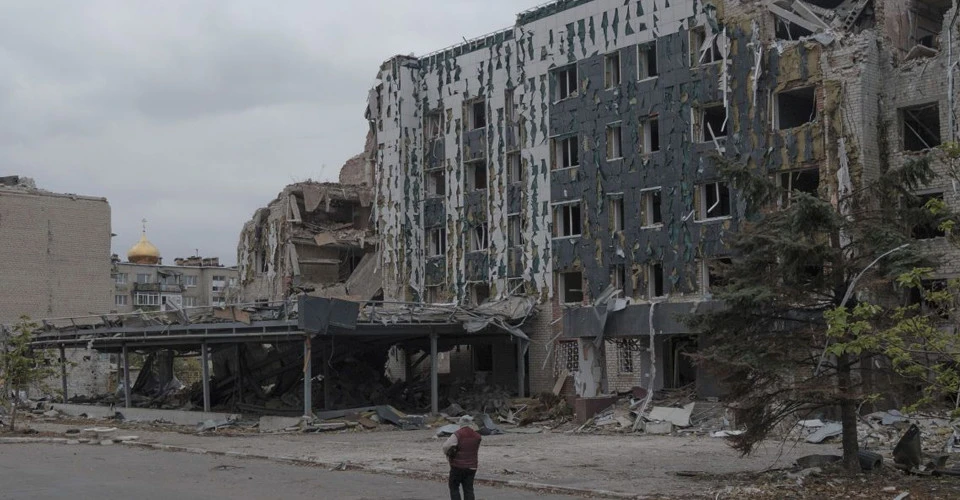
Pokrovsk, photo: AP Photo
Holding Pokrovsk won’t solve all problems
First of all, the potential loss of Pokrovsk would be more of a psychological blow than a mere territorial loss. Such a scenario gives the Russians new opportunities and incentives to continue the offensive. It also creates additional leverage to pressure the West, especially Trump with his constant political swings.
For Ukraine, holding the city and neutralizing the surrounding fire ring is an opportunity to demonstrate to the West the impotence of Putin’s war machine and to frame the event as the "beginning of the end" of the criminal regime.
In any case, around this small Ukrainian city, a multi-layered context has already formed — many factors, each unlikely to act as an independent lever, but whose critical mass can change the situation at a strategic level.
It is therefore crucial to understand: the city in Donbas can be held, but if the critical mass of problems mentioned earlier is not reduced, the front will suffer other losses. The level of threat will then be far greater than the loss of a single city. History has shown this.
How can one see and confirm that changes have begun? It’s quite simple: the first step is to drastically reduce the bureaucracies of various “power structures” — from the Ministry of Defense and the General Staff of the Armed Forces to all other “relevant” ministries and agencies — and to appoint specific accountable individuals with names and announced responsibilities.
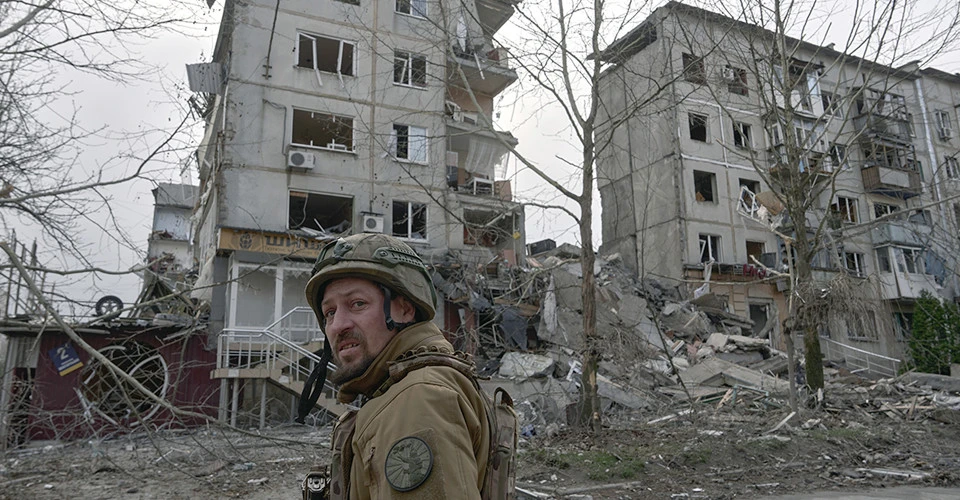
Destroyed residential buildings in Pokrovsk, photo: Getty Images
The material was prepared in collaboration with the Consortium for Defense Information (CDI), a project that unites Ukrainian analytical and research organizations and aims to strengthen information support and analytical capacity in the fields of national security, defense, and geopolitics.




- News