


Bombed fields, drone strikes: how Ukrainian farmers risk their lives to harvest crops



Even Prince Harry knows what courage tastes like. During his first trip to Ukraine, the British royal was given Easter bread made from wheat grown in Sumy's demined fields - baked by grandmothers from war-torn villages. Right now, farmers are still out there harvesting this year's crop under rocket fire and explosions, determined to make sure Ukrainians can bake their Easter bread again next year
Espreso asked farmers how they manage to plant, tend, and harvest in zones of constant shelling—and whether anyone is willing to work where safe field conditions basically don't exist.
Harvesting Ukrainian grain near the Russian border
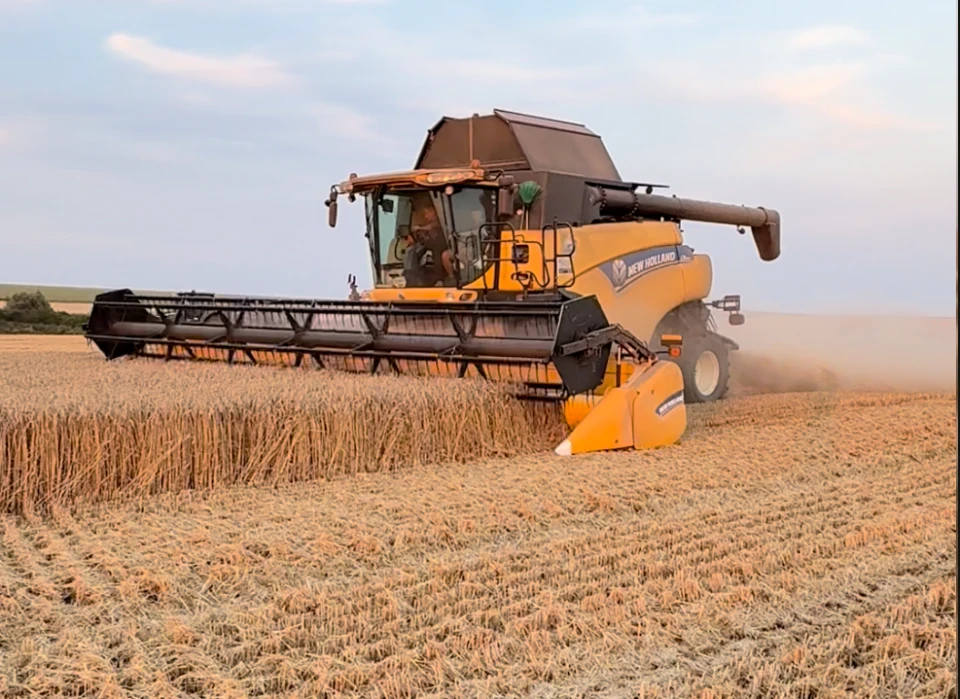
The Svetlov farm is located 10 kilometers from the Russian border, in the Richkivska community of Sumy region. Its head, Vadym Svetlov, who has 15 years of experience in agriculture, is harvesting this year’s wheat, sunflower, soybean, and corn crops with his team. A recent missile strike on another farm, which injured 11 workers, hasn’t stopped them, as they know the harvest must be gathered while the weather is still warm.
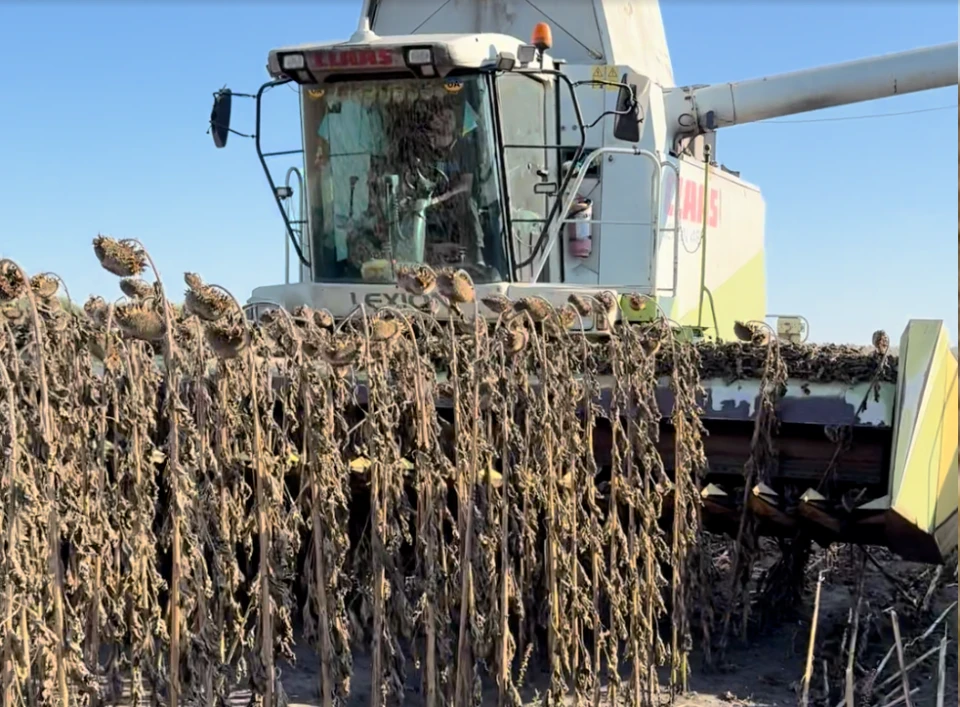
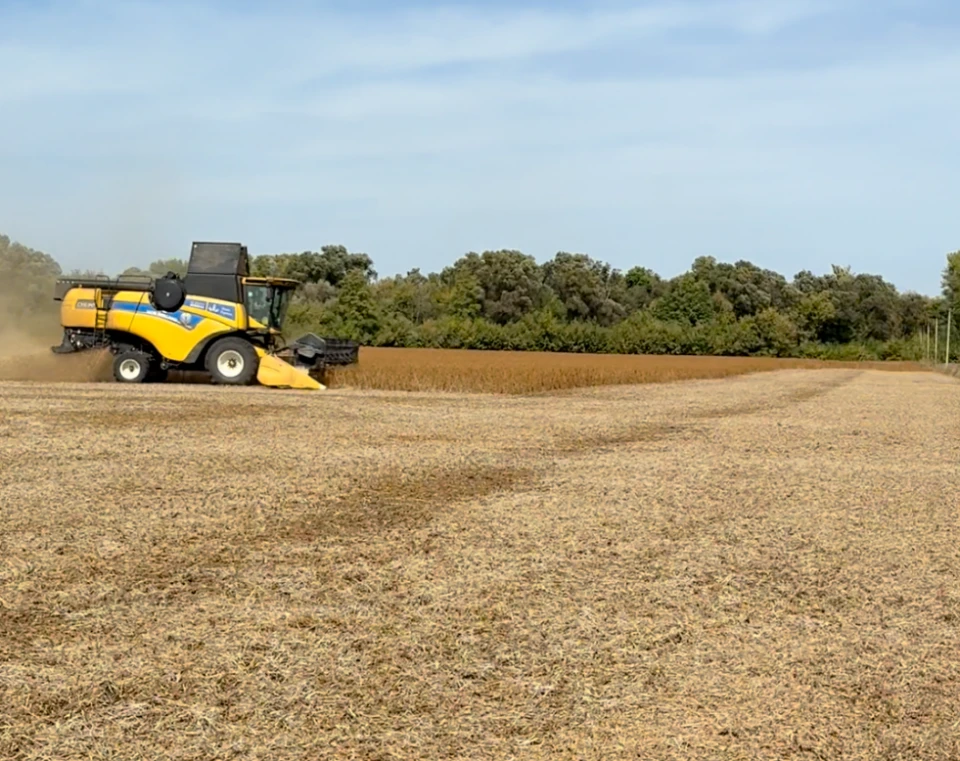
The soybean and sunflower harvest began last week, the farmer says, and will continue until mid-October, after which only corn will remain. Before that, they harvested wheat, mustard, coriander, and dill. They work in the field as a single team that came together before the full-scale invasion.
“We hold on thanks to our workers. We try to increase salaries every year and give bonuses. With currency and prices rising, we understand that people want to meet their basic needs. We want them to do more, so we aim to pay above the market rate to keep our staff motivated to stay, especially given the risks,” says Vadym Svetlov.
Constant strikes by guided bombs and drones on the fields
The field where crops are being harvested is covered with drone fibers and KAB bomb craters. Workers, Svetlov says, ignore the alarms because in border areas they sound only after an attack, as everything flies so fast here. They rely on the sounds to know when something is approaching.
“We often conduct briefings on how to behave during shelling and provide first aid to minimize risks. We don’t cluster machinery together—combine harvesters and tractors are kept apart. Some people transport the grain as far away as possible immediately. Workers eat lunch or dinner separately in different locations because the Russians can see and deliberately target groups of people, combine harvesters, and tractors. So one of the most important rules is to avoid large gatherings in one place,” says Vadym.
Despite all the dangers, he says, they’ve gotten used to working under such conditions. In his farm, no one has been injured by the fighting.
“In other regions, people rely on air raid alarms. That doesn’t work for us. There have been cases when guided bombs fell, leaving the entire field covered in craters. Many drones end up on the fields because they’re jammed by electronic warfare, run out of battery, or go off course and crash. There was also a case when a KAB fell about 150 meters from the workers, but they were lucky - the nearby road was lower than the field, and they hid there. Molniya drones once targeted our vehicle. You can’t hear them; they fly silently - it’s just a matter of luck,” he says.
Vadym Svetlov says that sometimes Ukrainian soldiers warn farmers of danger if they are stationed near the fields.
“They have very good equipment, can see more, and alert us when something is flying, but that’s not everywhere. In the village, there’s almost no connection—neither mobile phones nor the internet work. We can only communicate with each other via radios,” he explains.
In his observation, working in the field isn’t as dangerous; it’s worse in the storage areas, as drones target them directly.
“Nearby, a guided bomb fell on a warehouse in May - 500 kilograms of TNT - it destroyed everything around. Our warehouse was badly damaged, so we covered it with plastic, and the neighbor’s warehouse was completely destroyed. Luckily, no one was injured,” recalls Vadym Svetlov.
Expensive, because it’s dangerous
The farmer explains that the conflict has increased production costs, as not everyone is willing to transport the crops.
“Out of ten trucks, maybe two are willing to come and collect the grain. Those who agree naturally raise their prices. So, of course, we overpay compared to farmers in safer areas. Previously, we stored everything in the warehouse and didn’t pay storage fees, selling directly from there. Now it’s too dangerous to store crops locally because something could strike at any moment. We have to transport everything immediately - harvest and take it straight to the elevator. That’s why production costs have risen significantly,” the farmer says.
In frontline regions, farmers receive some state support - cheaper loans, the ability to book 100% of their workers, and access to equipment funds for use during fieldwork.
One charitable foundation lent a combine harvester to Svetlov’s farm, to be returned after the harvest.
Overall, Vadym says, all the challenges could be managed if it weren’t for the occupiers’ shelling. Even though people get used to constant attacks, they still fear for their lives.
“It would be helpful if soldiers were present in the fields during harvest to shoot down drones, or at least to give us training, sharing their experience on how to act during different types of air attacks. Then we might be better prepared for shelling,” the farmer concluded.
Agriculture in the Sumy region
During the full-scale war, the sown area in the Sumy region decreased by 15% - from 1.21 million hectares to 1.025 million hectares - mainly in border communities that are under constant fire and lack safe conditions for agricultural work, the Sumy Regional State Administration told Espreso.
For example, grain and legume production dropped from 4,260.8 thousand tons in 2021 to 3,178.8 thousand tons in 2024.
Despite reduced production and the ongoing war, the Sumy region officially produces more than enough for local needs: five times the demand for food grains, six times for fodder grains, seven times for potatoes, and twice for vegetables and eggs. Agricultural products from Sumy - including meat, dairy, oil, meal, grain, and berries - are exported to 16 countries, including China, Poland, Lithuania, Hungary, Romania, Italy, Bulgaria, and France.




- News