


How Ukraine can achieve air superiority



Ukraine is urgently seeking ways to break Russian air dominance. Western allies have supplied aircraft, Ukraine is engaging new eastern players reshaping the battlefield, and domestic projects show promise
If we speak about the future of the Ukrainian Air Force, it is obvious that it is linked to the transition to unmanned aviation. Alongside this — the development and integration of artificial intelligence (AI), as well as some localization of production. It would not be an exaggeration to say that Ukraine will need a hyper‑leap here — amid uncompromising mastery of the "zoo" of various Western‑made aircraft. We must give even more dynamism to our own R&D (Research and Development) sphere, which has already gained momentum today. And also pursue maximum cooperation with those capable of providing "breakthrough" solutions. And these are not always those who are currently considered leaders and are in the spotlight.
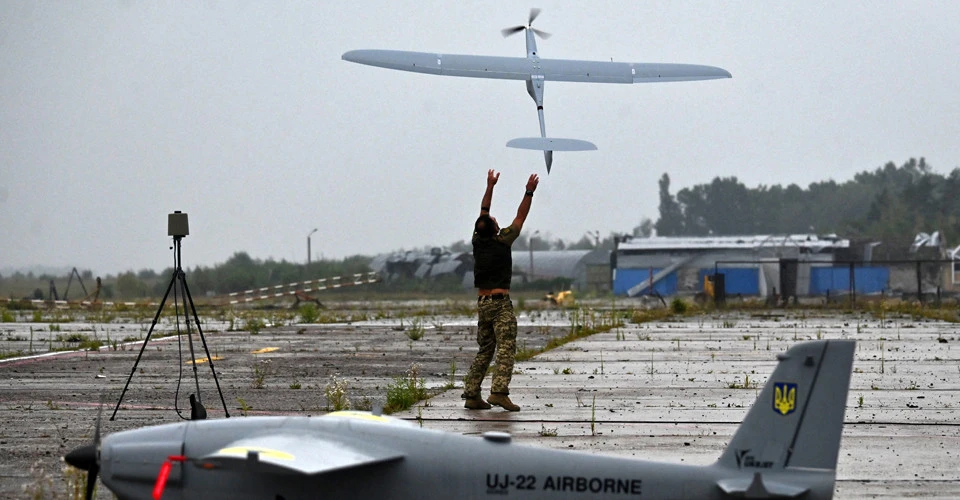
Long-term prospects. Path to unmanned aviation
If we speak directly about the Air Force, perhaps we should not fear diversification and should spend some resources on duplicating capabilities in the sky.
For example, the aforementioned Indonesia, with its political Chinese choice of combat aircraft in July 2025, additionally signed a contract to purchase 48 KAAN fighters from Turkey — aircraft that do not yet de facto exist (deliveries of serial fighters to the Turkish Air Force are expected to begin only in 2028), but which are in a very promising state of development, given the achievements of that country’s defense industry over the last three to five years. Let us watch how the new trends work.
First, new production capacities for services and some localization of production will be created in Indonesia.
Second, a technology exchange is envisaged.
Third, this is an investment in the future, because it foresees the gradual development of a new type of aviation (more technological, cheaper, and embracing new prospects in the form of a transition to unmanned systems — in the latter the Turkish aircraft acts as a bridge).
Since military‑technical cooperation (MTC) between Ukraine and Turkey can have exceptional importance for the future Ukrainian Air Force, let us recall that ground tests of the KAAN prototype began only in March 2023, and the project itself is aimed at replacing the F‑16. The first flight was made in February 2024, and so far the fifth‑generation KAAN fighter uses American F110 engines; this is planned also for the first serial machines. But Ankara has ambitions to replace the American General Electric F110 engines with Turkish TF35000 engines (F110 GE are installed on the F‑15 and F‑16), which is expected in 2032.
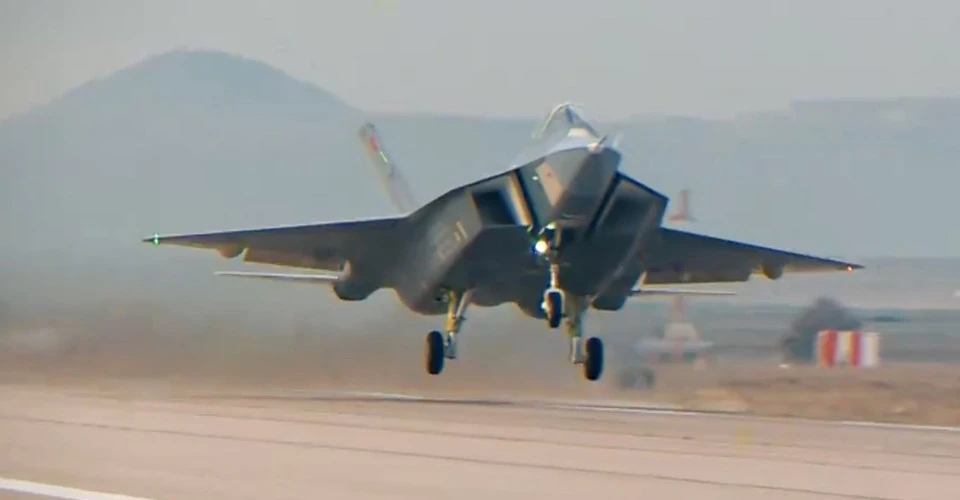
As we see, for countries developing under the paradigm "between the U.S. and China," this is an opportunity to use technologies from both. Europe cannot afford this for itself, except perhaps by buying more from Israel. But countries such as Turkey, Indonesia, or Saudi Arabia can. Global armament projects like the KAAN aircraft are indicative and testify to the existence of alternative prospects in the world. Therefore, one of the first buyers of KAAN could be Saudi Arabia — if problems arise with the purchase of the F‑35 within the announced $100 billion expenditure.
Ukraine, which is not being hurried into NATO, and which can rely on military‑technical cooperation with the West only partially (this is already evidenced by the very cautious approaches of NATO countries to joint development and production of missile technology with Ukraine), must hedge. 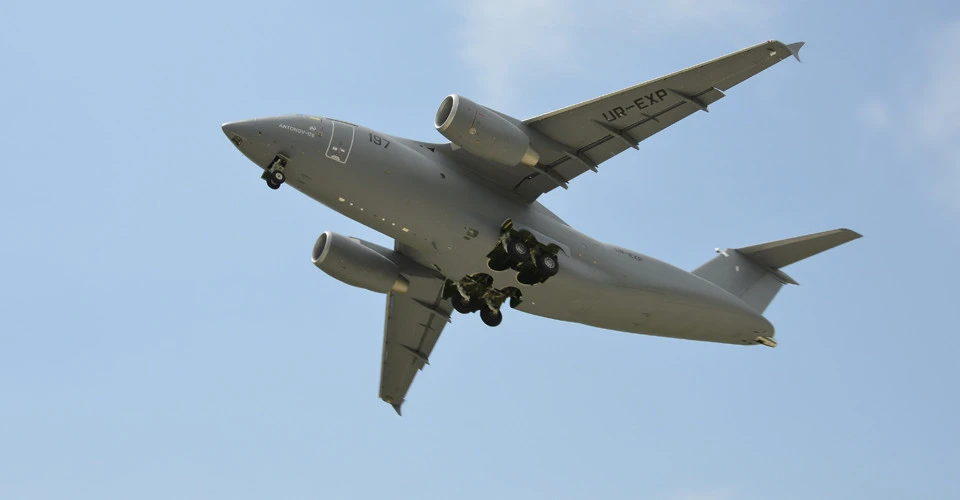 Namely, it should establish military‑technical cooperation with alternative countries. Strengthening the future Ukrainian Air Force already in the context of a transition to a combined "manned plus unmanned aviation" version amid a severe shortage of new modern aircraft should be done in linkage(s) with partners.
Why "alternative countries" are interesting for Ukraine, in particular Turkey
Turkey is one of the most interesting countries in this respect. MTC with it has not stopped during the full‑scale war. It must be acknowledged that Ankara is somewhat restrained in transferring technologies to Ukraine, and wishes to gain more from MTC than to give (this is evidenced by projects in the field of ATGMs and the modernization of SAMs). Nevertheless, it is ready to open up — primarily through expanding ties with its private industry.
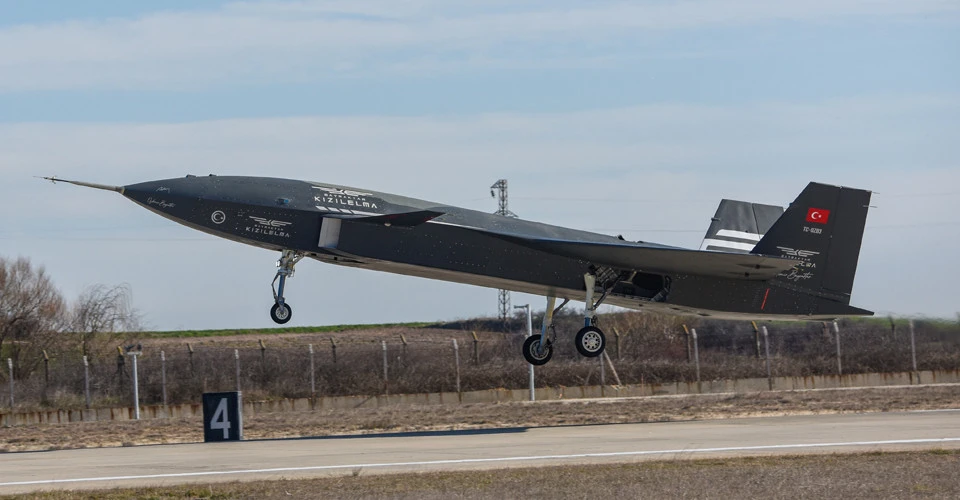
For example, the private company Baykar Makina is ordering Ukrainian jet engines AI‑322F and AI‑25TLT from the state enterprise Ivchenko‑Progress for the new stealth UCAV Bayraktar Kızılelma. Despite Putin’s bloody wishes to impede MTC between Ukraine and Turkey, these engines can be produced at a plant in the Kyiv region together with other modern UCAVs. It is worth recalling that in May 2025 the Kızılelma UCAV with the Ukrainian AI‑322F engine (fourth prototype) completed a successful test flight. Baykar then announced in August the start of serial production of this UCAV, likely equipped with the Ukrainian engine.
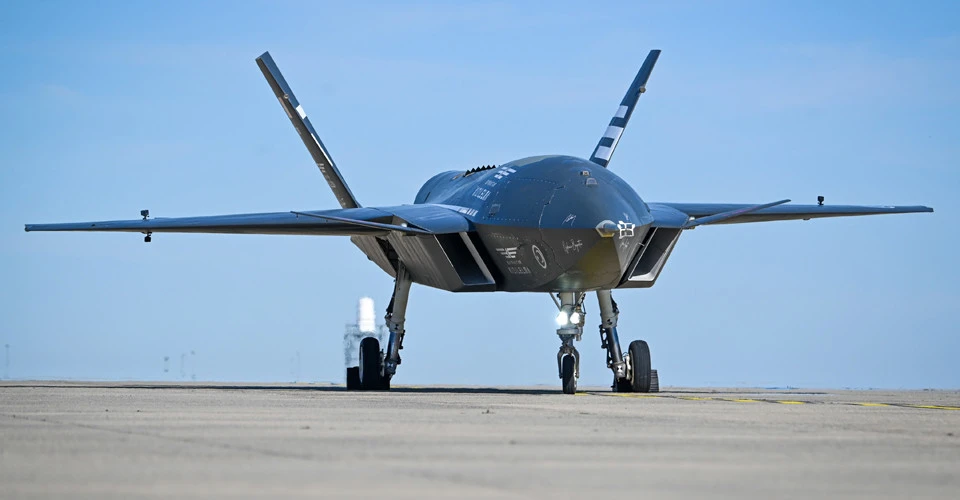
And in March 2025 the same company demonstrated unprecedented successes with the new UCAV — Bayraktar TB3 — which can carry a combat payload of up to 280 kg. This concerns the interaction of two different unmanned platforms within a pinpoint targeting system: one vehicle designates the target, the other delivers the strike. According to the leadership of the Turkish company, Ukraine can fully localize production of the Bayraktar Akinci — they are even capable of carrying compact cruise missiles with a strike range of 280 km. All these are very tangible technological advantages at the tactical level.
Finally, it is known that Ukrainian companies are participating in the development of certain components of that very new fifth‑generation KAAN fighter. Primarily, this concerns the engine, since Ukraine in the 2020s developed an engine for China's fifth‑generation fighter.
In June 2025 another important and unexpected piece of news was that the Turkish unmanned fighter Baykar Kızılelma is being considered as a drone wingman for the Global Combat Air Programme (GCAP) project to create the sixth‑generation fighter Tempest within the international club with Japan, Italy, and the United Kingdom. This was proposed by Leonardo CEO Roberto Cingolani at the Paris Air Show in Le Bourget. Of course, this may not happen, but the events and achievements mentioned undeniably indicate that the level of Ukrainian technologies allows high‑tech partnership. Without diminishing the achievements of Indonesia or Saudi Arabia, one can state that Ukraine’s technological level is an order of magnitude higher than those countries (although its resources are probably an order of magnitude smaller).
In any case, if Ukraine correctly uses the transitional period in the technological revolution as the world moves to automated unmanned systems, then over the coming decade, operating fourth‑generation manned aviation, the country can ensure the hyper‑leap we spoke of. Initially, these would be combined versions, where manned aircraft will control drones, and prospectively swarms of drones. Later, coordinating swarms of small drones of various functions will already be done by large unmanned aerial platforms.
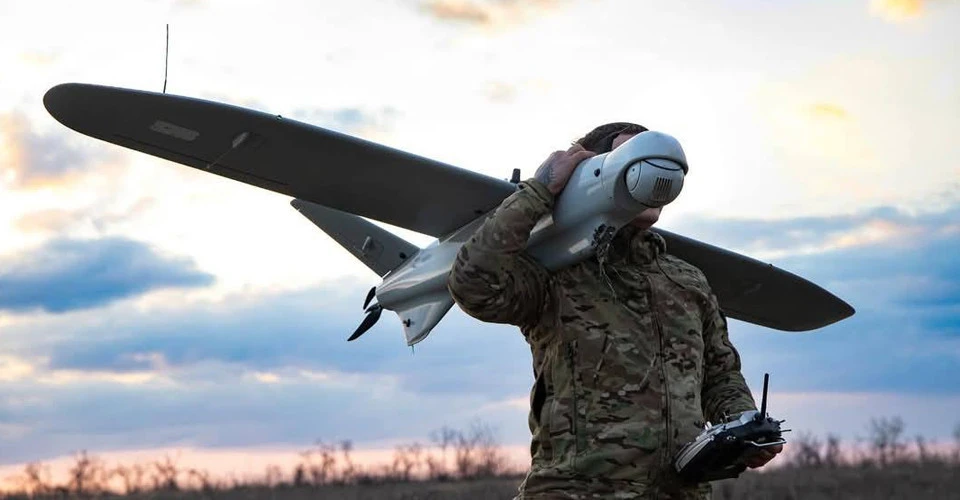
Ukraine is fully capable of mastering this direction independently, because over the last three years up to a dozen companies in the country have been developing elements of artificial intelligence in weaponry — this in addition to two dozen companies capable of working in the field of creating combat aviation. But a solo path is certainly not rational or optimal — it will inevitably lead to delays. To get ahead, partners are needed. Thus, one of the most promising partners could be Turkey — an important factor here is an approximately similar technological level. Of course, the lead does not seem to be ours: thanks to massive investments Turkey already has a number of fantastic achievements. But Ukraine also has its trump cards.
Why Ukraine is interesting to "alternative" aviation countries
The first, undoubtedly strong card for Ukraine is real war and weapons bearing the most valuable market stamp "proven in battle."
The second — the presence of remnants of the world’s most powerful school of military transport aviation of Oleg Antonov, which can be jointly restored (Turkey had extraordinary interest in creating joint production of the An‑178 — with localization on its territory).
It is also worth making serious efforts to expand MTC with Sweden — its interest is primarily security‑driven. Despite a similar episodic dependence on the USA for aviation engines, Sweden consistently and steadily pursues its own path. In June 2025 the Gripen E fighter was tested with integrated artificial intelligence in a simulated air combat.
How promising a partner can we be for the Swedes? An interesting question. On the one hand, Sweden so far demonstrates inflated ambitions: acknowledging certain high‑tech achievements of Ukraine, SAAB in 2025 still made frank proposals to acquire one of the most powerful Ukrainian companies of this profile. At the same time, if such proposals are made, it means there is interest in us. So there is room for maneuver. Even if an acquisition is on the table, that too could be a path — everything should be weighed.
Ukraine has already achieved a lot in developing its own aviation, largely thanks to Western partners. However, the future picture of developed Air Forces may look roughly like this: engines and the greater part of aviation armament will be produced by the Ukrainian defense industry, up to 30% of the new platform and associated ground and aviation infrastructure may be localized in Ukraine. Of course, all swarms of drones and key automation and robotics technologies must be Ukrainian.
Strong players sit at the table. But we also have cards to play.
The piece was prepared in cooperation with the Consortium of Defense Information (CDI), a project that unites Ukrainian analytical and research organizations and is aimed at strengthening information support and analytical provision in the field of national security, defense, and geopolitics.




- News