


Captivity is micro-model of Russian society — Ukrainian POW Maksym Butkevych



"Where there is no possibility to create meaning, we gradually cease to be human." These are the words of Maksym Butkevych – a human rights defender, journalist, former soldier, and prisoner of war. He always stands with the vulnerable, defending human rights, freedom, and dignity. He defended these values on the front lines and didn't lose himself even in enemy captivity
The first thing I have to say is you look good, at least outwardly. Because I remember when you came out of captivity, only the big blue eyes remained of the Maksym Butkevych I once worked with.
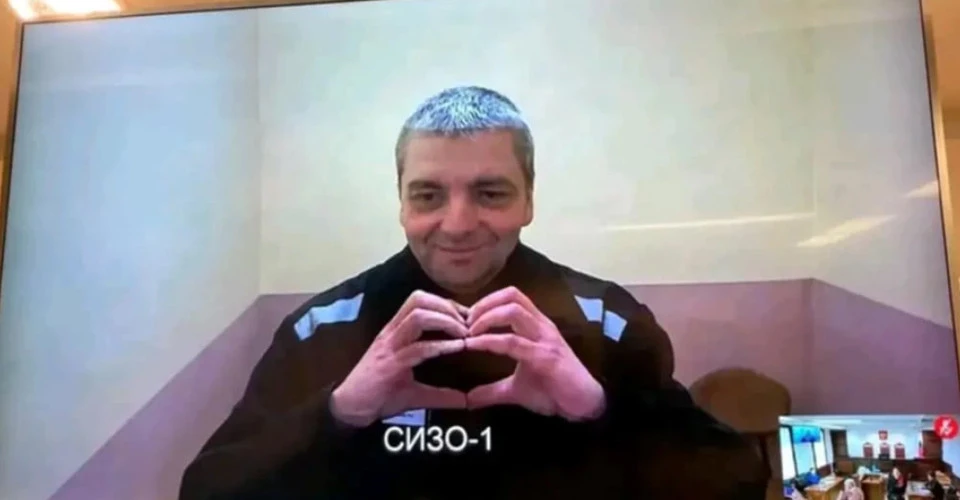
Yes, I’ve already managed to gain some weight. I’ve been free for eight months now. On the one hand, that feels like a lot, but it’s still less than the time I spent in captivity. I’m already fully here, but of course, the inner rehabilitation process is ongoing. This is typical for all released prisoners.
Are you going through this process on your own, or do specialists help?
First of all, when we were released, a reintegration period began. It wasn’t so much rehabilitation as returning to society. It lasted four weeks, and we were taken care of by the Armed Forces’ reintegration group. These are people who, out of conscience, sincerely try to help the released men and women, and they already have a lot of experience. We still work with them. Now my colleague and I do it institutionally, as experts, because we have a charitable foundation called The Principle of Hope.
The first thing we noticed was the need to help those who deal with released prisoners – relatives, friends, doctors, journalists – to take into account the specific issues these people may have. Often, there’s a lack of understanding of what they went through. And of course, this also concerns the military. We’re implementing this project now, and I hope in the fall we’ll be able to present the results and help those who want to support people released from captivity.
After eight months in freedom, what still surprises you?
A lot of things, actually. First, you have to remember I missed two and a half years of the country’s life, and many things have changed. I think I’m gradually catching up. But some things are still unusual. Some are unpleasant, some very encouraging.
In captivity, especially the first year and a half, we had no access to outside information at all. Sometimes bits of news came from people captured later. Sometimes the guards told us things, but it was clear they did it to shake our morale.
For example, we heard about the first Russian strikes on Ukraine’s energy system from the guards. They said: “Anyone of you who has relatives in the cities is now freezing to death because we destroyed your energy system.” Of course, we didn’t believe them, but it was clear something had happened.
I got some access to information only after a criminal case was fabricated against me, I was sentenced to 13 years of strict regime, and transferred to another part of the prison, where those accused of ordinary crimes were held. The regime there was much lighter, the guards treated prisoners better than Ukrainians, the food was different, and there was access to a TV that never turned off, even though it was pure Russian propaganda. Still, bits of information could be picked out of that stream of propaganda slag. But there was never a full picture of what was happening in Ukraine.
I lived with two options: one worse, which I feared, and another better, which I hoped for. When I was released, I was glad to see more of what I had hoped for, and it was closer to reality.
What exactly do you mean?
First of all, the resilience of people. It may sound banal, but take this example: at the start of the full-scale invasion, the EU made an unprecedented decision to grant temporary protection to Ukrainians for one year, with the possibility of extension. I remember the general reaction, including my own – do they think it will last a whole year? And when I got out, the war had already lasted three years. And yet we are still here, talking now in a free country, as much as is possible under wartime conditions.
I went to the front on the very first day of the full-scale invasion.
On June 21, 2022, you were captured in the Luhansk region along with eight of your subordinates.
At that time, I was a platoon commander in the 210th separate special battalion "Berlingo." Now it’s the 210th separate assault regiment, formed from the "Berlingo" battalion and another special forces battalion, "Ukraine." Yes, I was what they call a "jacket." I had no experience of conscription or real military service, not to mention combat.
I graduated from the military department of the Shevchenko National University of Kyiv, but that was back in the 1990s. First, the quality of education there was poor, because no one thought the Armed Forces would ever be needed. And second, it was so long ago that I remembered almost nothing. Now I am a senior lieutenant of the Armed Forces of Ukraine, on the reserve register. The military is already part of my identity, which is something I couldn’t have imagined 15 years ago.
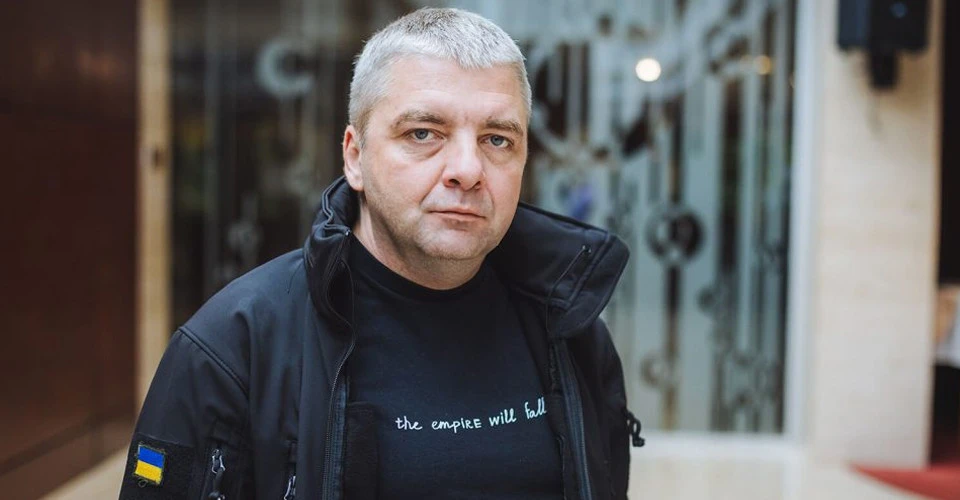
The Russians portrayed you as a criminal who supposedly mistreated civilians, which is laughable. Because I remember Maksym, with whom I worked. Sometimes we met after work, and once you heard that some Black student was beaten in the center of Kyiv, and immediately Maksym Butkevych rushed to help him. And now the Russians claim this same Maksym Butkevych mistreated civilians.
Yes, it was absurd, and they only hurt themselves by doing this. They kept talking about Ukrainian war criminals, so they had to show them, but in reality, they didn’t exist. When publications started to appear in Russian social networks and media that I was a Nazi and a punisher, they picked the wrong person. I think it backfired, because many articles began to appear, including in international media, about what I was actually doing.
And in general, all the criminal cases are fabricated by the same scheme. Mine was one of the first. It was opened in August 2022, and in March 2023 the so-called Supreme Court of the so-called LPR of the Russian Federation convicted me. According to this case, I supposedly saw two local women in Siverskodonetsk and decided, fully conscious and calm, to kill them with a grenade launcher. Well, what do conscious people do? Of course, they kill others with grenade launchers for no reason at all.
It’s hardly worth saying that during the full-scale war we weren’t in Siverskodonetsk at all. We were never there. And on the specific date they assigned to me, I was in Kyiv. There was plenty of proof, but no one cared.
The cases were absurd to the core. Later, when I met other prisoners whose cases were fabricated, I realized the same group of people was behind them, using the same scheme. The victims are real. The civilians mentioned are real. These two women were indeed in Siverskodonetsk and were wounded by shelling. It was absolutely clear where it came from: the Russians, who while capturing settlements, shelled them heavily with artillery and mortars. And when they occupied the settlements, they found civilians wounded by their own fire and shifted the blame onto Ukrainian prisoners.
There was one young prisoner of war who, according to the case, threw a hand grenade 200 meters. I said he should compete in the Olympic Games. Another supposedly fired from a "Grad" system at 60 meters. The accusations were completely absurd, but no one cared. The sentences were written in advance, and prison terms were decided far from the courts.
Listening to you, I remember reading The Garden of Gethsemane by Ivan Bahryanyi back in school. I felt like I was pressed against a wall. It was frightening, terrifying, and painful, because the book is based on real events – how the Soviet Union destroyed our intelligentsia and what was done in NKVD prisons. Is it the same?
It’s the same system. There are moments I remember very clearly. After the first so-called interrogation in my criminal case – four hours of psychological, moral, and physical violence – they explained my options: what would happen if I agreed or refused to sign a confession. When I returned to my cell after those four hours, one of the first people I thought of was my great-grandfather, who was executed as an "enemy of the people" in the basement of the Poltava NKVD in 1938.
I had access to his original case and later to his rehabilitation file from the Khrushchev Thaw. There was very little material. But in the interrogation protocol, the first question was: “Admit it, when did you join the underground counter-revolutionary anti-Soviet spy network?” He answered that he didn’t know what it was about. The next question from the investigator was: “We know you’re lying. Tell us, who recruited you into this network?” And suddenly my great-grandfather replies: “Yes, I admit that I lied.” And so it goes.
But the text doesn’t say what happened between those questions.
Yes, it’s not written. But now I know it from my own experience. I don’t have the highest sentence, only 13 years of strict regime. But the system is the same. I thought it had disappeared. It didn’t. It only retreated for a while, hid in Russia, and then returned in full force. And 84 years after the death of my great-grandfather in a neighboring region of Ukraine, his great-grandson, that is, me, was also convicted for something he didn’t do, and confessed to it.
For me, it’s important to understand that the war we’re fighting is not only about defense and liberation. It’s about breaking this system, dismantling it, so that in another 80 years our great-grandchildren won’t be forced to sign confessions to things they never did.
Is there anything that haunts you from that captivity?
First of all, I have to say we were warned during reintegration that the toughest psychological state might come not right after release, but after three to six months, or even a year. And now I have to say it’s true. Because in the first months you’re just high on euphoria from being free. Every small thing you can do makes you happy.
I remember walking from one meeting to another along Khreshchatyk toward Independence Square, and suddenly I felt something I don’t know how to describe – when you physically feel this is reality. You’re walking along Khreshchatyk. You’re not imagining it, not remembering it, not dreaming it. It’s happening right now. I was walking and smiling with all my 30 teeth, probably surprising passersby. Even such things make you happy. But not completely, because I kept thinking about the guys who stayed in captivity.
Some of my platoon are still in captivity, though they’re being released little by little. I’m very happy about that. Just a few days ago, another soldier was released. And those I spent years with, the convicted prisoners, are still in the colony, because they’re almost never freed.
Then you get used to freedom anyway, you get used to having to choose. At first, it’s very hard. You go to a café, order coffee, and they ask what kind. And you freeze – what do you mean, what kind? Just coffee. Later you get used to it, but over time this normalization creates problems. Almost everyone who’s been in captivity has flashbacks, mainly emotional ones. A random situation can throw you back emotionally to where you were. Triggers are often impossible to predict.
I had long advocacy trips across Europe and suddenly realized that security checks at airports feel like searches and seizures. At first, I laughed at myself, then understood that humor really saves you there too. But still, you have to remember: mood swings, sharp shifts in your state, from euphoria to depression, or from openness to constant irritation. That happens too. Many people have sleep problems. I’m no exception.
I’m very grateful to people who come up during or after speeches and ask if they can hug me. That’s the right way, because I can, I need it, I love it. I joked at first, but then said seriously that I had two years of tactile deprivation, with very limited touch.
In captivity, I met people who suffered worse violence, went through heavy torture, which is the norm and the system there. I was lucky – I was beaten only a few times. It’s not right to ask directly about torture unless you’re careful and gentle. You can hug me, but usually people, if they want, will tell it themselves. If they don’t want to – you must never push. In general, treating a person with respect for their dignity is crucial when talking to former prisoners.
That’s why I get upset when I see journalistic pieces where someone shares their story, and the media takes the most shocking quote and puts it in the headline. You shouldn’t focus on what broke or destroyed a person. Respect for dignity is about how someone endured. And our prisoners endure, and some even come out stronger, more whole inside, strange as it may sound.
How do people react to your story abroad?
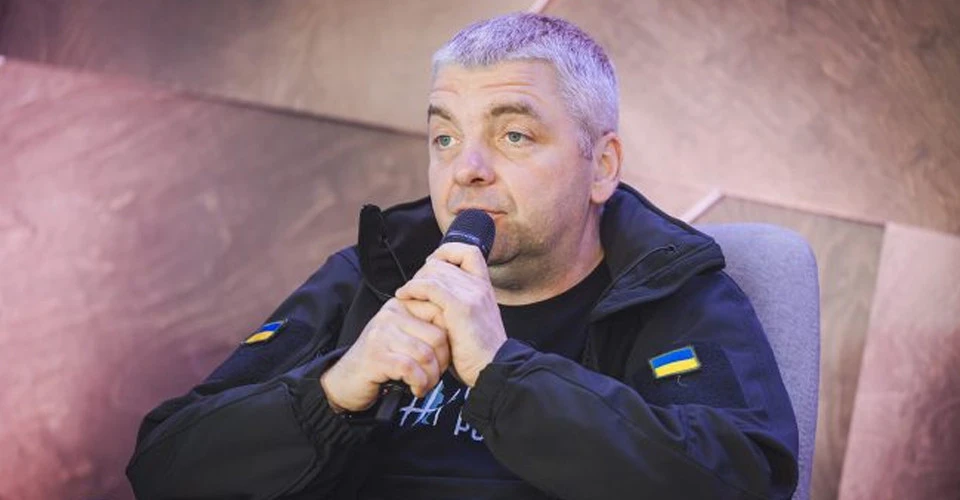
It depends. Some people find it strange. But I think what matters is not the shocking details, but simply that the story is told by someone who was there. They see a person who lived it. They’re not reading a human rights report, not hearing something distant. In front of them is someone who felt it on their own skin. That effect of presence is a little sobering, I think. Maybe more than a little.
You said that during captivity you saw the "Russian world" from the inside. What was it like?
I won’t say anything new. It’s a world where a person is worth almost nothing. An individual is not valued. It’s assumed they cannot influence the world around them. This agency, the ability to change things, is absent. One topic that always triggered the guards or local convicts was Maidan. They couldn’t understand why we did it, why we went to the streets. You know you won’t change anything, they said. The authorities will still do what they want, and all that.
And we told them they didn’t get it. We create society, and we change it. That’s our task. At the same time, we’re responsible for the state of our country. They have no faith people can change anything, but because of that they also believe they bear no responsibility. “The authorities decide, and I’m nobody. Just don’t stand out, sit quietly, maybe then they won’t beat you and will even feed you.”
At some point it became clear to me that captivity is a micro-model of Russian society and the “Russian world.” That’s why they think they’re not responsible for the war, though in fact they are. I tried telling some of the prisoners, not the guards, that this is a deal with the devil. He comes and says: “Give up your freedom, and I’ll take away your responsibility. You’re not responsible for anything.” You say fine, but he takes your freedom, and you stay responsible anyway.
There’s also this compensation mechanism. People told me more than once: they know they live badly, their kids will live badly, but they feel connected to this huge power, “Mother Russia,” and that supposedly everyone fears them and therefore respects them. Confusing respect with fear is a very typical trait of the “Russian world.” For me and for most Ukrainians I know, this world is the opposite of our values. It’s a clash of worldviews, a clash of values.
You say that you talked to the prisoners, but not to the guards. So there was no point in talking to the guards at all?
No, of course we talked to the guards too. Sooner or later, one way or another, it doesn’t matter, even if at first they treated us as “these bloodthirsty Ukrainian Nazis,” they still saw this person day after day for months or longer. And if the guard was not a sadist, then he began to treat people more humanly. As a person. With some of them you could talk, but the effect of Russian TV propaganda was strong there. They may dislike, distrust, even mock Russian propagandists – Skabeeva, Kiselyov, Solovyov. But when they open their mouths, Skabeeva speaks from there.
You say that criminal prisoners were fed better than Ukrainian prisoners of war. What was the menu?
The portions were very small. And the food was disgusting. Porridge, lousy soup, pieces of boiled fish, something that was supposed to resemble poultry, but we called it “pterodactyl” because it was just skin and bones. For 2–3 months the hunger was constant, even kept us from sleeping. Then the body adapted. After being convicted and moved to the criminal part of the prison, it was easier. Most of those convicted of crimes had relatives who could bring food. For us it was much worse. Help only appeared in the last few months of captivity, already in the colony. Then they allowed aid, before that there was none.
What kind of humor helped? How was it created?
Very often it was dark humor. Inevitably. But humor helped a lot. In general, there are two main things without which it’s very hard there. The first is believing that people remember you, think about you, and talk about you. If that disappears, a person quickly breaks down mentally and psychologically.
The second is humor. Those who lacked both had the hardest time. It could be dark jokes about beatings or worse. We laughed even at that, recalling how someone was tortured with electricity, how he twitched. Or we remade horrid Russian pop songs we heard. When there was a TV, one channel was “Muz-TV.”
In general, there was a constant sense of spiritual poverty in what they watched, listened to, and showed. The whole system. I think the main thing is not cruelty, not violence, but this meagerness, aesthetic and moral. But even those cheap songs were reworked. There’s a famous hit about a crimson Lada. We remade it: “Crimson lights, crimson Kamaz, you wanted the Canaries, but you’ll go to Donbas.” Or: “It’s better to cry in Poland than to laugh in captivity.”
I know you taught English even in captivity. How was that?
I was very afraid I’d lose English, because we had no practice. No books, no newspapers in any language, no pens, no paper. Not even toilet paper. But people are inventive, they find ways to live without. I sometimes say, for example, for a while we couldn’t cut our nails because they gave us nothing. We ground them into concrete. With toenails it was harder, you couldn’t grind them well. We laughed about that too.
But I really feared forgetting English, because it’s my working language. I composed texts in English in my head. I imagined speaking to an English-speaking audience on different topics more than once. And when it actually happened in reality, it was another dream come true. Later, in one cell we talked with our guys – both POWs and civilians illegally held. They asked if I could teach French. French began to return, which I thought I had forgotten. But since there was no outside information, the head began to recall things that seemed lost. For me it was very basic, but I started teaching it.
After a day or two the guys said: “It’s a pity you know French better than English, we want English.” I said I actually know English better. So we started learning English without texts, paper, or pens. I had never taught languages before, so it was very interesting. I understood they wanted to kill time, but my most diligent student made good progress. I hope he hasn’t forgotten it completely.
And you were not allowed to read books?
No, we were not allowed books. At least not in the part where POWs are kept. The librarian never came, nothing. At some point we started asking for at least a Bible. They said: “We will not give you books, we will look for a Bible.” They looked, but of course never gave one. A guard came later, thinking he was funny, and said: “The Bible is in the bibliotheque.”
Then, a few months later, a new psalter somehow appeared in our cell. By chance. That book was the only one for the next six months. Only after our sentencing, when we were moved to another part of the prison, did the librarian come for the first time. And in the colony there was a library. Then, when transfers were allowed, they gave me the books I requested. So you could read then.
The library even had Ukrainian-language books left from the Ukrainian era. All Soviet editions, but they remained until spring–early summer 2024, when they were removed. It was the Ukrainian books that were taken out. But I read both Ukrainian and Russian literature. For example, I was curious to rediscover Chekhov, who writes about Russian life. The main theme running through him is fear. People living in constant fear, often in humiliation. Not much has really changed.
In your opinion, why, after all those stories from captivity where Russian soldiers rape Ukrainian women, abuse soldiers, and kill families, are some Ukrainians still drawn to the Russian language?
I don’t know if it’s inertia or the fact that it’s hard for people who spent most of their lives in this gravitational field to leave it. I don’t want to make pathetic comparisons, like saying it’s a black hole that sucks you in, but I think for many it’s really hard to get out. Still, the process is happening little by little, because people now have a real alternative. We have many more interesting cultural products in Ukrainian. Much more than ever before.
You said Russian prisoners and guards were surprised that we had Maidan, that we came out and changed something. Did they know that, as a child, you actually spoke at the first Ukrainian Maidan – the Revolution on Granite?
"We all understand that this is only the beginning of the struggle, and we will continue to fight. That is why I want to call on all schools that have not yet joined us to support the student movement and the movement for Ukraine’s independence. I want to say that we supported you, support you, and will continue to support you. Glory to Ukraine!"
It was 1990. You were in the sixth grade. Did you know about your grandfather’s story then? What pushed you to go to the Maidan and support the Revolution on Granite? Later, you even went on hunger strike with those students.
When I recalled this moment in recent years, I thought that when I said it was only the beginning of the struggle, of course I couldn’t imagine how long it would be. But I was aware of what I was saying.
No, I didn’t know about my great-grandfather’s story yet, but I was in the movement for Ukraine’s independence, that’s true. In fact, I think this was typical for many in my generation. I was a completely Soviet child. I was happy when I was accepted into the October Youth, and then the Pioneers. I liked the values they taught us – solidarity, mutual aid – until it became clear that it was all hypocrisy and a huge lie built on fear. And this feeling of hypocrisy and inner disgust couldn’t help but push me toward political activity. We must remember these were very turbulent times. Everything was changing before our eyes. It was a new world, it was space. You could take part, so I jumped into it headfirst.
Did you imagine then, as a sixth-grader, what could be waiting for you in the future?
As a child, I was a member of the Union of Independent Ukrainian Youth. At first, they didn’t want to accept me because I was too young, but then they said there’s an exception to every statute, and they accepted me. My friends and I had this game: we took Stalin’s Article 58 of the Criminal Code – counter-revolutionary activity and all the related points, there are many – and we counted how much time they would give us if there was a rollback, if there was a putsch, which eventually happened. We replaced each execution with 25 years and added it up American-style, adding one to the other. We laughed at it.
But on the other hand, I must say that after some time, there was no more fear that it could actually be real. Especially in 1991. No one could predict what would happen next. I think our generation was lucky because we were born in one state and dismantled it with our own hands. We could choose which country we wanted to live in and which language was our native one. Borders that seemed natural yesterday were collapsing before our eyes, and new ones appeared where they didn’t exist. We witnessed the turning point of an era. But of course, it was hard to imagine that the time would come when Ukraine would be at the center of the world’s attention because of bloody, tragic events.
Before you took up arms to defend Ukraine and ended up in Russian captivity, besides journalism, you were a human rights activist. You were always on the side of those who needed help. Does that remain with you?
Yes, it remains with me. It’s still my life’s work. And now I really hope to return to human rights. Actually, it’s already happening little by little. And I must say, I’ve never valued human rights as much as I do now. Because, having been in a place where their violation is constant practice, you begin to value them much more.
On the other hand, I think – and some of our foreign partners or people abroad don’t understand this – these rights are not guaranteed forever. They need protection. They need to be nurtured, cultivated, defended. They are not something that is always there and doesn’t need care. They do. And they need protection. I really hope I’ll be able to invest at least a little into this and continue.
When our military and civilians are released from captivity, we see on video how thin they are, exhausted from hunger, some crippled. And then we see Russian prisoners of war who are well-fed and look fine. I understand that we follow international treaties. But why doesn’t Russia do the same, while our treatment of Russian prisoners of war is completely different?
Even while in captivity, we often discussed how we thought Russians were being treated here. I must say, most of those I was with in captivity said they really hoped the Russians weren’t treated the way they treated us. Because we cannot afford to be like them. We are not them.
We really try to follow international humanitarian law. We committed to this when we joined the relevant conventions, which Russia also joined. But contempt for international law, especially humanitarian law and international institutions, is one of the pillars of the "Russian world". They’re not interested in following the rules of these conventions — they’re interested in tearing them down. They want the law of the strong, not a set of rules regulating relations between nations.
I said that I heard the phrase "Geneva Conventions" twice in captivity. The first time was when we were being taken to Luhansk, and a group of Russian soldiers told us: "You are not prisoners of war, you simply disappeared in the combat zone. If you behave badly, you may never appear. But when they take you to your destination, we didn’t know where we were going, and you are registered, then you will become prisoners of war, the Geneva Conventions will start to apply to you, and so on." This was untrue, because the Geneva Conventions never applied to us in reality.
The second time I saw the Geneva Conventions – specifically the third, on prisoners of war, and the fourth, on civilians – was in my criminal case. I was accused of violating them. It read like a bad joke. Dark humor. Just like I was accused of violating the European Convention on Human Rights – the same one no longer in force in Russia. They are simply mocking these rules and obligations. And they do it openly.
We see how cynically they now comment on events in the Middle East, saying you can’t bomb peaceful cities. We are different. That’s why I’m glad we really do treat Russian prisoners differently. You can’t let emotions, especially negative ones, dictate your behavior. No, we have rules.
Have you seen the conditions Russian prisoners of war are kept in? How are they fed? Can they read books?
Yes, they can read books. I’ve seen the conditions they are kept in. Thanks to my experience, I already know what to look at. In basic things, their conditions and ours are like heaven and earth.
And do they have toilet paper?
They even have cubicles with doors. These little things surprise me the most, because they mean a lot. Doing everything in front of everyone, for years, inevitably affects your psyche. They even have shower curtains. These seem like little things, but they make a big difference.
When you first saw the conditions Russian prisoners in Ukraine were living in, did you feel envy or anger?
I felt a complicated knot of emotions, but mostly joy. I was glad we followed the rules and didn’t mistreat people. That’s what I hoped for. Envy? A little, when you realize they can buy food with money they earn from work, while you had nothing like that. But thank God at least someone is following the rules, and that’s us.
So you worked, but you weren’t paid?
No, I wasn’t.
What did you dream about most from practical things in captivity?
It depended on the stage of captivity. At first, it was very important just to see myself in the mirror. In the first months it was hard. When I finally saw myself in a mirror in the medical office, I came back to the cell in shock. We weren’t taken outside at all, we sat in these stone bags. The clipper had broken months earlier, so I had a patch of cut-off hair, my skin was grey-green, I had lost a lot of weight. It was a person I didn’t recognize. Seeing myself in the mirror mattered.
Later, in the colony, the situation was different, and we had some access to things. Maybe a mirror, or a proper razor, because what they gave us was useless. Maybe spices to make food at least somewhat edible. For me, it could be specific books.
Will there ever be a time when Russian prisons stop treating people like this?
I don’t know, I left my crystal ball at home. But I hope so. This time, when I came to Lviv, I fulfilled a long-standing intention – I went to the "Prison on Lontskoho" museum. Earlier, in East Berlin, I visited the former Stasi prison in Hohenschönhausen specifically to compare their conditions with ours.
The guide in Berlin understood why I came, and after the tour she asked if I was triggered, what my impressions were. I said I felt the same knot of emotions, but mostly joy. Because political prisoners were once held there, and now people come, see what it was like, and leave free – people from Germany, a group of Spanish schoolchildren who were with me, or former Ukrainian prisoners. And it feels like a promise, a hope that someday the same will happen in the places where I was kept.




- News