


'Czech Trump' returns: what Andrej Babiš's victory means for Ukraine, Europe



The victory of Andrej Babiš's party in the Czech elections marks a political shift that Ukraine may also feel. The former prime minister, a billionaire and populist, will once again lead the government – and his foreign policy views are causing increasing debate in Europe
Contents
- Biography: from a communist agent to one of the richest people in Central Europe
- Path to power and the high-profile Stork's Nest scandal
- Evolution of views: from pro-European to populist
- Why he is called pro-Russian and what he says about Ukraine
- What the experts say
In the parliamentary elections in the Czech Republic, held on October 3–4, the ANO (Yes!) party, led by Andrej Babiš, secured a convincing victory, winning 34.5% of the vote. The victory of ANO, which falls short of a constitutional majority (80 out of 200 seats), opens the way for complex coalition negotiations, likely with right-wing populist forces. For Ukraine, this event could be a turning point: Babiš promises to reduce military aid to Kyiv, cancel a key ammunition supply initiative, and focus on the Czech Republic's domestic problems.
Babiš is called a pragmatist, a populist, and even the "Czech Trump." Espreso will explain in more detail whether the Czech Republic will become a new headache for Ukraine due to Babiš's openly pro-Russian views.
Biography: from a communist agent to one of the richest people in Central Europe
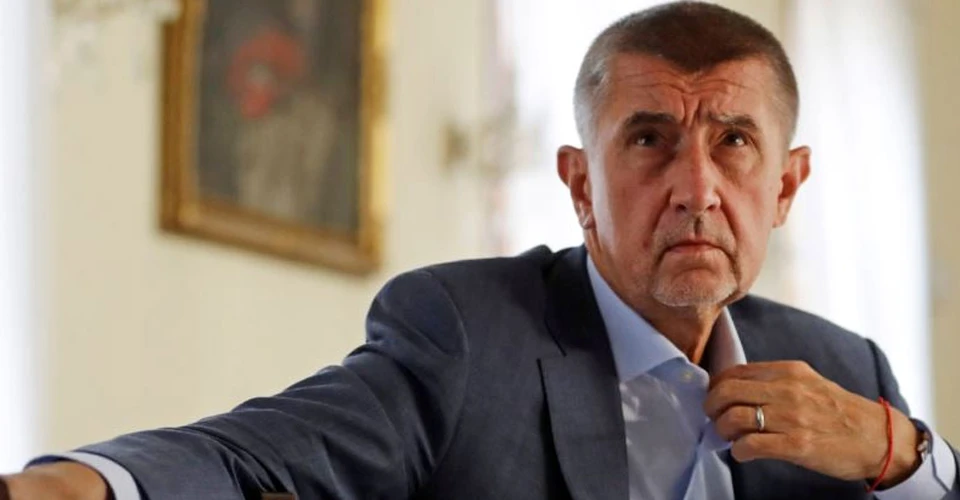
Andrej Babiš was born on September 2, 1954, in Bratislava, which was then part of Czechoslovakia. His father, Štefan Babiš, was an engineer, diplomat, and member of the country's communist party, and his mother, Adriana, came from the Carpathian Germans of Yasinia (now the Zakarpattia region of Ukraine).
The family held a privileged position in communist society, which allowed Andrej to receive a quality education. He studied at a gymnasium in Bratislava and later in Geneva, where his father worked at the Czechoslovak trade mission to the UN. In 1978, Babiš graduated from the University of Economics in Bratislava with a degree in international trade.
In the 1980s, Babiš worked for the foreign trade company Petrimex, which was involved in the export and import of chemical products. He worked in Morocco, where, according to the archives of the Czechoslovak secret police (StB), he was registered as an agent under the pseudonym "Bureš." Babiš himself categorically denies collaborating with the StB, calling the accusations politically motivated. The Slovak Nation's Memory Institute confirms the existence of the documents. Babiš's lawsuits against these accusations have not yet reached a final verdict.
After the Velvet Revolution of 1989 and the dissolution of Czechoslovakia, Babiš took advantage of the opportunities of a market economy. In 1993, he founded the company Agrofert, which started by trading fertilizers but quickly grew into a conglomerate of over 250 companies in agriculture, the food industry, chemicals, and media. Agrofert received significant subsidies from the EU – estimated in the 2010s to be over 20 billion crowns (approximately 800 million euros). The acquisition of media, including the influential newspapers Lidové noviny and Mladá fronta DNES, strengthened his influence, drawing comparisons to Silvio Berlusconi. Babiš's fortune is estimated at $4.3 billion, making him one of the richest people in Central Europe (he is also on the list of the top 1000 richest people in the world).
Path to power and the high-profile Stork's Nest scandal
Babiš's political career began in 2011 when he founded the ANO movement (Action of Dissatisfied Citizens), positioning it as an anti-corruption platform against the "corrupt elites."
In 2013, ANO won 18.65% in the parliamentary elections, and Babiš became Minister of Finance (2014–2017). In 2017, the party won with 29.64%, and he transferred Agrofert to a trust (a move critics called cosmetic) to assume the post of prime minister, becoming the richest head of government in the Czech Republic.
But his government faced scandals, particularly over allegations of EU subsidy fraud in the Hnízdo čápa (Stork's Nest) case. This scandal became one of the most high-profile political and legal episodes in the Czech Republic in the last decade.
It all began in 2007–2008, when the ecological and recreational complex Stork's Nest – a farm with a hotel and conference hall on the shore of Lake Slavníč, 60 km from Prague – received an EU subsidy of about 50 million Czech crowns (approximately 2 million euros). These funds were provided under a program to support small and medium-sized businesses in poorer regions of the EU. The problem was that the complex at that time belonged to Agrofert, Babiš's giant conglomerate, which clearly did not meet the criteria of a "small company."
To get around this, Babiš temporarily transferred the assets to relatives (his wife, children, and partner), creating a separate company that applied for the grant. After receiving the subsidy, Stork's Nest returned to Agrofert's control through a subsidiary, IMOBA. The police and the European Anti-Fraud Office (OLAF) later recognized this as manipulation, i.e., concealing the real owner to illegally obtain funds.
The investigation intensified in 2015–2017. And in January 2018, OLAF published a report recommending that Brussels take "all appropriate measures" regarding the fraud, and the Czech prosecutor's office charged Babiš and 10 other people with subsidy fraud. Babiš denied any wrongdoing, claiming that the assets belonged to his children, not him personally. However, he refused to provide documents that would confirm this version.
The scandal peaked in November 2018, when an interview was published with Babiš's son, Andrej Babiš Jr., who lived in Switzerland. He, who has mental health problems and was involved in the ownership of the complex, stated that he had been "kidnapped" and held against his will in Crimea (annexed by Russia), Kaliningrad, Moscow, and even the Ukrainian city of Kryvyi Rih, to prevent him from testifying against his father.
According to him, this was organized by Petr Protopopov, a driver from Agrofert and the husband of psychiatrist Dita Protopopová, who was treating Andrej Jr. in Prague. Babiš Sr. rejected the accusations, saying that his son has schizophrenia and claiming that he went on "vacation" himself. This story caused a political storm in the country, and the opposition demanded his resignation. However, former communist and ex-president Miloš Zeman, an ally of Babiš, defended him, promising to reappoint him if the government fell.
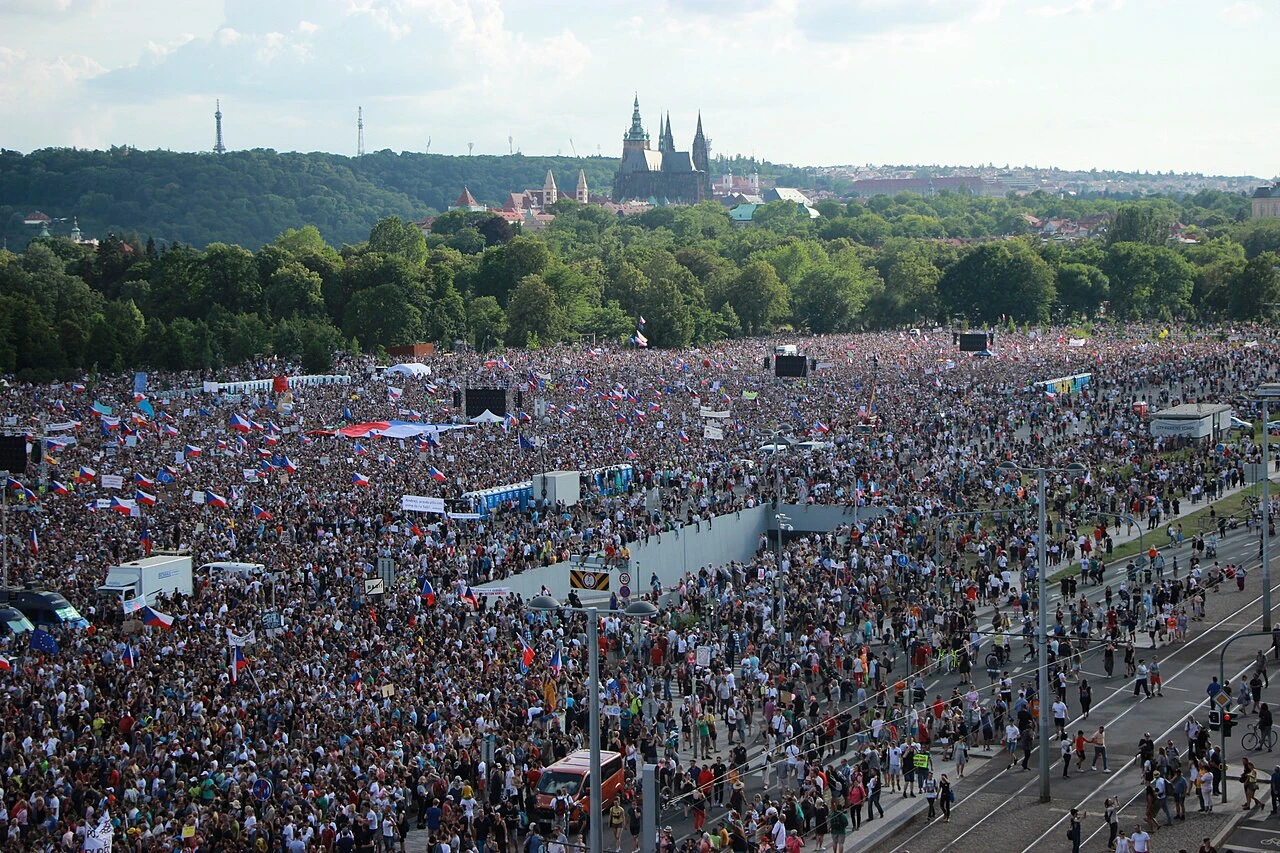
Mass protests periodically occurred in the country. In particular, in 2019, 250,000 people gathered in the center of Prague – the largest rally since the Velvet Revolution of 1989.
The consequences for Babiš's government were fatal. The Stork's Nest scandal, combined with dissatisfaction over the COVID-19 pandemic and other accusations, undermined voter confidence. In the parliamentary elections in October 2021, ANO won 27.12% and lost to the opposition coalition.
Babiš resigned on November 17, 2021, and Petr Fiala became prime minister. However, the legal finale of the case turned out to be ambiguous. In January 2023, a court of first instance acquitted Babiš, finding that the prosecution had not provided sufficient evidence of intentional fraud. The prosecutor's office appealed the decision, but this verdict allowed Babiš to declare his "innocence" and use it politically, shaping the image of a reformer "persecuted by the system." It was against this backdrop that he began his political comeback, which culminated in his party's victory in this year's elections.
Evolution of views: from pro-European to populist
Initially, Babiš positioned ANO as a centrist, pro-European force. From 2014–2017, as Minister of Finance, he supported European integration, reforms, and anti-Russian sanctions after the annexation of Crimea. He even called himself a "Europeanist," criticizing the British Brexit.
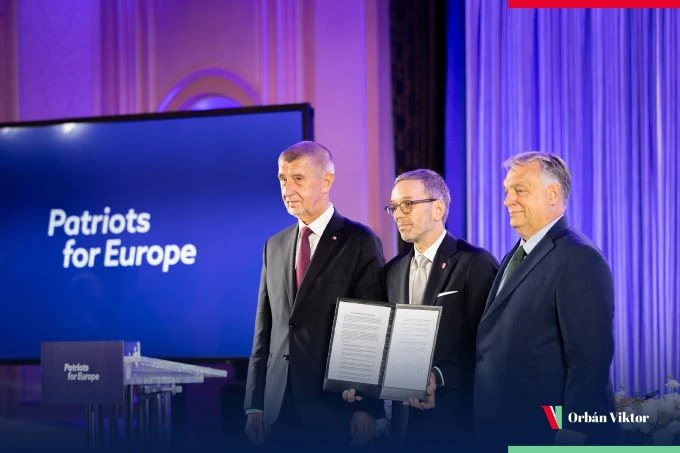
However, since 2017, after the scandals, his rhetoric has radicalized. He began to express typical anti-migrant statements, became a critic of "Brussels bureaucracy" and the "green course." Babiš joined the Renew group in the European Parliament, but in 2024 he left it, creating Patriots for Europe with Viktor Orbán and Herbert Kickl (FPÖ of Austria) – an alliance of the right that focuses on sovereignty, anti-migrant policy, and climate skepticism.
In fact, this evolution is related to the voters. ANO "steals" votes from the right and the left by playing on public dissatisfaction. Babiš also calls himself a "Trumpist" and praises the return of Donald Trump. As CNN notes, Babiš also promises to "make the Czech Republic great again," handing out, like Trump, "Strong Czechia" baseball caps inspired by the MAGA slogan.
In Babiš's opinion, the Czech Republic should think first and foremost about itself. His media empire reinforces this populism.
"We want the Czech Republic to become the best place to live in the European Union, and we will do everything to make that happen," he told his supporters after winning the parliamentary elections.
Why he is called pro-Russian and what he says about Ukraine
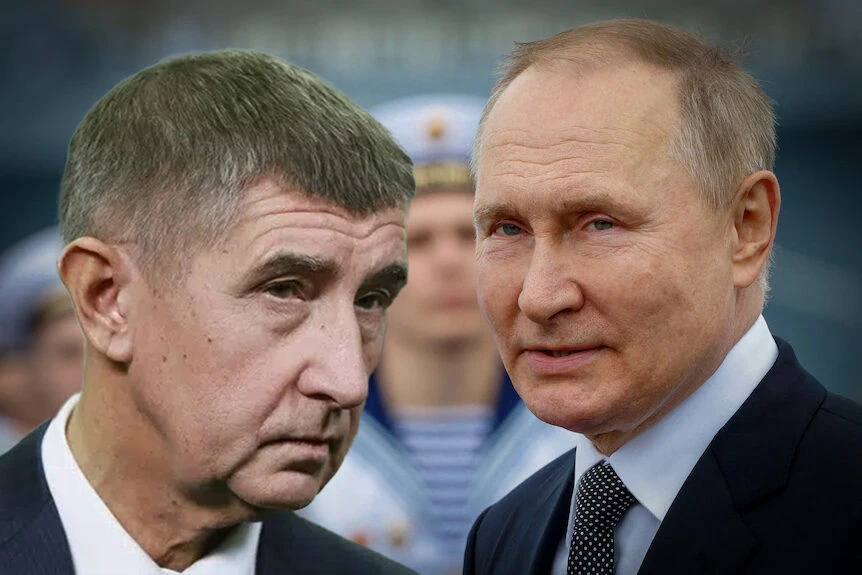
The "pro-Russian" label appeared due to Babiš's clear alliance with Hungary's Orbán and Slovakia's Fico on issues related to Ukraine, namely, that diplomatic solutions to the war should be sought, Ukraine should not be helped with weapons, and it should not be invited into the EU. In fact, this is what the Kremlin wants – to cut off Western aid to Ukraine in order to absorb it through a resource advantage.
In particular, after his election victory, Babiš stated that Ukraine is "not ready" for EU membership, and that NATO, not the Czech Republic, should be responsible for supplying shells to Kyiv.
"First we have to end the war, and we can cooperate with Ukraine, but you are not ready for the European Union. No one should profit from the war, so the supply of ammunition must be transparent and handled by NATO," the politician said.
That is, Babiš may cancel the important Czech initiative for the supply of shells, which since 2024 has been supplying Ukraine with about 1.5 million artillery shells annually with funds from NATO donors. And this could quickly be reflected in the situation at the front, when the "shell hunger" of the Ukrainian Armed Forces could allow the Russians to advance.
Foreign Minister Jan Lipavský told Politico back in April that Babiš is spreading "Russian narratives" in Europe and is a "nightmare for European security."
"Babiš is constantly playing with Russian narratives. He is a great friend of Orbán, and he would like to drag us into such a policy. Babiš said he would stop the ammunition initiative, and he also couldn't say on public television that he would commit to Article 5 if Poland were attacked by an enemy, he was very uncertain on this issue," Lipavský noted.
At the same time, Babiš himself does not position himself as a supporter of direct friendship with the Kremlin – he more often talks about "national interests," Euro-optimization, and the need to "balance" foreign policy. However, in practice, his one-sided calls to reduce military aid and his skepticism towards sanctions have led to him being perceived as a figure who could potentially lead the Czech Republic away from active support for Ukraine.
However, Babiš's real influence will depend on the coalition mathematics in Prague, international pressure, and internal legal and institutional constraints that could restrain the drastic steps of the likely old-new prime minister.
"To become prime minister, Babiš has to overcome some obstacles, including conflict-of-interest laws as the owner of a chemical and food empire, as well as long-standing fraud charges related to the Stork's Nest, " notes Reuters.
What the experts say
The Economist emphasizes that Babiš is a pragmatist with a commercial background. Therefore, it is advantageous for him to appeal to the electorate with sensitive topics of economy and social policy, but he may soften his foreign policy position so as not to create conflicts with partners in the EU. At the same time, the publication warns that his victory could strengthen the trend in Central Europe towards refusing aid to Ukraine. Thus, the Czech Republic could be added to the pro-Russian bloc of Hungary and Slovakia.
"Critics fear that if the right-wing billionaire returns to power, the Czech Republic could become a new 'object of disgust' for the EU alongside Viktor Orbán's Hungary and Robert Fico's Slovakia," says Politico.
The Atlantic Council in its analytical material indicates that although Babiš has a history of Eurosceptic rhetoric, he has often demonstrated a "pragmatic" approach.
In particular, Czech political scientist Josef Mlejnek noted that fundamental changes in foreign policy from a Babiš government are not expected due to the need to hold on to power, weigh coalition compromises, and not alienate the West.
In contrast, Pavel Havlíček, a research fellow at the Association for International Affairs Research Center, told Suspilne that Babiš is not actually a pro-Russian politician.
"He is, of course, a populist politician. He had very good and correct relations with Volodymyr Zelenskyy when Babiš was still in power. That was back in 2019. ... Babiš is a pragmatist. He also has some of his own interests related to Ukraine. Andrej Babiš knows the ultra-left and far-left politicians in the Czech Republic well. To form a coalition with them, he will, of course, have to pay a price," said Havlíček.
As for the comparison with Orbán, Babiš is still very far from his influence. After all, Orbán has systematically strengthened his control over the country's institutions, media, and judiciary, taking the Hungarian political system under his control. Therefore, the phrase "the second Orbán" is more of a warning metaphor than an accurate prediction about the future of Babiš and the Czech Republic.
Reuters notes that Babiš's populist promises, such as raising wages and lowering taxes, could lead to a serious blow to the budget. Analysts warn that the projected increase in spending could increase the deficit and public debt of the Czech Republic and thus make life even more difficult for Czechs.
So, the final fate of the new Czech government and whether Babiš will really be appointed prime minister will become known in the coming days. Negotiations are currently underway between the parties that entered parliament.




- News