


2025 live war map: year-end summary



In 2025, Ukraine experienced one of the most difficult periods since the start of the full-scale war. Only 2022 was worse. This year became the year of battles for towns, primarily in the Donetsk region. Russians captured Kurakhove, Toretsk, and Siversk, while fighting for Pokrovsk and Myrnohrad continued throughout the year. By year's end, battles began for Huliaipole, Lyman, and Kostiantynivka, with the front rapidly approaching Kramatorsk and Sloviansk after the loss of Siversk
In 2025, Ukraine experienced one of the most difficult periods since the start of the full-scale war. Only 2022 was worse. Society has accumulated fatigue, and critical military problems can no longer be ignored. The main one is the failure of mobilization, resulting in an avalanche-like growth of casualties and loss of territory.
December is still coming to an end, but already 4,200 square kilometers of occupation have been recorded, whereas in 2024 Ukraine lost 3,600 square kilometers, and in 2023 only 110 square kilometers.
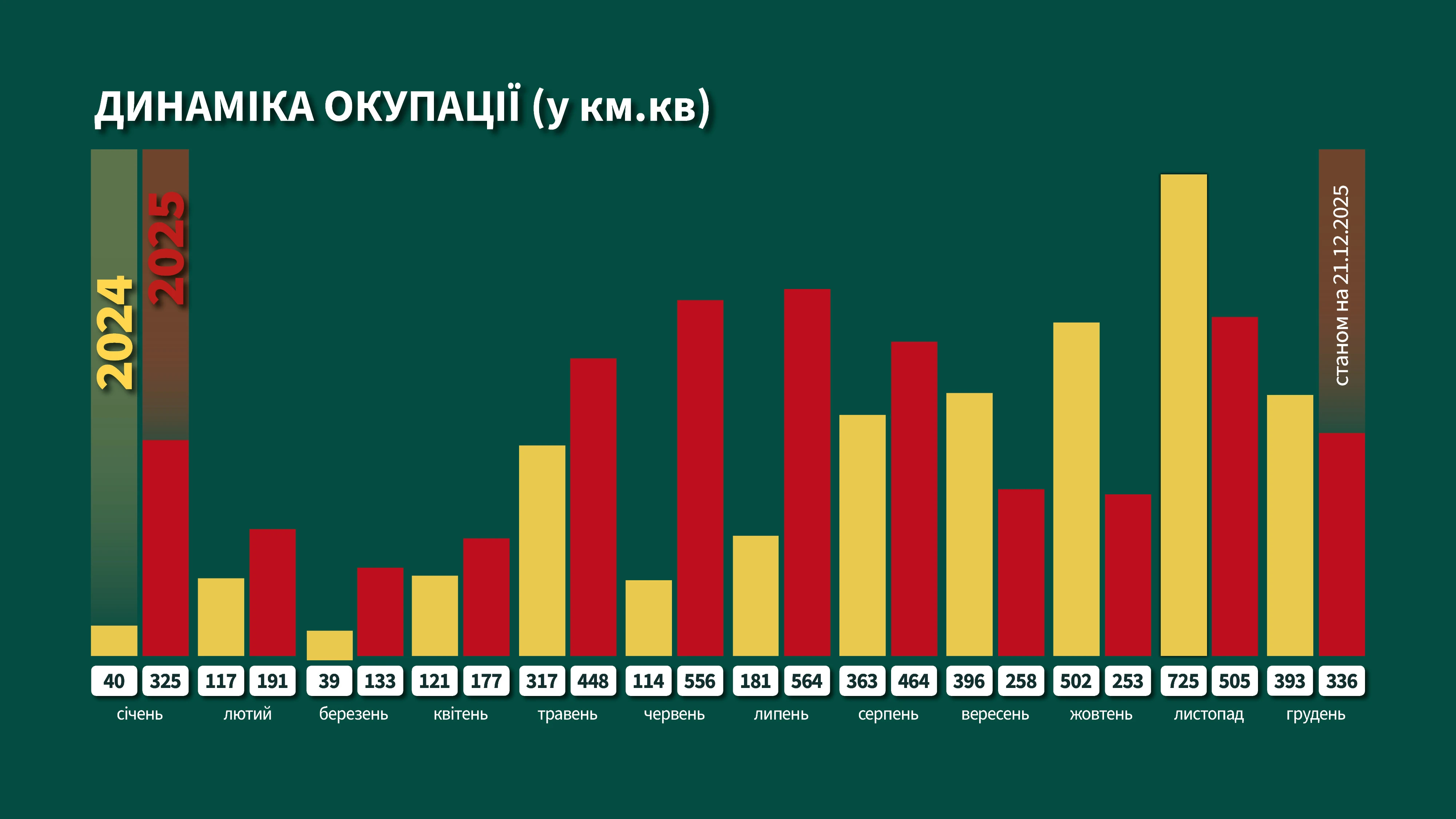
On the other hand, compared to 2022, after a series of Ukrainian counteroffensives, Russia captured less than 1% of Ukraine. 0.97%, to be precise.
This once again demonstrates that Ukraine has sufficient territorial depth to counter Russia. And the greatest value is people, not square kilometers. Such is the merciless arithmetic of this war.
This year saw not only increased intensity of combat operations but also a change in tactics—for example, the seasonality of offensive campaigns disappeared. Russians started their major offensive in October 2024 and have not stopped it since.
Their main target was the Donetsk region, where 80% of all fighting took place throughout the year, with the remaining 20% in the Sumy, Kharkiv, Zaporizhzhia, and Kherson regions.
Already at the beginning of the year, Russian forces hit Ukrainian defenses at Pokrovsk and Myrnohrad. Throughout the year, daily, these two cities withstood 30% of all assaults on the front—between 40 and 100 attacks per day.
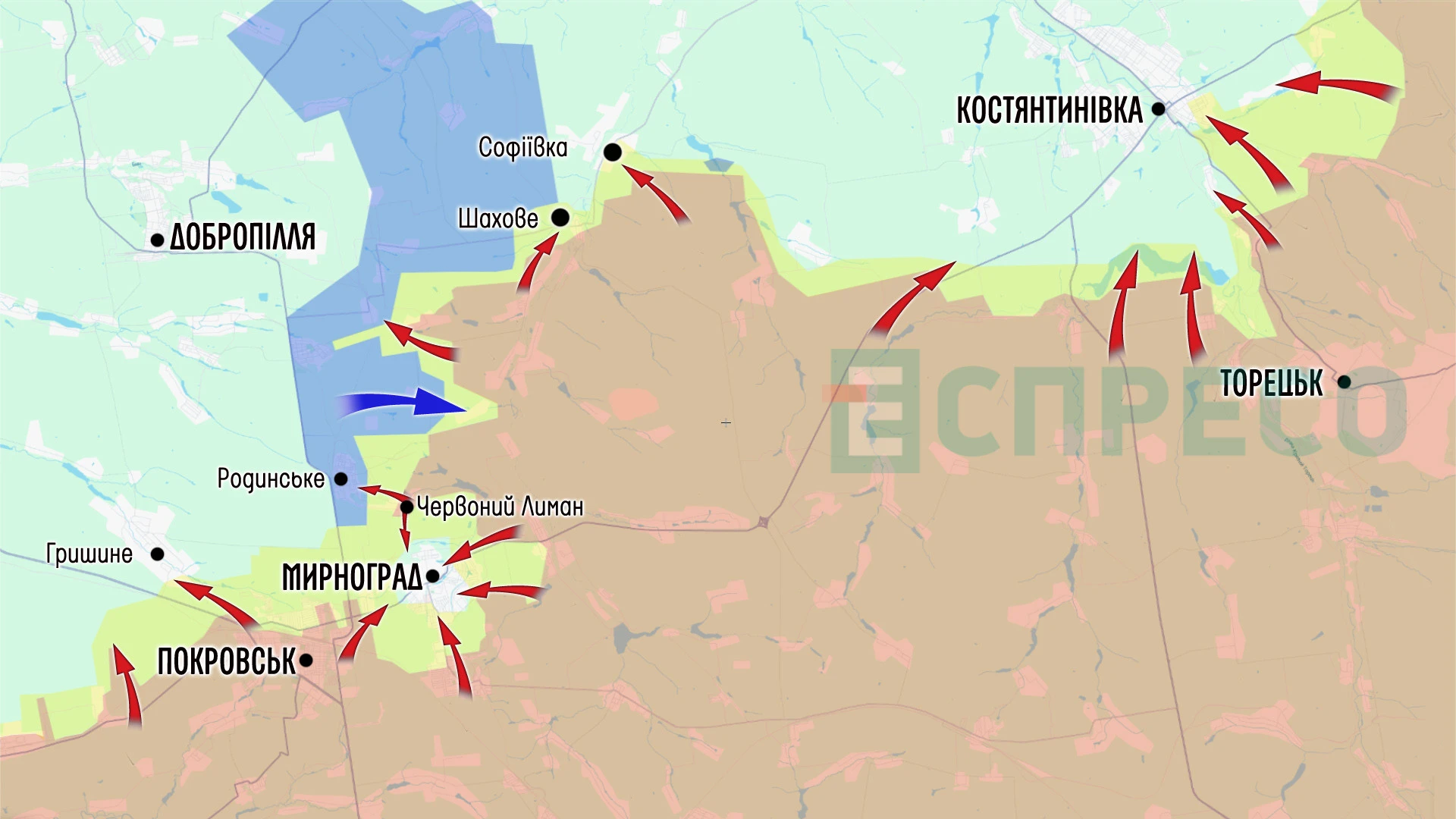
In fact, 2025 is the year of Pokrovsk's defense, which held back the Russian onslaught within its walls and prevented Russia from advancing deeper into Ukraine.
Bypassing Pokrovsk from the flanks did not work. On one side, Russia got stuck in the fields of the Dnipropetrovsk region, and on the other, they were repelled near Dobropillia.
Nevertheless, as last year, Russians advanced most on the southern Donetsk front.
Here they occupied powerful defensive centers in Kurakhove and Velyka Novosilka. They negated all the gains of the Ukrainian Armed Forces' counteroffensive in 2023 and also moved beyond the Donetsk region, breaking into the Dnipropetrovsk and Zaporizhzhia regions.
Last year, Russians advanced 35 km from Vuhledar to Velyka Novosilka, and this year another 45 km from Novosilka to Huliaipole.
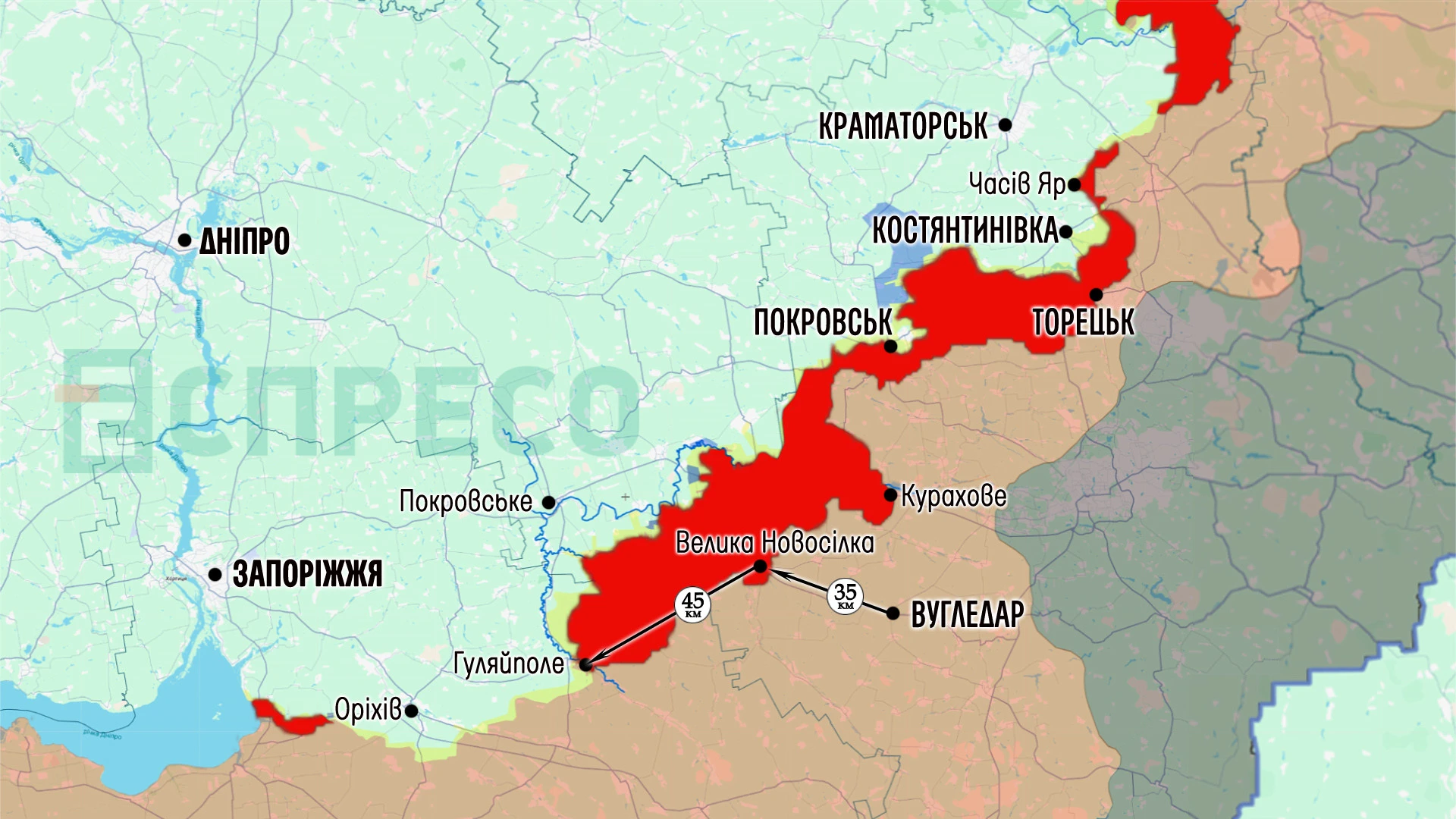
Further, on the southern front of Zaporizhzhia region, Russians had small local advances, the main one being the occupation of Kamianske and approaching Zaporizhzhia by 5 km.
However, overall, there was minimal fighting here, and as we see from the now critical situation near Huliaipole, this relaxed some of the defenders.
In 2025, the battle for Toretsk, which lasted just over a year, ended, and the battle for Kostiantynivka began, on the outskirts of which Russian assault groups were already being recorded.
Meanwhile, the defenders of Chasiv Yar, although they withdrew to the extreme western quarters, have held this city for a year and a half and are not allowing advances on Kostiantynivka and Kramatorsk from the east.
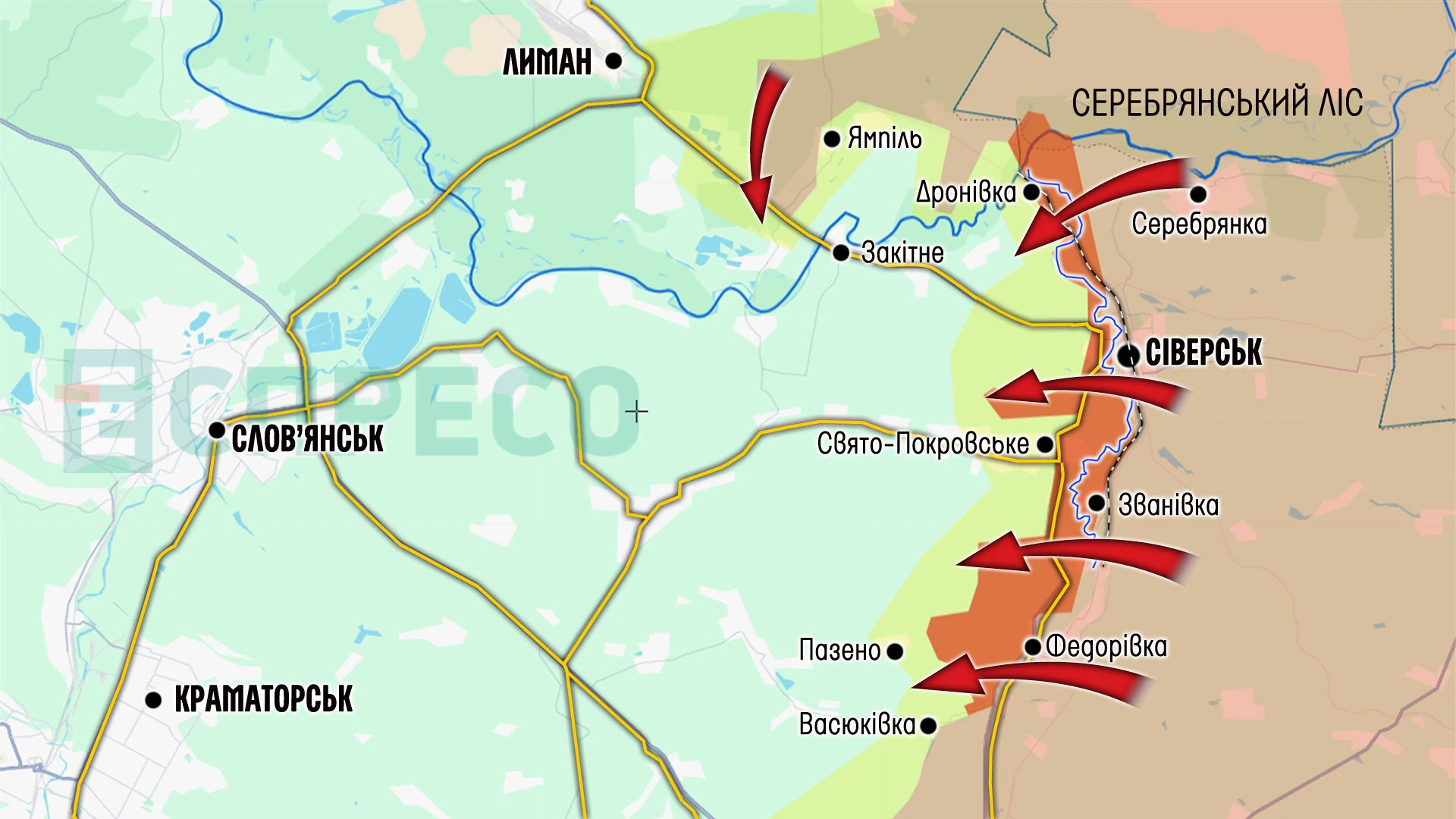
But at the same time, on another section, the Russian onslaught pushed Ukrainian defenders from Bilohorivka and Serebryansky Forest, and then occupied Siversk. And already from this direction, Russian troops continue moving toward Sloviansk and Kramatorsk—the last major city in the Donetsk region that Ukraine fully controls. The consequence of Siversk's fall may be the relatively quick loss of Lyman as well. Although, over the year, the advance here mostly stalled.
The further north, the more unsuccessful Russian attempts become. They could not accomplish anything near Borova, and the advance on Lyman, although it has progress, is not at all what was planned and certainly not proportionate to the amount of troops and resources involved.
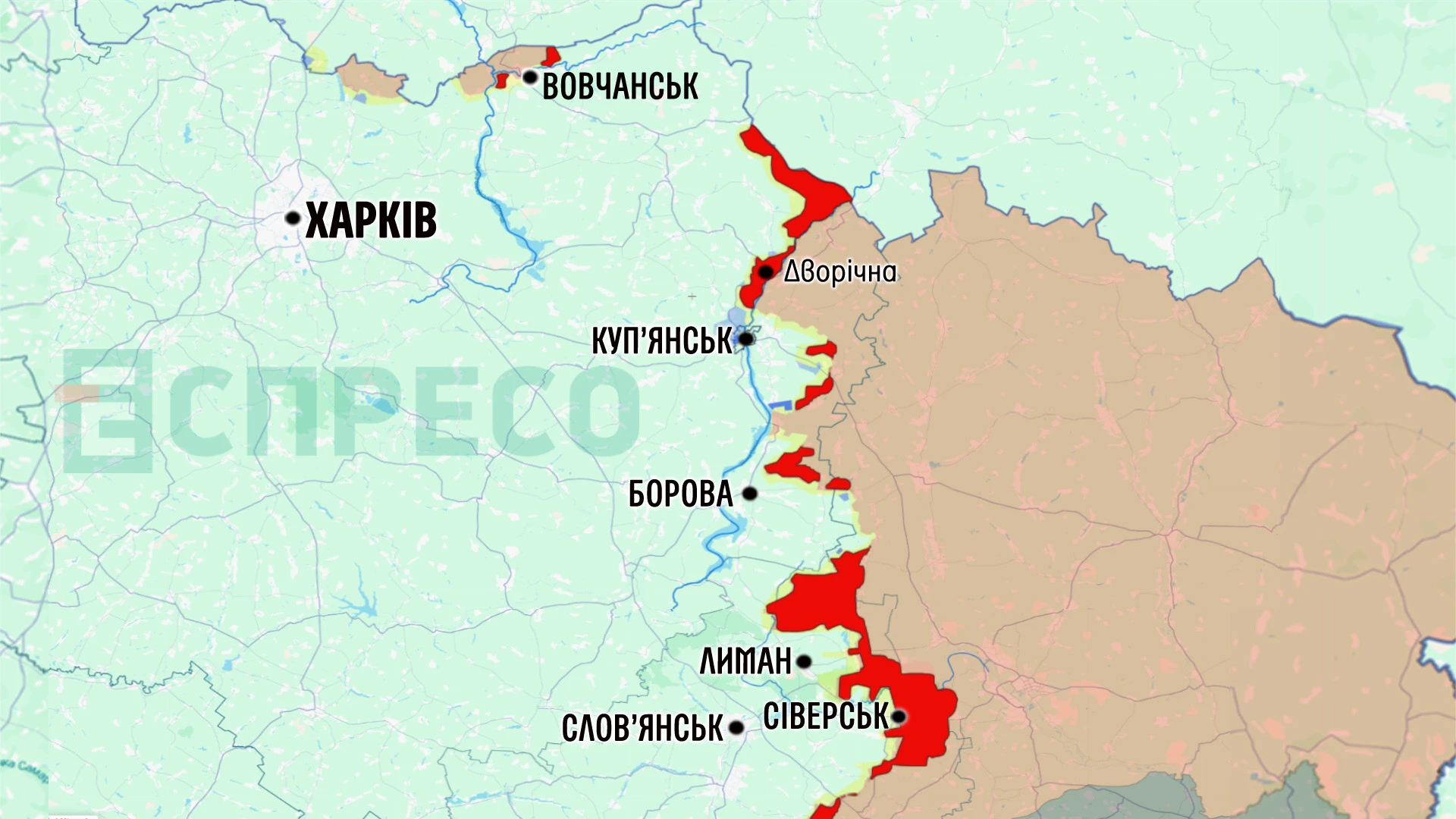
The battle for Kupiansk will be a separate epic story. The Russian army prepared for a year to take the city, creating two bridgeheads for this purpose: on the right bank of Oskil and along the border, and also intensified fighting for Vovchansk—all to stretch Ukrainian resources. However, the Ukrainian Armed Forces managed to liberate Kupiansk for the second time. Although the battle for the city is still ongoing. Russian generals, who don't want to go out the window, are now throwing new brigades into the assault on the city. Hopefully in vain.
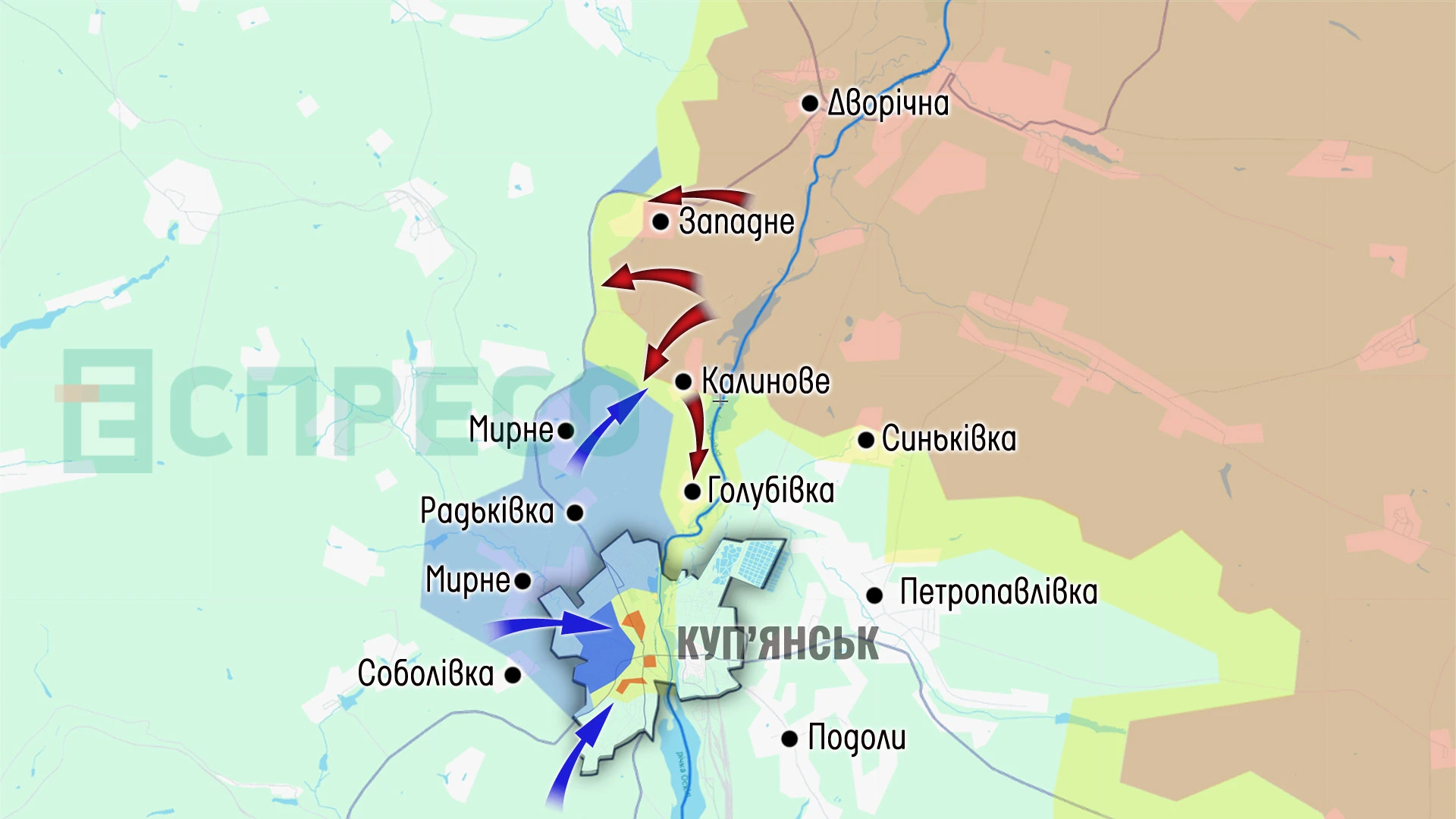
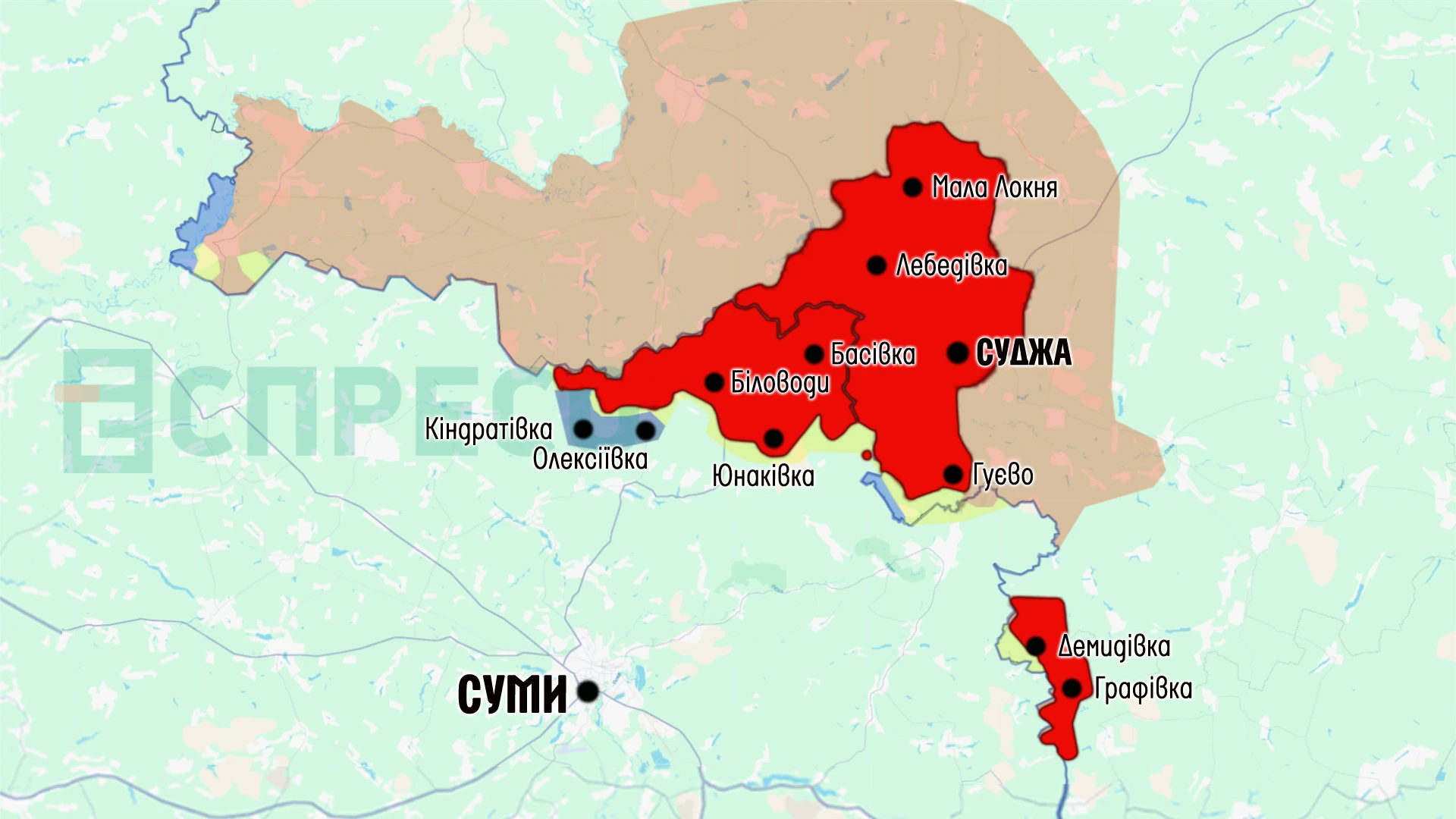
And finally, the Kursk region. Ukrainian Defense Forces withdrew from it in early spring, and already in May and June were forced to stop Russians in the Sumy region. At that time, Putin spoke about the need to create a 10-km buffer zone deep into Ukraine, but after the summer battles, the Ukrainian Armed Forces went on the counteroffensive, prevented a breakthrough to Sumy, and recaptured some of the occupied border villages.
Moscow continues to fantasize about a "buffer zone" and to this end is destroying infrastructure in all three border regions.
2025 is a year of continuous meat assaults. Due to a total shortage of armored vehicles, the Russian army changed tactics to infiltration by small assault groups. Meanwhile, Ukrainian Defense Forces have not found a counter to this throughout the year.
If at the turn of 2024-25, the Ukrainian Armed Forces eliminated over 45,000 Russian soldiers for three consecutive months, then throughout the rest of the year this figure only fell to an average of 30,000.
This allowed the Russian army, without conducting general mobilization, to maintain the number of its troops at a consistently high level of over 700,000, which made it possible to ensure a high level of intensity of assault operations.
Eventually, Putin announced continuous conscription into the army, which will allow maintaining the pace of replenishment.
Meanwhile, Ukraine at this stage lost the information war and failed mobilization. The number of casualties in 2025 became record-breaking.
The reason for this is rather slow reforms in the Armed Forces of Ukraine. The transition to the corps system, which lasted all year, was not completed by the end, whereas Russians reformed their troops during 2023. Ukraine preserved the ineffective Soviet-style management, and the successful experience of individual brigades was not extended to the entire army structure.
Ukraine was the first to create unmanned forces, but they got stuck in staff bureaucracy for a long time, whereas the Russian army created the Rubicon formation, which changed the course of combat operations in a number of areas from the Kursk region to Pokrovsk.
If in January Ukrainian defense forces shot down 2,500 tactical-level drones, by November it was over 11,000.
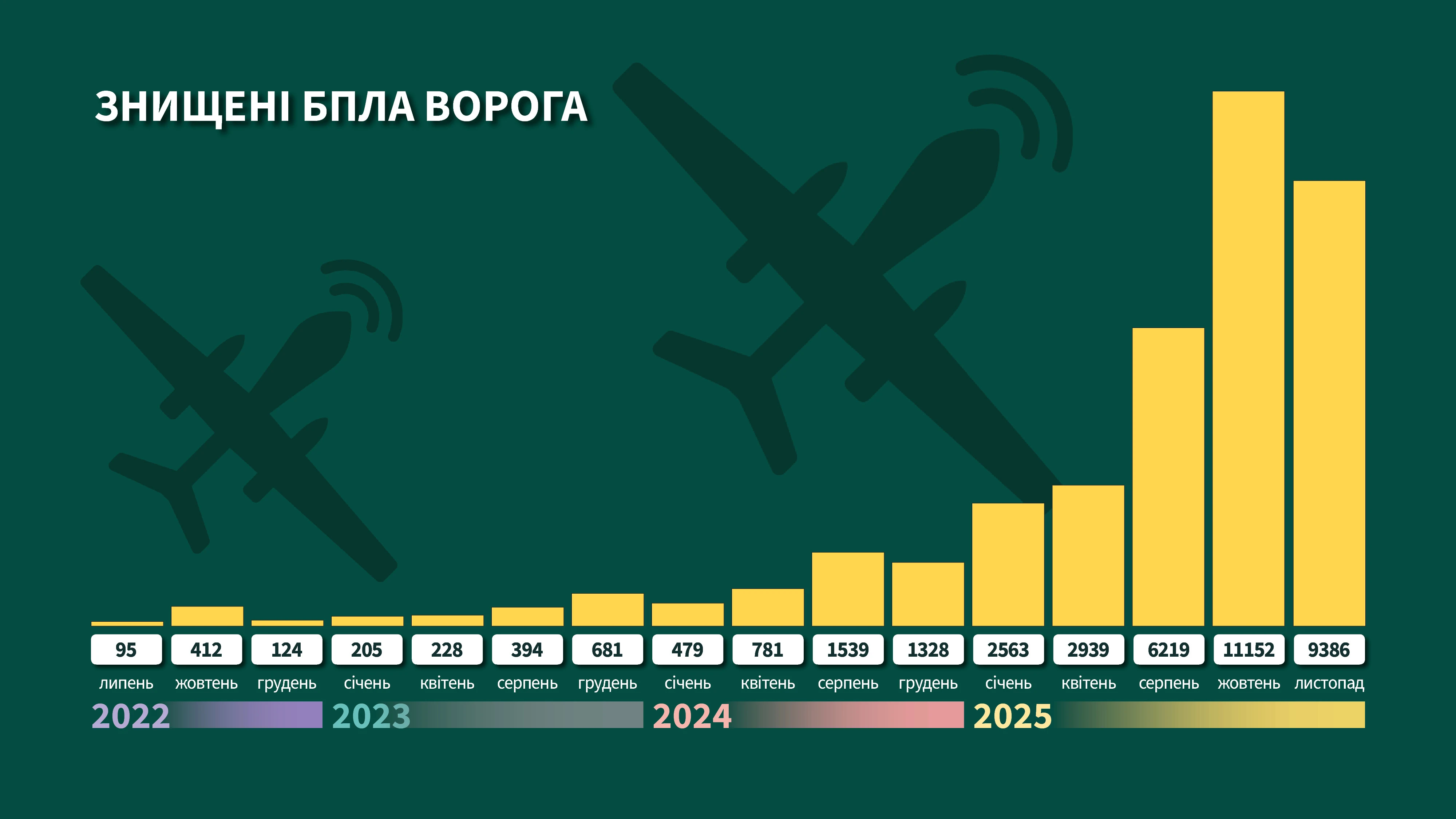
In addition, the Russian army uses over 1,200 tactical drones and more than 1,300 guided bombs weekly, which due to modernization now strike at 150 km.
In 2025, the war fundamentally changed—instead of armored vehicles, which are now in deficit, there appeared an unlimited number of drones that terrorize both military and civilians. Over 80% of injuries at the front are now from shrapnel.
The front line held by people disappeared; instead, a 20-km kill zone appeared, paralyzing logistics and rotations. Military personnel are forced to leave equipment and cover the last 10-12 km to positions on foot, which slows down ammunition delivery and evacuation. The hope here is perhaps for ground robotic complexes, attention to which has grown this year.
But despite all advantages—in resources and in people—Russians still failed almost all their plans for 2025. They did not occupy Pokrovsk, Dobropillia, and did not even approach Kramatorsk or Sloviansk. Sumy and Kharkiv regions withstood the blow, and the buffer zone did not spread like metastases along Ukraine's border.
The only unsuccessful direction for Ukraine is Huliaipole and Russia's advance toward Zaporizhzhia from the east rather than from the south. This task will remain for Ukraine for the next year, as will accelerating the modernization of the Armed Forces of Ukraine.
And there are also plenty of grounds for optimism. The unmanned systems forces finally gained momentum and set new records for destroying Russia every other day.
Ukraine became less critically dependent on partners—over 40% of weapons at the front are of Ukrainian production.
In three years, defense industry capacity grew from $1 billion to $35 billion. As a result, deep strikes became a daily occurrence in Russia. Ukrainian weapons are developing and striking farther and more powerfully.
Non-standard thinking and technological development allowed Ukraine to conduct the unique Spider’s Web operation, strike a submarine with an underwater drone for the first time, and carry out a strike in the Mediterranean Sea for the first time.
Ground robotic complexes successfully replace people on the firing line, and Pokrovsk's logistics are 80% sustained by drones. All this indicates that Ukrainians are ready to work on mistakes and hold out one day longer than the terrorist state.
Putin's war against Ukrainians will become longer on January 11, 2026, than the Soviet-German war, which lasted from 1941 to 1945. At the same time, Germans reached Stalingrad and retreated to Berlin, covering 4,500 km. And Russians managed to break through 70 km from Vuhledar to Huliaipole.
Strategically, the war has reached a deadlock; the collapse of the Ukrainian front did not happen and will not happen. But the solid concrete wall for the Russian economy, Russian society, and the Russian state is getting closer. It's hard for Ukraine to see it in the fog of war. But Putin doesn't want to see it either, which gives Ukraine hope that he won't manage to brake in time. Of course, unless he decides to flip the table with the cards and starts aggression against NATO.




- News