


Putin gains global attention, while Trump secures joint photo — key takeaways from Alaska summit



The August 15 meeting between Donald Trump and Vladimir Putin in Anchorage, Alaska, ended without any agreements. Despite the pomp with a red carpet and air show, a White House statement issued beforehand made clear this was only a “listening session,” not a real step toward peace
Plenty of symbolism but no results — that’s how most media and experts summed up the meeting between U.S. President Donald Trump and Vladimir Putin. The Alaska talks produced no visible agreements but reinforced the sense that the Kremlin used the event for its own publicity, generously enabled by the American leader. Espreso has the details.
How the meeting unfolded
The Elmendorf–Richardson military base near Anchorage turned into the stage for a grand political spectacle. Donald Trump arrived first — Air Force One landed at about 9:30 p.m. Kyiv time. He was met by journalists, security, a perfectly laid red carpet, and a stage emblazoned with ALASKA 2025. More than half an hour later, the Russian delegation’s plane appeared, with Vladimir Putin characteristically keeping everyone waiting.
Both presidents then exited their planes almost simultaneously. Overhead, F-22 fighters and a B-2 strategic bomber flew past, underscoring American power and the gravity of the moment. On the platform, the leaders smiled, shook hands, exchanged a few words, and headed to their motorcades. Notably, Trump and Putin rode in the same vehicle — the Russian president left his armored Aurus behind and joined Trump in the presidential limousine known as The Beast. According to The Independent, no translators or aides were present in the car, meaning the two leaders held a brief private conversation lasting less than 10 minutes.
The official talks began about an hour later. First came a one-on-one meeting with only interpreters present, followed by a “3-on-3” format. The Russian side was represented by Putin, his aide Yuri Ushakov, and Foreign Minister Sergey Lavrov, while the Americans were represented by Trump, his adviser and special envoy on Russia and the Middle East, Steve Witkoff, and Secretary of State Marco Rubio.
This conversation lasted about three hours, after which the two leaders appeared before the press for less than 15 minutes. The format was predetermined: only brief statements, no questions from journalists. Afterward, Trump and Putin did not share a working lunch but instead quickly headed back to their planes and departed home. Notably, there was no broader round of negotiations between the U.S. and Russian delegations. Meanwhile, according to Russian state media, the Kremlin leader managed to visit a Russian Orthodox Church in Alaska, lay flowers at a cemetery, and present the priest with an icon.
What Trump and Putin told the press
According to U.S. journalists, Putin spoke for about eight minutes at the press conference, while Trump spoke for only three. It was the Russian leader who opened the “conversation” with the media.
Putin thanked Trump for the invitation and said the talks had been constructive. He added that it was logical to meet in Alaska because of geography, since Russia and the U.S. are “close neighbors,” and the location has a “shared history” for both nations.
“I even greeted Trump as I stepped off the plane with the words: good day, dear neighbor,” Putin said, making Trump visibly smile.
Putin then spent several minutes recounting history, mentioning Soviet pilots buried in Alaska, before moving on to say that there had been no U.S.–Russia summits for years and that under Biden relations hit their lowest point since the Cold War.
“We have excellent relations with President Trump, we’ve spoken many times, and his special envoy has visited Moscow several times. As you know, one of the central issues was the situation around Ukraine. We see President Trump and his administration’s desire to resolve the Ukrainian conflict, their willingness to delve into its essence and understand its roots. I have often said that for Russia, events in Ukraine are linked to fundamental threats to our national security. Moreover, we have always considered and continue to consider the Ukrainian people as brothers, however strange that may sound in the current conditions. We share the same roots, and everything happening now is a tragedy for us. That is why our country is truly interested in putting an end to this,” Putin declared cynically.
He then added his usual “but,” claiming that long-term settlement requires “removing the root causes of the crisis.”
Putin went on, in a feigned tone, to say he agreed with Trump that “Ukraine’s security must also be ensured.”
“We are ready to work on this,” he said.
The Russian leader then spoke vaguely, saying he wanted to believe that common understanding would lead to peace.
“We hope that in Kyiv and European capitals this will be taken constructively and that there will be no obstacles, no provocations or behind-the-scenes intrigues to derail the progress that is emerging,” Putin said, effectively issuing a veiled ultimatum.
It was clear Putin wanted to read more from his notes on the subject but quickly skipped the pages and switched to economic cooperation with the U.S. He once again flattered Trump, repeating that the war would not have started if Trump, not Biden, had been president.
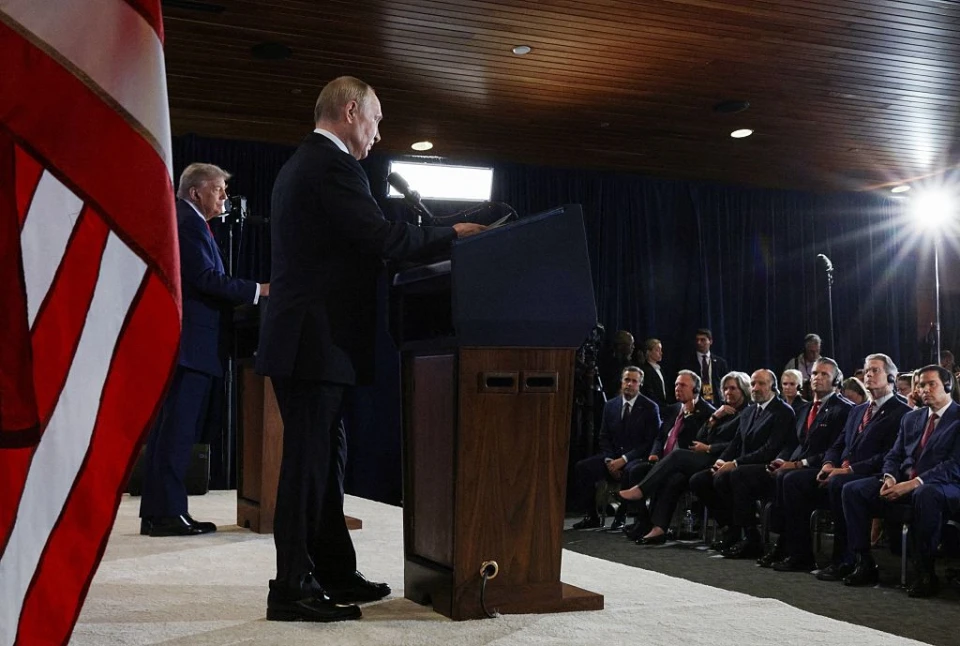
In contrast, the U.S. president Donald Trump spoke briefly, calling the talks “productive” and saying the parties had made “great progress” — one of his trademark phrases.
“There were many, many points that we agreed on,” Trump said. “I would say a couple of big ones that we haven't quite got there, but we've made some headway.”
He also emphasized the absence of a final agreement on Ukraine:
“So there's no deal until there's a deal.”
Trump said he planned to call Ukrainian President Zelenskyy and other allies to update them on the summit’s outcomes:
“I will of course call up President Zelenskyy and tell him about today's meeting.”
He spoke optimistically about stopping the violence:
“We have a good chance to resolve this… We will stop the killing of thousands of people every week. President Putin wants that just as much as I do. I will... call up President Zelenskyy...”
In addition, the U.S. president stressed that he does not plan to impose sanctions against Russia for now, since the meeting with Putin “went well.”
How international media and experts assessed the summit
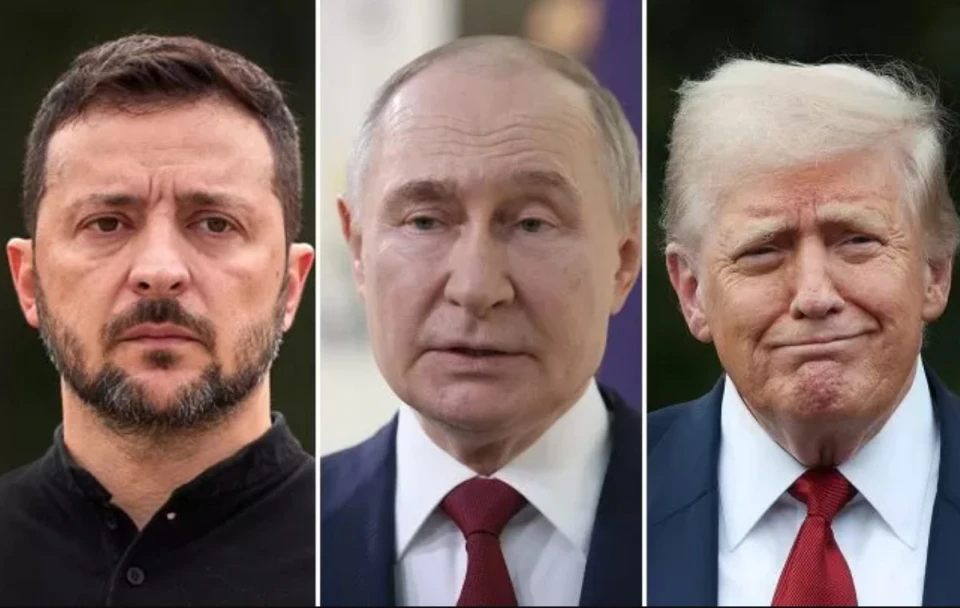
In short, all media outlets emphasize the same point — the meeting produced no public agreement or even a “roadmap.”
Many commentators therefore saw in the summit what had been suggested earlier — a symbolic victory for Putin. After all, a war criminal was received with full honors without any commitments in return. All this boosted the Kremlin’s status, legitimizing its aggressive policy in the eyes of the world.
"President Trump gave President Vladimir Putin a warm public reception, effectively ending his diplomatic isolation over the past three years for his invasion of Ukraine. But Mr. Putin did not agree to stop the war," The New York Times pointed out.
The Guardian highlighted that no ceasefire deal was reached, calling the meeting “a PR victory for Putin” and emphasizing that Trump gave the Kremlin global visibility without securing tangible results for Ukraine
The Wall Street Journal put it bluntly: “Trump rolled out the red carpet for Putin. He got little in return.”
According to AP, “Trump leaves Alaska summit with Putin empty-handed after failing to reach a deal to end Ukraine war.”
Sky News contrasted expectations with reality, noting that “more than two-and-a-half hours of talks resulted in just a brief news conference with little detail given away—and ultimately, no talk of a ceasefire and no deal on Ukraine reached yet.”
One thing that was evident: There was no deal made. And the ceasefire Trump said he wanted in place when the summit ended was far from becoming a reality as he increasingly put the onus on Ukrainian President Volodymyr Zelensky to “make a deal,” CNN wrote.
The New York Post writes that Trump’s “quiet stance” after his meeting with Putin indicates there are still “sticking points” regarding peace in Ukraine.
Putin showed a mastery of saying things Trump likes to hear, even without giving significant ground. He gave credence to Trump's assertion that if he had been president four years ago, the war in Ukraine would never have started. "I'm quite sure it would indeed be so," Putin said.
Despite playing into Trump's theory on the origins of the war, Putin signaled that the Ukraine conflict was a ways away from being solved.
But Putin got a win with the invitation alone. The Russian president has been ostracized by other world leaders, so his meeting with the most powerful man in the world was a victory for the former KGB spy, and his seeming satisfaction with that showed," Reuters summed up.
The news agency also reported that Trump handed Putin a letter from his wife Melania concerning Russia’s abduction of Ukrainian children. Officials did not disclose the details.
According to Ukrainian political commentator and journalist Vitaliy Portnikov, it was clear to everyone that this spontaneous meeting would not yield any results.
“It’s obvious that the two presidents did not actually agree on anything. The situation returned to the same atmosphere that existed before Putin’s arrival in Alaska. Putin was pursuing two main objectives: to block the possibility of U.S. sanctions against Russia’s energy sponsors and to secure yet another diplomatic victory over Trump,” Portnikov said, adding that Putin has not abandoned any of the demands he first voiced back in 2022 when he launched the war against Ukraine.




- News