


Price of trust in global guarantees: 34 years ago, Ukraine chose non-nuclear path



On October 24, 1991, Ukraine's parliament adopted the Non-Nuclear Status resolution, starting the loss of the world’s third-largest nuclear arsenal
Contents
1. First step toward non-nuclear status and what preceded it
2. Why Ukraine gave up nuclear weapons
3. The Soviet nuclear legacy: what remained for Ukraine
4. Signing the Budapest Memorandum: guarantees that didn’t work
5. What happened to the nuclear weapons
First step toward non-nuclear status and what preceded it
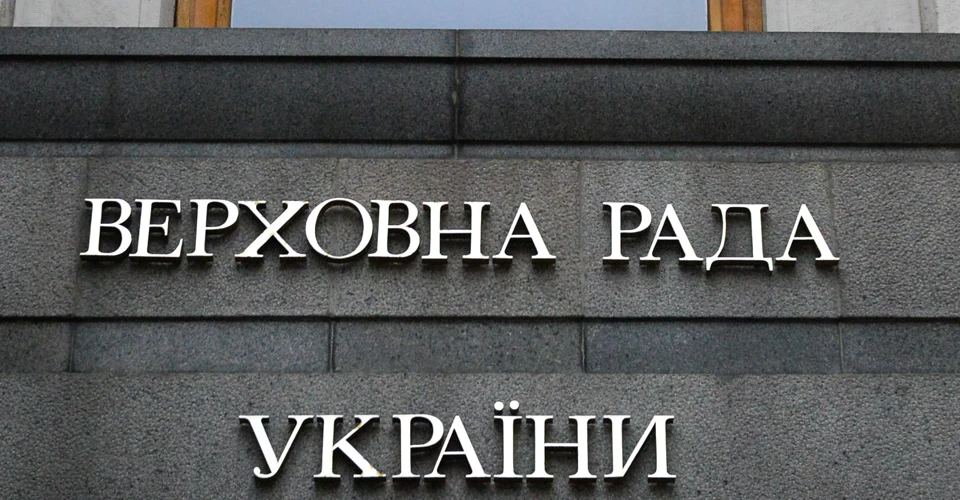 The decision of October 24, 1991, marked Ukraine’s first official step toward relinquishing its nuclear status and was also among the young nation’s earliest moves in shaping its own foreign policy.
“Ukraine will pursue a policy aimed at the complete elimination of nuclear weapons and the components of their basing located on the territory of the Ukrainian state. It intends to carry this out in the shortest possible time, taking into account legal, technical, financial, organizational and other capacities, and ensuring proper environmental safety.”
At that time, Ukraine possessed the third most powerful nuclear arsenal in the world - behind only the United States and Russia. However, instead of keeping this status, Kyiv chose the path of voluntary disarmament, expecting security and territorial integrity guarantees from the world’s leading powers, primarily the United States, the United Kingdom, and Russia.
Why Ukraine gave up nuclear weapons
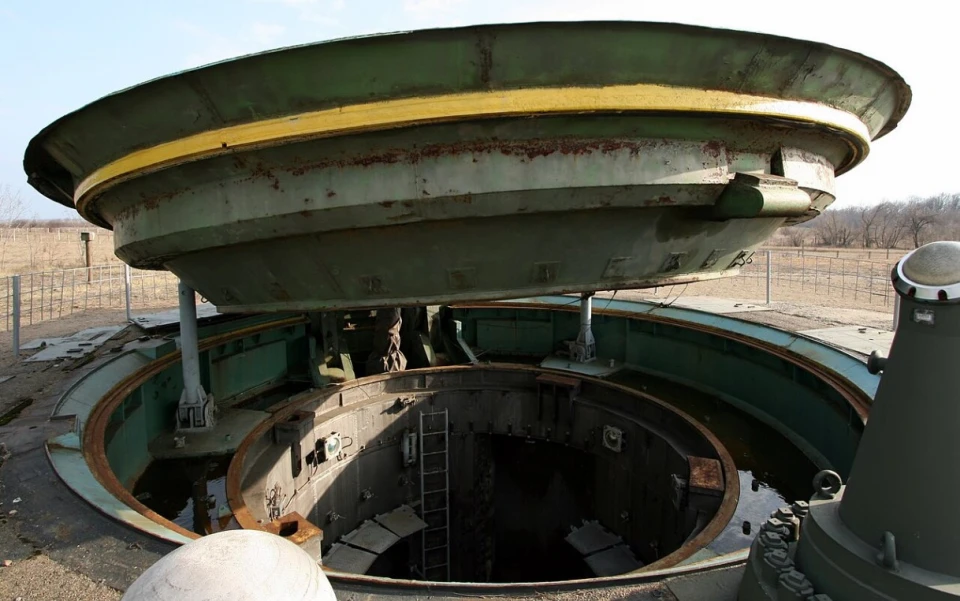 In the early 1990s, public sentiment was oriented toward peace and cooperation with the West. After the Chornobyl disaster, the nuclear issue was associated more with danger than with power.
As it happened, even before declaring independence, Ukraine had already chosen a path free of nuclear weapons. In the Declaration of State Sovereignty of July 16, 1990, the Verkhovna Rada of the Ukrainian SSR declared that the country aspired to be neutral and non-aligned, and committed itself not to produce, acquire, or use nuclear weapons.
And after the landmark events of August 1991, Ukraine sought international recognition and membership in the UN, OSCE, IMF, and the World Bank. All these institutions required a clear definition of the country’s status.
Therefore, guided by the prevailing public sentiment of the time and faith in the support of Western nations, the corresponding resolution was adopted, marking the beginning of Ukraine’s path toward nuclear disarmament.
Soviet nuclear legacy: what remained for Ukraine
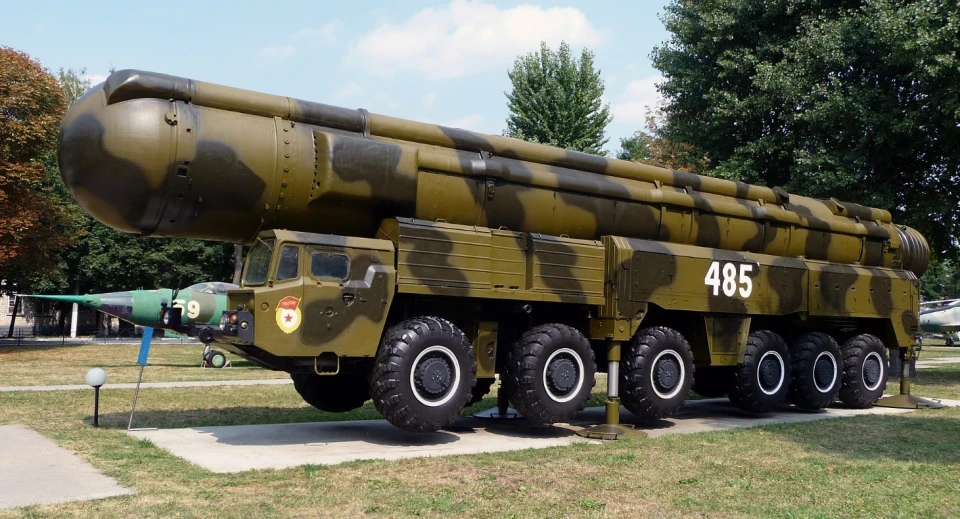 After the collapse of the Soviet Union, a vast nuclear legacy remained on Ukraine’s territory, along with a large infrastructure for maintaining this arsenal. In terms of scale, it was a force capable of destroying the planet several times over:
- 176 intercontinental ballistic missiles in the 43rd Missile Army: 130 liquid-fuel SS-19s (six warheads each) and 46 solid-fuel SS-24s (ten warheads each) in silo launchers;
- Tu-95MS and Tu-160 strategic bombers (30 to 43);
- strategic nuclear warheads: 1,514 to 2,156;
- tactical nuclear warheads: 2,800 to 4,200.
However - and this is an important point - control over the launch of the missiles remained in Moscow. Kyiv effectively received the weapons without the “button.” Despite this, Ukraine had every legal reason to be considered a nuclear state, since the arsenal was located on its territory. This gave it a real leverage in negotiations with both the West and Russia.
Signing the Budapest Memorandum: guarantees that didn’t work
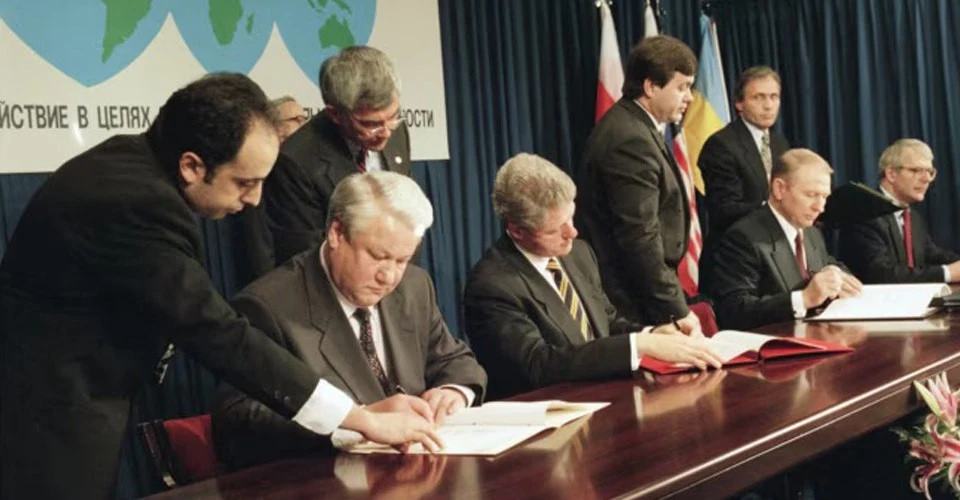 After lengthy negotiations, on December 5, 1994, Ukraine signed the Budapest Memorandum on Security Assurances. The document was concluded between Ukraine, the United States, the United Kingdom, and Russia, and later supported by China and France in the form of official statements.
The historic document was signed by U.S. President Bill Clinton, Ukrainian President Leonid Kuchma, Russian President Boris Yeltsin, and U.K. Prime Minister John Major. In exchange for Ukraine’s accession to the Treaty on the Non-Proliferation of Nuclear Weapons (NPT) as a non-nuclear state, the parties provided Kyiv with a set of security assurances.
The signatories committed to:
- respect the independence, sovereignty, and existing borders of Ukraine;
- refrain from threatening or using force against the territorial integrity or political independence of Ukraine;
- not use economic pressure to subjugate the political will of other states;
- appeal to the UN Security Council if Ukraine becomes a victim of an act of aggression involving the use of nuclear weapons.
- consult in the event of a situation arising that raises questions about these commitments.
However, the signed document contained no clear mechanism for enforcing its commitments - it offered assurances, not guarantees. And that difference later proved to be critically important.
Thus, when Russia occupied Crimea in 2014 and subsequently started the war in Donbas, the provisions of the Budapest Memorandum turned out to be empty. Western states condemned the aggression but did not provide Ukraine with real protection.
Russia’s full-scale invasion in February 2022 finally buried any illusions about the effectiveness of international guarantees.
What happened to the nuclear weapons
 Starting in 1992, delegations from Washington and Moscow began arriving in Ukraine. The Americans insisted on the complete elimination of the nuclear arsenal, while the Russians asked for the warheads to be transferred to them. All tactical nuclear munitions were quickly sent to Russian plants for disposal in the first half of 1992, with the last train arriving in Russia in early May. After that, it was planned to transfer the strategic warheads to Russia as part of the agreements under the Strategic Arms Reduction Treaty (START).
By 1996, all nuclear warheads had been removed from Ukraine’s territory. At the same time, delivery systems and related infrastructure were dismantled. In exchange, Ukraine received economic compensation - fuel supplies for its nuclear power plants for several years and around $500 million in aid under U.S. programs for reducing nuclear threats.




- News