


Russia’s potential strategy in case of “frozen” conflict. Consortium for Defence Information analysis



The leading American think tank RAND Corporation has analyzed options for restoring Russia's military capabilities in the event of a “freeze” in the war. We explain how these assessments fit into Ukraine's vision and what is critically important
Content
1. RAND Corporation research
2. Shoigu Plan - a combination of quantitative and qualitative changes
3. Revision of Old Approaches model - a step backward toward the Soviet Army
4. New Paradigm model - deep modernization
5. New Operational Doctrine model - institutional reform of Russia's defense industry
6. How RAND's assessments align with Ukraine's vision
The material was prepared in cooperation with the Consortium for Defence Information (CDI), a project that brings together Ukrainian analytical and research organizations, aimed at enhancing informational support and analytical provision in the fields of national security, defense, and geopolitics. Author - Mykhailo Samus, Director of the New Geopolitics Research Network, CDI co-founder.
RAND Corporation research
The leading American think tank, RAND Corporation, has released a new analysis on potential ways to restore Russia's military potential in the event of a frozen conflict against Ukraine. For modeling the situation, American experts used the following initial conditions:
- The Russian leadership will maintain its strategic goals and conceptual approaches in the ongoing war, even if Putin loses power for any reason.
- The Putin regime will not back down from its current intentions of dominance in Eurasia.
- Russia will continue to be supported by strategic allies such as China, Iran, Belarus, and North Korea.
- Demographic trends in Russia will remain at current levels, and there will be no mass protests from the Russian population.
RAND researchers identified four main models for restoring Russia's military potential.
Shoigu Plan - a combination of quantitative and qualitative changes
This model suggests that Russia will attempt not only to restore its military potential to the level of 2022 but also to surpass it through qualitative changes in doctrine, structure, management, logistics, and technologies. This means both qualitative and quantitative development of the Russian Armed Forces.
Likelihood of implementation: Russia’s failure in Ukraine was due not so much to quantitative problems with the Russian Armed Forces, but largely to imperfect management in the context of a large-scale, high-intensity war. Based on this, RAND suggests that Russia may make selective qualitative changes to improve its structure, doctrine, management system, logistics, and procurement. However, overall, RAND experts consider the successful implementation of the so-called Shoigu Plan to be unlikely. They view qualitative changes as uncertain, while quantitative growth in military mass, particularly through increasing the size of the Armed Forces, is seen as more probable. Why? The military-industrial potential of Russia will face significant challenges for qualitative (technological) recovery, as Russia will continue to face limitations in labor, technologies, and supply chains, and its scientific capital and human potential are in long-term decline. Furthermore, an increase in industrial production does not guarantee improved productivity in the defense sector. Corruption will undermine the effectiveness of the military industry, predict American analysts, and an increase in the defense budget will lead to the formation of stronger corrupt ties.
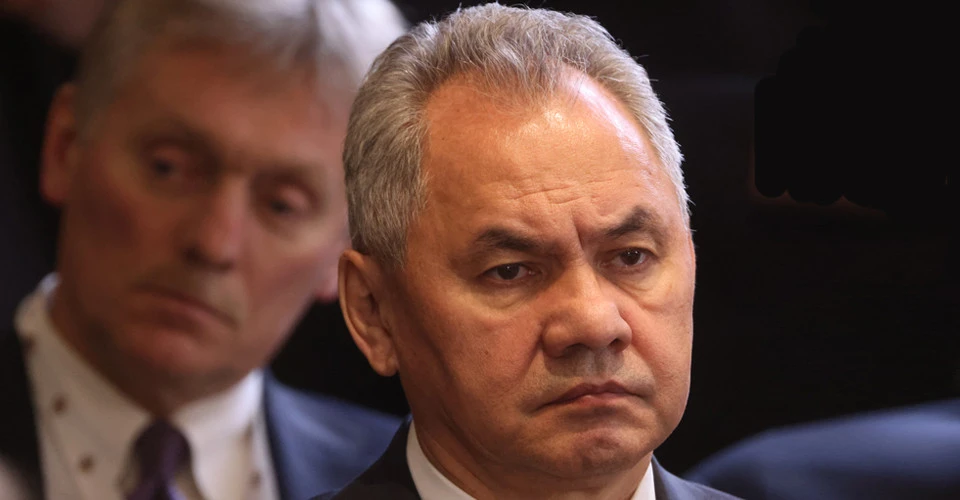
The role of allies: Russia’s relations with its allies will also impact the implementation of the Shoigu Plan. Although China, Iran, North Korea, and Belarus have played a critically important role in waging a war of attrition against Ukraine under sanctions, their ability to assist Russia in implementing the Shoigu Plan will be limited. Economically, technologically, and resource-wise, Russia's allies (except for China, which may refuse to support Russia's recovery for its own interests) are unable to provide Russia with the capabilities it may need to succeed in the Shoigu Plan.
Revision of Old Approaches model - a step backward toward the Soviet Army
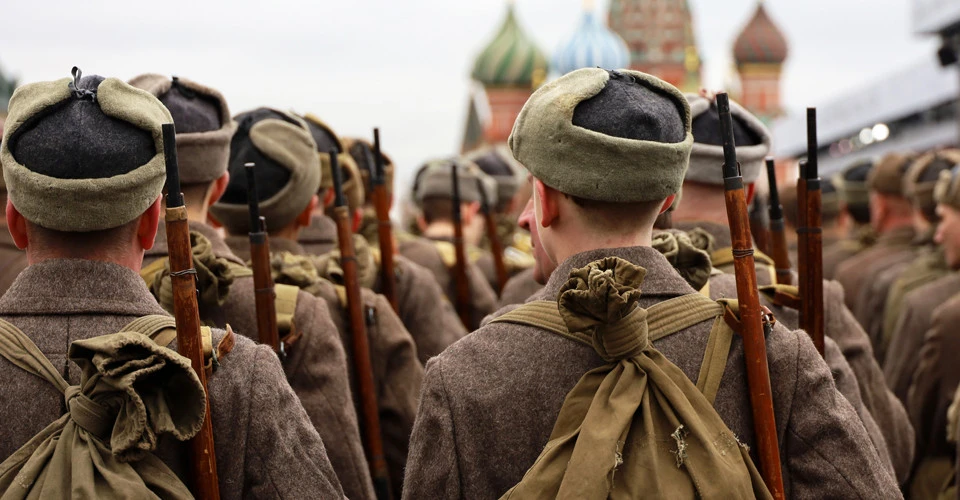
Within this model, Russia returns to military concepts that existed before the so-called Serdyukov reforms (2008-2012) – that is, it begins to rebuild a mass (with long-term conscription and a large mobilization reserve), mechanized army ready for a war of attrition – essentially the Armed Forces of the USSR. In this case, conventional armed forces are minimally improved, and the focus is placed on the development of strategic nuclear forces. Technological shortcomings and gaps are compensated by quantity, not modernization and improvement. In other words, reliance on advanced technologies will not be a mainstream focus in the development of the Russian Armed Forces.
Likelihood of implementation: In fact, some elements of the transition from quality to quantity have already been implemented by Russia's military-political leadership in adapting the Russian army to a war of attrition against Ukraine. The shift from the concept of compact battalion tactical groups to an army-division structure is precisely about returning to old models and doctrines. The emphasis on mass and quantity in conducting offensive operations is already a characteristic feature of the modern Russian Armed Forces. Therefore, analysts at RAND see the return to old models as a more realistic path for Russia than deep modernization. They believe that Russia "is focused on quantity and concentrated on vertical subordination." At the psychological level, it has traditionally been easier for Russia to rely on quantity rather than quality.
At the same time, the Revision of Old Approaches model places a significantly greater emphasis on strengthening Russia's nuclear forces, which will be made possible by the self-sufficiency of the Russian corporation Rosatom. Rosatom is a vertically integrated company that controls the entire production cycle, from uranium extraction to enrichment for the production of nuclear fuel and nuclear weapons. Thus, Russia's nuclear industry remains a guarantee of its superiority in nuclear weapons.
The role of allies: Russia's allies, in general, also focus on quantity rather than quality. In particular, close partnerships with Belarus, North Korea, and Iran contribute to quantitative advantages, increasing Russia's defense industrial production and providing a potential source of additional personnel. This approach may also reflect Putin's own beliefs about post-war reconstruction: the outcome of the war is his personal project, and analysts at RAND predict that he is willing to take great risks but is not ready for significant changes and reforms. This could lead to destabilization of the regime and threaten his power.
New Paradigm model - deep modernization
In this model, Russia focuses on quality investments rather than mass ones — essentially, it is an alternative to the Revision of Old Approaches. Russia will build smaller but qualitatively superior forces and implement significant personnel reforms, prioritizing the development and use of asymmetric capabilities, intelligence, cutting-edge automated command systems, private military companies, and other irregular formations. Overall, the Russian Armed Forces under this model will adopt the most advanced technologies and doctrines, drawing on both global trends and its own experience in the war against Ukraine.
Likelihood of implementation: This model is based on deep reforms similar to the initial steps of the Serdyukov reforms, focusing on areas that were less successful (such as personnel reforms) or lacked resources (for example, contactless forces and means), as initially planned. However, experts from the center conclude that Russia's long-standing tendency to rely on mass and quantitative parameters reduces the likelihood of implementing this model. Although they do not rule out possible attempts to adapt this model in specific areas of development within the Russian Armed Forces, creating "modernization clusters."
Role of technological potential: The war in Ukraine has shown Russia the advantage of Western technologies, despite the fact that Ukrainian forces are mostly fighting with outdated Western equipment. Russia is aware of the benefits of Western armaments, which could influence Russian leaders and encourage them to pursue the New Paradigm path. At the same time, RAND analysts believe that it will be difficult for Russia to make qualitative improvements across all branches of the armed forces. With the onset of the war in Ukraine, technical specialists have left Russia in large numbers, and the existing staff of engineers in the Russian defense industry continues to deteriorate. Under continued sanctions, the country's ability to import necessary components, such as microchips, will also serve as a limiting factor.
New Operational Doctrine model - institutional reform of Russia's defense industry
In the implementation of this model, Russia undergoes large-scale institutional reforms in the defense sector. To remain strategically competitive and relevant, the Russian Armed Forces are restructuring according to a new operational model, which could adapt elements of existing advanced models, such as Western (or to some extent, Chinese) doctrine. Russia may make selective qualitative changes in its Armed Forces, involving external experts to improve its operational art and tactics, as well as leveraging key external connections to acquire new technologies and develop new strategic partnerships.
Likelihood of implementation: The Soviet or Russian operational model is no longer viable – this has become evident due to the unsatisfactory effectiveness of Russia's armed forces in the war against Ukraine. Accordingly, Russian defense institutions and strategy require a fundamental reassessment and restructuring in line with the demands of modern warfare. To maintain strategic competitiveness and relevance, the Russian Armed Forces must either create a new operational model or adapt elements of existing ones (e.g., Western). However, analysts at the center conclude that the political and strategic culture of modern Russia contradicts radical changes to existing operational models, as nothing encourages the military to make decisions or take initiative without direct orders from the top leadership. In this system, defined by the principle of "negative selection," professionalism is punished, as it can lead to disrupting the established order and criticizing the system.
If commanders, who during the war in Ukraine were forced to take the initiative, rise through the military hierarchy, the transition to a mission command model would become more realistic. However, the likelihood of initiative-driven commanders advancing to higher levels of military command in modern Russia is low, conclude RAND analysts.
The role of allies. Russia will seek external expertise to improve its doctrine and tactics, as well as leverage key external connections (especially with Iran, North Korea, and China) to obtain new technologies and strategic partnerships. However, Russia’s ability to borrow China’s operational model will be significantly limited. The boundaries of Chinese support for Russia became evident during the war in Ukraine. Although Putin speaks of "unlimited" relations, in practice, there are many sensitive issues, including differing levels of risk acceptance and Russia’s status in these bilateral relations.
How RAND's assessments align with Ukraine's vision
The modality of ending the war in Ukraine will be determined by the model chosen by the Russian leadership. This model, according to an analysis by Ukrainian experts, specifically the Consortium for Defence Information, may differ significantly from the conclusions drawn by the United States and its allies. Historically, Russia has demonstrated a willingness to tolerate high personnel losses, which is why the failure at the initial stage of the war against Ukraine did not lead to large-scale protests in Russia or demands for radical changes within the country. Therefore, the model chosen by Russia for the development of its defense industry may differ from the logic of Western analysts.
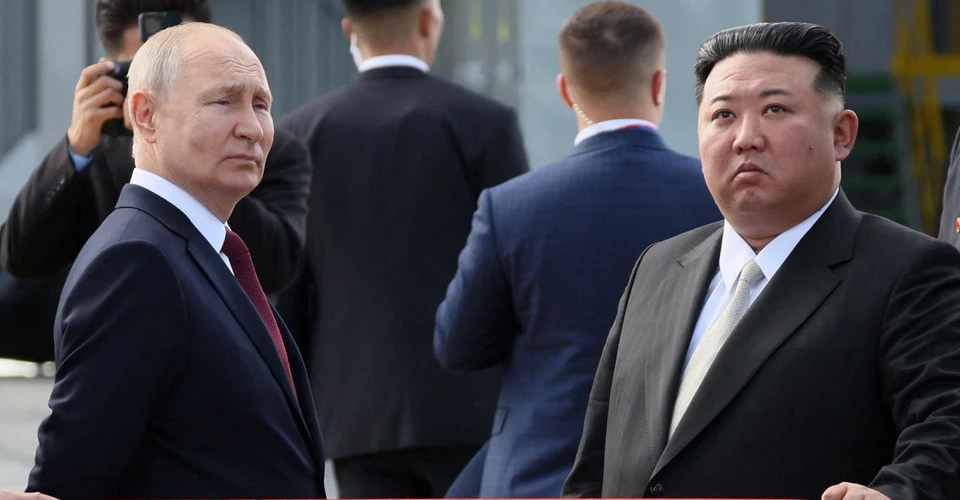
A significant role in these decisions will be played by Russia's relations with its key partners, primarily China, as well as Iran, Belarus, and North Korea. China is expected to be of the greatest importance, as the war in Ukraine has increased Russia's dependence on Beijing. However, China, which has a lower tolerance for the risks of war and internal instability than Russia, is not interested in a definitive Russian defeat in the war (including due to the corresponding strengthening of the West). At the same time, it is unlikely to sacrifice its own economic and geopolitical interests for the direct support of Russia's military plans.
Therefore, it should not be ruled out that all the models of military potential restoration for Russia, described by experts from the American center, may become components of a possible hybrid approach with different focuses and emphases. Considering this, Ukraine must clearly ensure the adaptation of its own defense capabilities, allowing for variability in the application of different models by Russia and applying asymmetric and high-tech approaches.
Strengthening international alliances is equally important: the focus on the mass and quantitative expansion of the Russian Armed Forces requires Ukraine and European countries to develop comprehensive security and defense models. Unpredictable actions by the United States further highlight the importance of developing an alliance between Ukraine and European countries. Finally, regional threats from Iran, North Korea, and Belarus must be taken into account to maximize the adaptation of Ukraine's security policy to possible scenarios of events.




- News