


Russian jets and “unidentified” drones in EU: Is Europe prepared for hybrid warfare?



In what was once a calm European sky, “unknown” drones are increasingly appearing over military bases and near civilian airports, while Russian fighter jets enter airspace without any warning. This is forcing countries to sound the alarm and at least attempt a response
Contents
1. Testing the limits
2. Understanding hybrid warfare: what European leaders say
3. First steps in countering hybrid attacks
Testing the limits
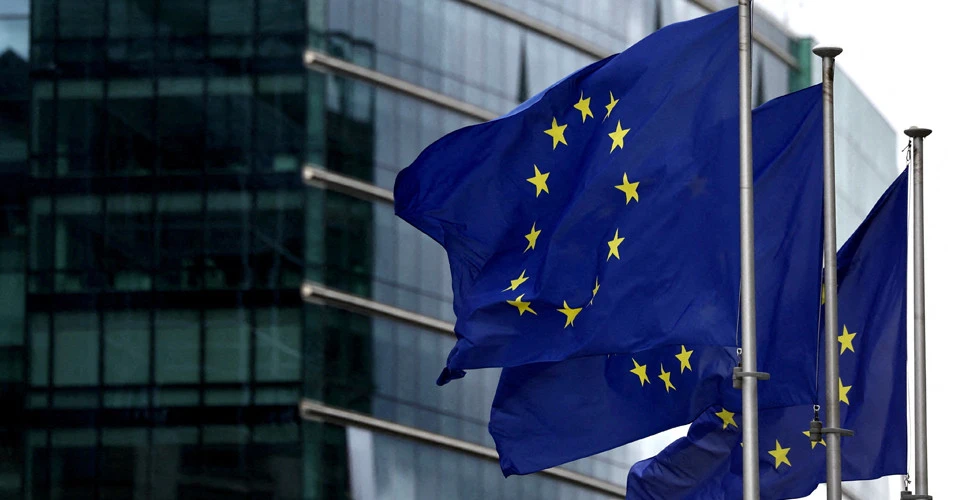
In just the past two weeks, a series of incidents have clearly shown that Moscow is testing NATO and the EU’s ability to respond to hybrid threats.
Following the first signal — drones in Poland — Europe has faced both Russian fighter jets entering its airspace, as in Estonia, and indirect provocations. This specifically concerns so-called “unidentified drones,” which have suddenly begun appearing increasingly across the airspace of various EU countries.
The earliest incident that drew global attention and caused significant disruption occurred late on September 22, when unidentified drones were detected in Norway, leading to the temporary closure of Oslo Airport and delays for 12–14 flights. Earlier, drones had also been spotted over Akershus Fortress. Around the same time, Copenhagen Airport was closed due to drones, delaying about 15 flights. Danish authorities later stated that the drones “were not amateur-made,” raising suspicions that the incidents could be part of a hybrid attack, likely by Russia.
The story of “unidentified” drones in Denmark did not end there. On September 25, Aalborg Airport, used for both commercial and military flights, was closed due to drones in its airspace. During the night of September 26, Aalborg was again shut down following reports of suspicious objects, with drones appearing dangerously close to military facilities.
Over the Swedish Karlskrona archipelago on September 26, unidentified drones with flashing lights were also spotted. According to the police coordination center, there were two drones emitting red and green lights. None were intercepted, and there are no suspects. Authorities believe the incident may be linked to recent events in Denmark and Norway. The area where the drones were seen is located just a few kilometers from a naval base.
Finland has also recorded cases of unidentified drones, although detailed information remains limited. Drones have been detected in Lithuania and Finland as well.
Overall, during the past week, Europe has seen numerous instances of unidentified drones, raising serious concerns about European countries’ readiness to face hybrid attacks. These incidents highlight the urgent need to strengthen security measures and develop technologies to detect and neutralize such threats.
In addition to unidentified drones and brazen fighter jets, another incident occurred: a knife attack in the Czech Republic on Brigadier General Roman Gítha, responsible for military intelligence and drone deployment. Gítha was hospitalized with injuries. Czech media emphasize that the general is close to Chief of the General Staff Karel Řeha and oversees army intelligence support and the implementation of unmanned aerial systems.
Understanding hybrid warfare: what European leaders say
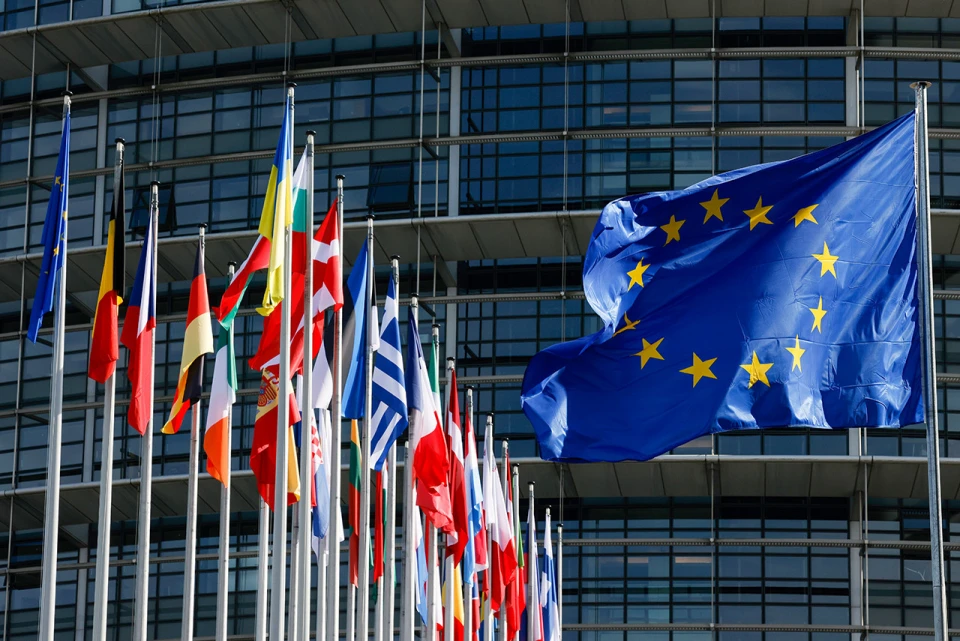
Denmark’s Prime Minister believes Europe is already in a state of hybrid warfare. “There is one obvious antagonist, and that is Russia,” Mette Frederiksen emphasized following the recent drone incidents.
“These are attacks we must expect, and there may be more. These attacks reveal vulnerable points, and their purpose is to create instability and division,” she said, referring to the unidentified drones in the country’s airspace.
Frederiksen stressed that hybrid warfare is not a traditional war. These attacks primarily aim to make Danes feel insecure.
“One day it may be drones. Another day – cyberattacks. A third time – disinformation. Influence on elections. Conspiracy theories online,” the prime minister noted. “Regardless of the method, the goal is to destabilize our society and undermine trust in authorities. All of this highlights that Europe’s security threat is serious – and real.”
She added that the increasing intensity and frequency of hybrid attacks against Denmark and Europe represent a new reality, requiring Europe to arm and strengthen itself.
“While authorities cannot yet conclude who is behind the hybrid attacks on our airports and other critical infrastructure, we can at least acknowledge that there is one country primarily threatening Europe’s security – and that is Russia,” Frederiksen said. She added: “No European country can defend itself against Russia alone. Not even Ukraine, which has been courageously fighting for over three years. That is why we have NATO. That is why we are building up the European defense industry.”
Meanwhile, NATO announced it is reinforcing its presence in the Baltic Sea with an air-defense frigate and other assets in response to the drones in Denmark. A NATO representative said they would not disclose which countries are providing additional resources. However, the new measures will strengthen the Baltic Sentry mission, launched in January following a series of incidents that damaged submarine cables, telecommunications lines, and gas pipelines.
The Atlantic Council, in turn, published a report emphasizing that Russia’s recent actions show drones are increasingly integrated into the Kremlin’s hybrid strategy, as Moscow seeks to escalate its confrontation with the democratic world.
“Russia now appears intent on exploiting growing divides within the Western camp and intimidating Europe with thinly-veiled threats of possible drone bombardment. European leaders must take the Russian drone threat seriously,” the organization noted.
First steps in countering hybrid attacks
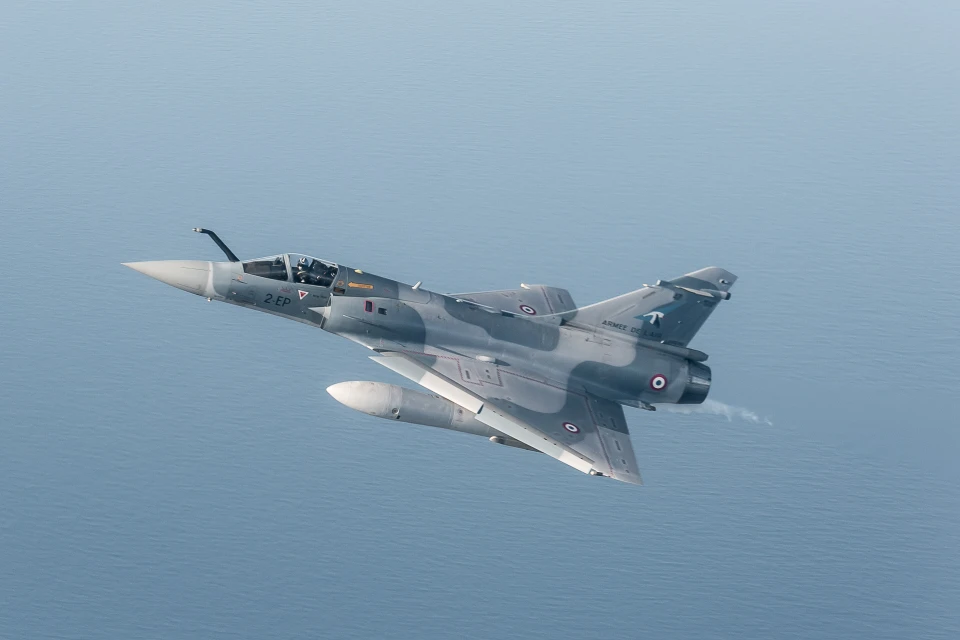
Next week, Denmark will host the EU summit, and for security reasons, the country has banned drone flights in its airspace from September 29 to October 3. Violations carry fines and even prison sentences.
“We are currently in a complex security situation, and we must ensure the best possible conditions for the armed forces and police as they take responsibility for security during the EU summit. This is a task that already requires significant efforts from our authorities, who work around the clock to protect Danes and our guests,” emphasized Danish Defense Minister Troels Lund Poulsen.
Meanwhile, earlier this week, the Lithuanian parliament almost unanimously approved amendments to legislation allowing the military to respond more flexibly and effectively to airspace violations by drones, and, if necessary, use force to neutralize these threats. Lithuanian authorities also expressed support for Denmark and confirmed their readiness to coordinate actions within NATO.
Finland and Sweden have also taken the matter seriously. According to the Finnish media outlet Iltalehti, NATO’s Supreme Allied Commander in Europe, Alexus Grynkewich, approved an operational plan developed by the general staffs of Sweden and Finland, under which Swedish soldiers from the Norrbotten Brigade will make up the main part of Finnish FLF forces.
“The Swedes are on standby in their barracks near Finland. If tensions with Russia rise, they will move to the Finnish side,” a NATO source told the media.
Sweden’s armed forces have the Norrbotten Brigade in northern Sweden, consisting of five combat battalions and their support units. The brigade specializes in winter warfare, and its headquarters is located in Boden, 130 kilometers from the Finnish border at Tornio.
Sources emphasize that NATO’s operational planning now assumes that Swedish units in the north will defend the Alliance’s eastern border alongside Finnish forces.
Unidentified drones, Russian aerial provocations, and increased military aircraft activity are already prompting European governments to actively rethink the rules of the game. Initial steps have been taken in the right direction, but they are unlikely to be sufficient on their own. The EU and NATO must act together across several interconnected areas, including rapid detection and neutralization of threats, establishing clear operational rules and protection mechanisms, and addressing the technical side to respond faster to danger. Clear information policies are also essential, explaining to citizens what is happening, how to act, and what to expect.




- News